Springs · Mississauga
Torsion Spring Replacement
One side of the door sits higher than the other in the tracks, and a lift cable is hanging slack or has jumped off its drum.
In plain words
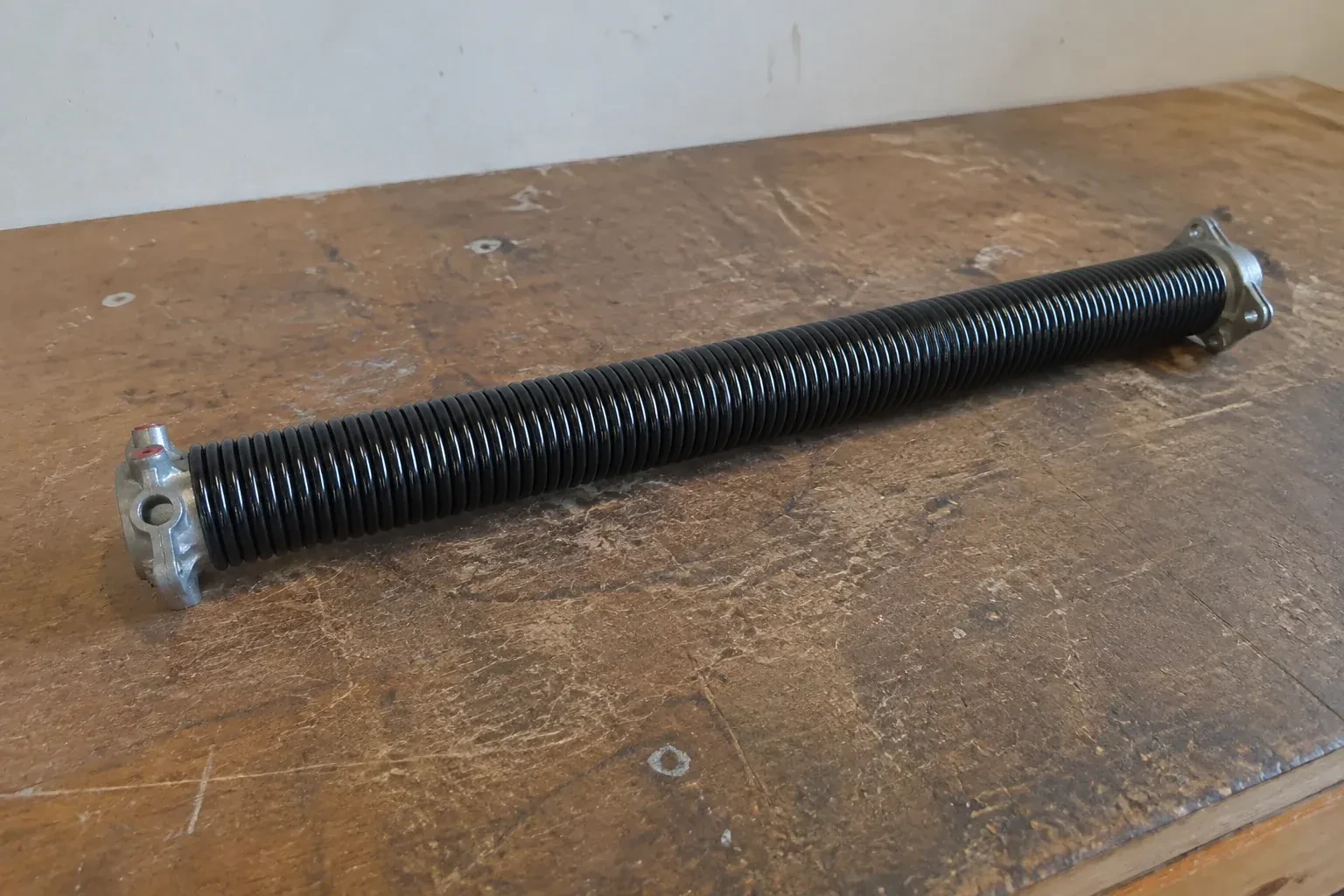
On a door with two springs, replacement usually starts with a conversation about scope. Both springs have completed the same number of cycles, so when one breaks the other is typically close behind, and replacing the pair together gives the door two matched springs sharing the load evenly. The technician explains what the installed system is, how each spring is loaded and what the door's weight calls for, then fits and winds the springs as a set. The result is a balanced door with a fresh cycle life on both sides rather than a repair that may be repeated soon.
How the visit goesNothing broke outright, but the door has grown heavier each winter, opens more slowly and squeals as it moves. The springs on an older door have lost tension and the coils show pitting, so the system is asking for attention before it fails.
Torsion Spring Replacement
How the visit goes
Checking what the spring anchors to
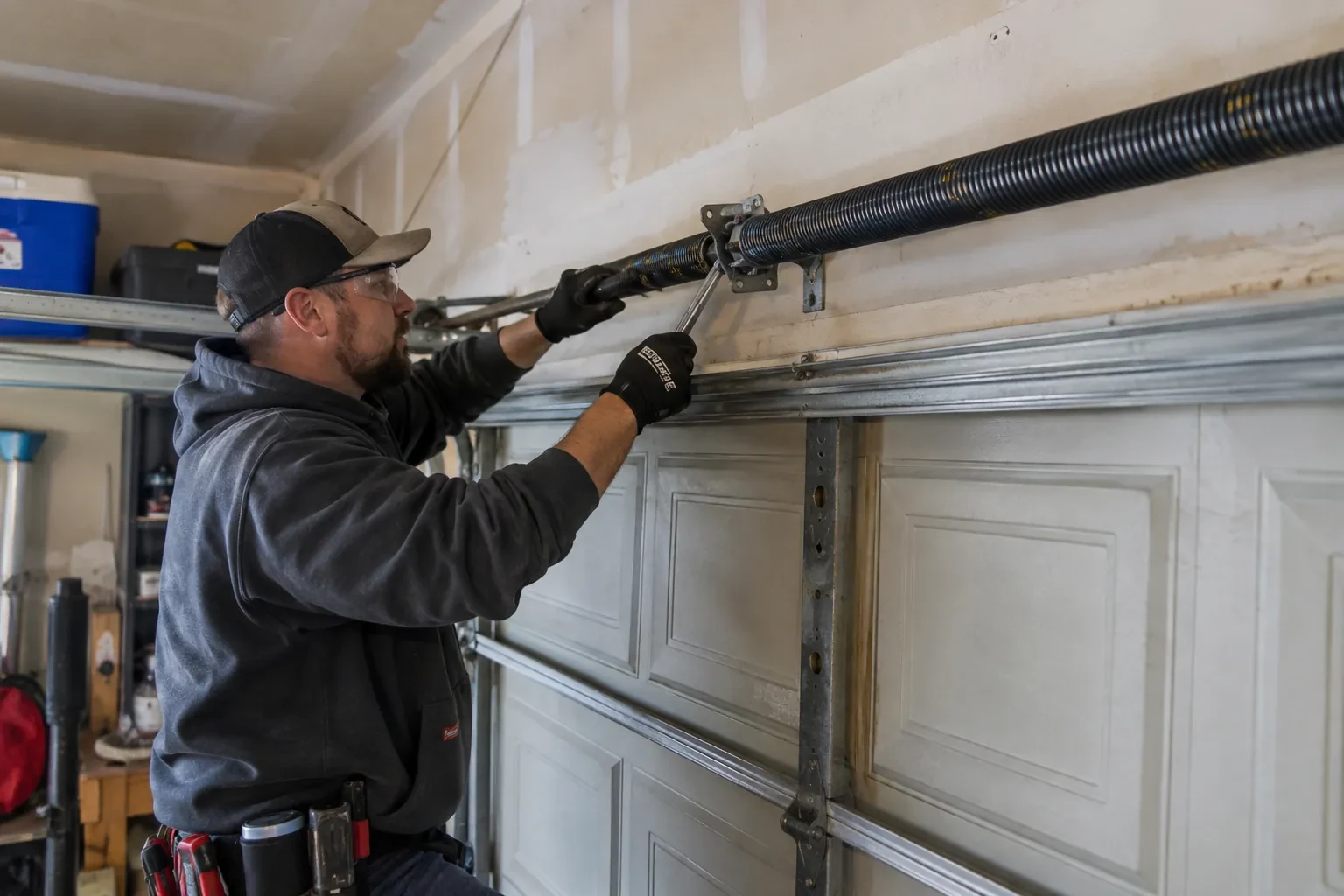
A torsion spring pushes against a centre bracket bolted to the header above the door, and that anchor takes the full reaction force every cycle. The technician checks that the bracket is fastened into solid framing with proper lag bolts, that the header wood has not split or softened with moisture, and that the end bearing plates on each side are square and tight to the jamb. Loose or corroded fasteners are noted for replacement. A sound anchor keeps the shaft level and the spring pulling straight, which protects both the new spring and the bearings that carry it.
Balancing the door by hand
Once the clamps are off, the technician lifts the door by hand to about waist height and lets go. A balanced door stays where it is, or drifts only slightly. If it rises on its own, the spring has a little too much tension and is eased a quarter turn; if it drops, a quarter turn is added. The door is then run through its full travel, watching that both sides move together and the sections stay flat in the tracks. This is repeated until the door feels light and stops cleanly at several heights, which is the standard the whole job is measured against.
A door that carries its own weight
The clearest change is in your hands: with the opener released, the door lifts with light, even effort and holds its position at mid-height instead of sliding down. That is what a balanced counterweight feels like. The door closes softly at the floor and rises without hesitation, and the opener runs with a calmer sound because it is guiding the door rather than hauling it. You can test this yourself any time by pulling the release cord with the door closed and lifting to waist height; a door that stays put is a door in balance.
Torsion Spring Replacement
In the van
Garage-door spring lubricant
Locking pliers for the track
Winding bars
Stationary cone bolts and nuts
Socket set and wrenches
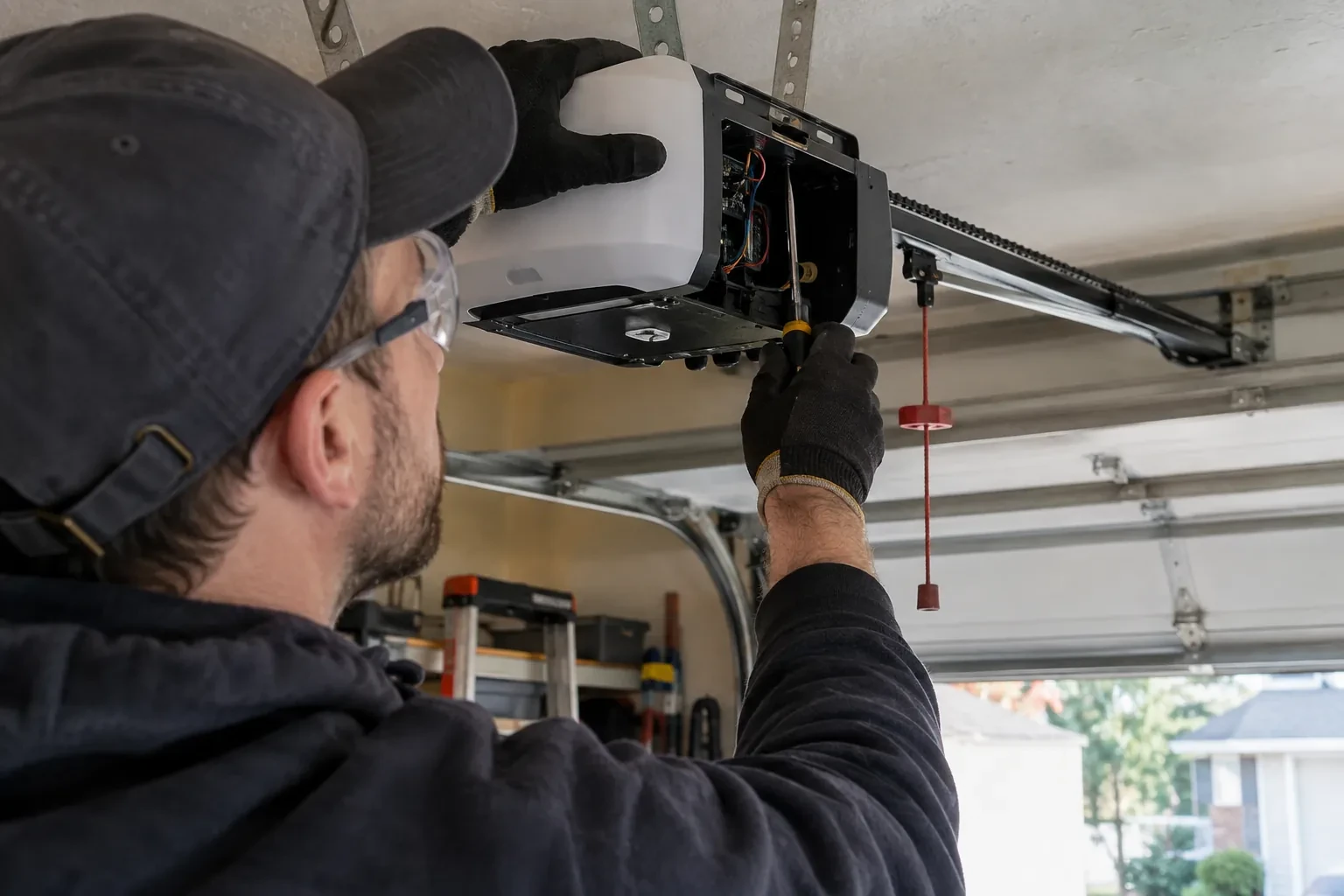
Torsion Spring Replacement
What affects the quote
Spring specification
The wire size, inside diameter and length that the door's weight and height demand determine which spring is fitted. Larger doors take larger springs, and unusual combinations may need specially wound coils.
Anchoring to the header
A centre bracket with pulled lag bolts, a split header or a corroded bracket needs refastening, reinforcing or replacement before the spring can be wound, which is included when found.
Door size and weight
A double-width door, a solid wood door or a thick insulated door weighs far more than a single-width steel panel, calling for heavier wire, longer coils or more springs to balance it.
What to have ready
- How many springs are mounted above the door, one or two?
- Did you hear a loud bang before the door stopped working?
- Can you see a gap in the spring above the door?
Torsion Spring Replacement: questions
QuestionsMy car is inside the garage; how do you get the door open?
Once the technician is on site, the door is secured and the spring replaced with the door in its closed position, which is how spring work is always done. When the new spring is wound and the door balances, it lifts normally and the vehicle drives out. There is no need to force the door open beforehand; leaving it closed keeps the door square and the job straightforward.
Do I need to be home for the visit?
It helps to have someone present to open the garage, point out anything you noticed and hear how the door should feel afterwards. The technician needs power at the opener outlet, clear space under the shaft for a ladder, and access to both sides of the door. If a vehicle is inside, it stays until the door is working. Being there also lets you approve any extra items, such as bearings or cables, as they come up.
What is the difference between galvanized and oil-tempered springs?
Oil-tempered springs are the traditional dark grey or black coil; they hold their tension well over time and are widely used. Galvanized springs have a zinc coating that resists rust, which is useful in damp garages, though they tend to relax slightly and may need a small adjustment after settling in. Both are available in standard and high-cycle ratings, and the technician can explain which suits your garage.
Related services
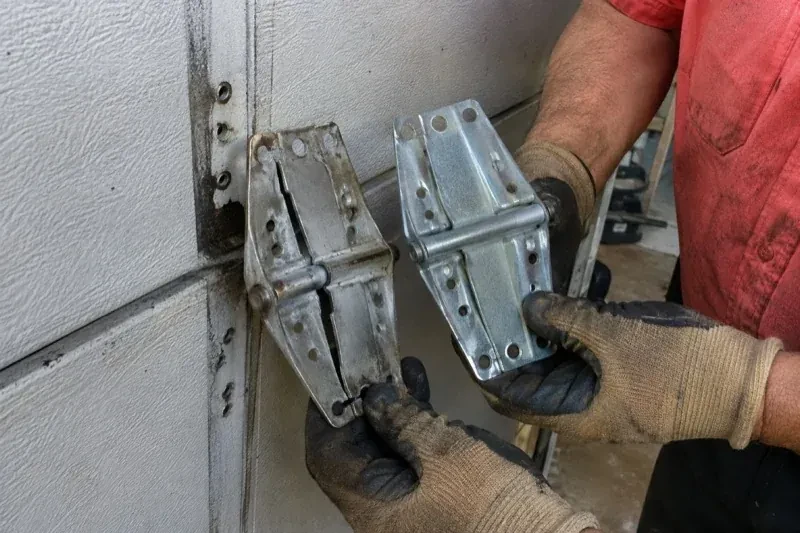
- Garage Door Hinge ReplacementWatching from inside as the door opens, you can see the gap between the second and third panels open up on one side as they turn the corner into the ceiling, then close again.
- Garage Door Track Repair or ReplacementAfter a decade of slushy winters the bottom foot of the track is flaking rust.
- Garage Door Cable ReplacementThe door went up as usual this morning, then stopped a third of the way with one corner higher than the other.