Garage Doors in Meadowvale West, OntarioThe garageis part of the house.
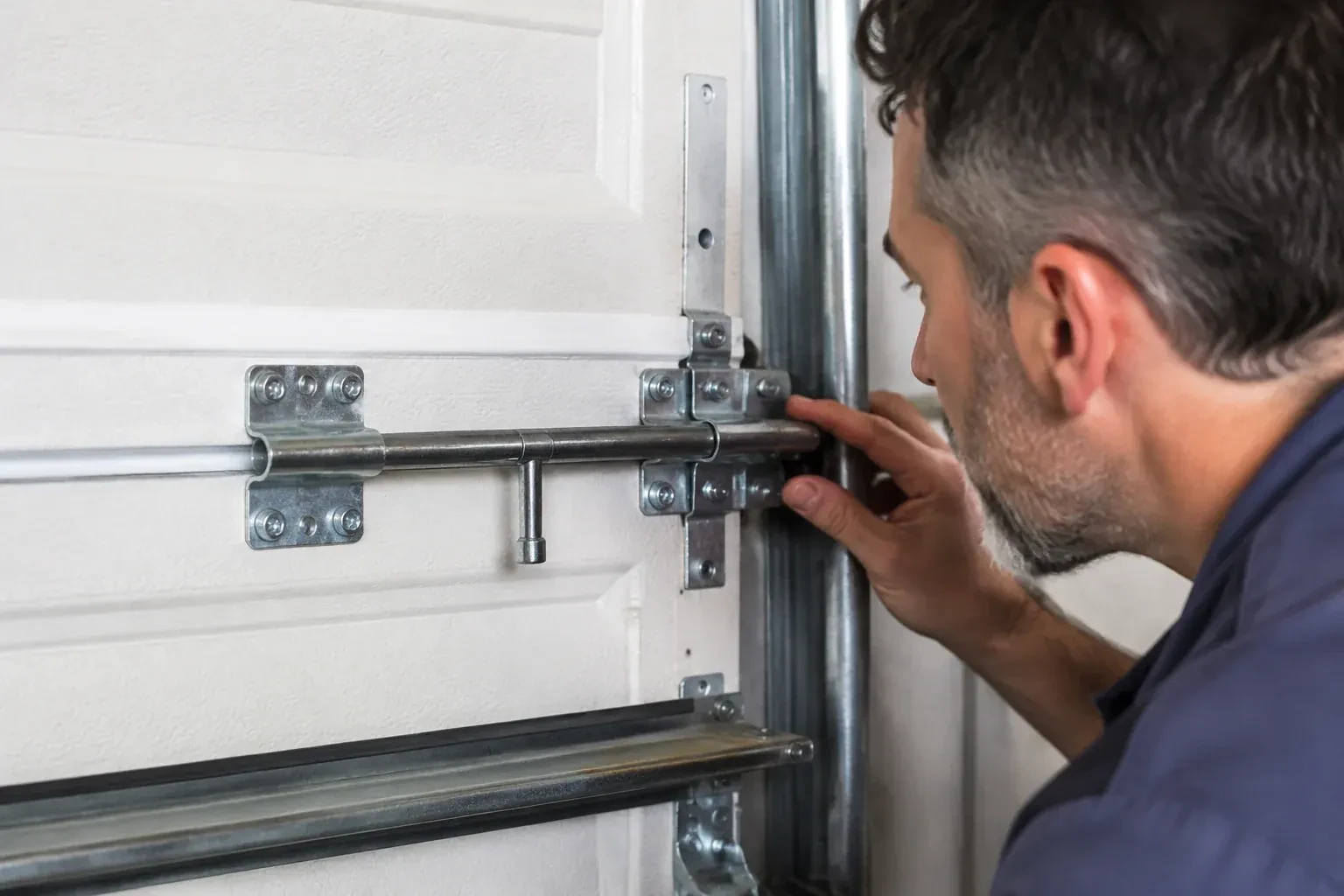
In most homes in Meadowvale West the door between the garage and the kitchen is the least guarded one, so the garage door itself matters for security. We make sure it closes and locks fully, replace worn emergency-release cords, add a manual lock where wanted, and clear old codes from the opener.
In most homes in Meadowvale West the door between the garage and the kitchen is the least guarded one, so the garage door itself matters for security. We make sure it closes and locks fully, replace worn emergency-release cords, add a manual lock where wanted, and clear old codes from the opener.
A door you barely notice.
Our commercial customers in Meadowvale West run shops, warehouses and service bays that depend on their doors. We set up maintenance visits at intervals that suit the door's cycle count, keep records of the springs and operators on each door, and turn up with the right parts so downtime stays short.
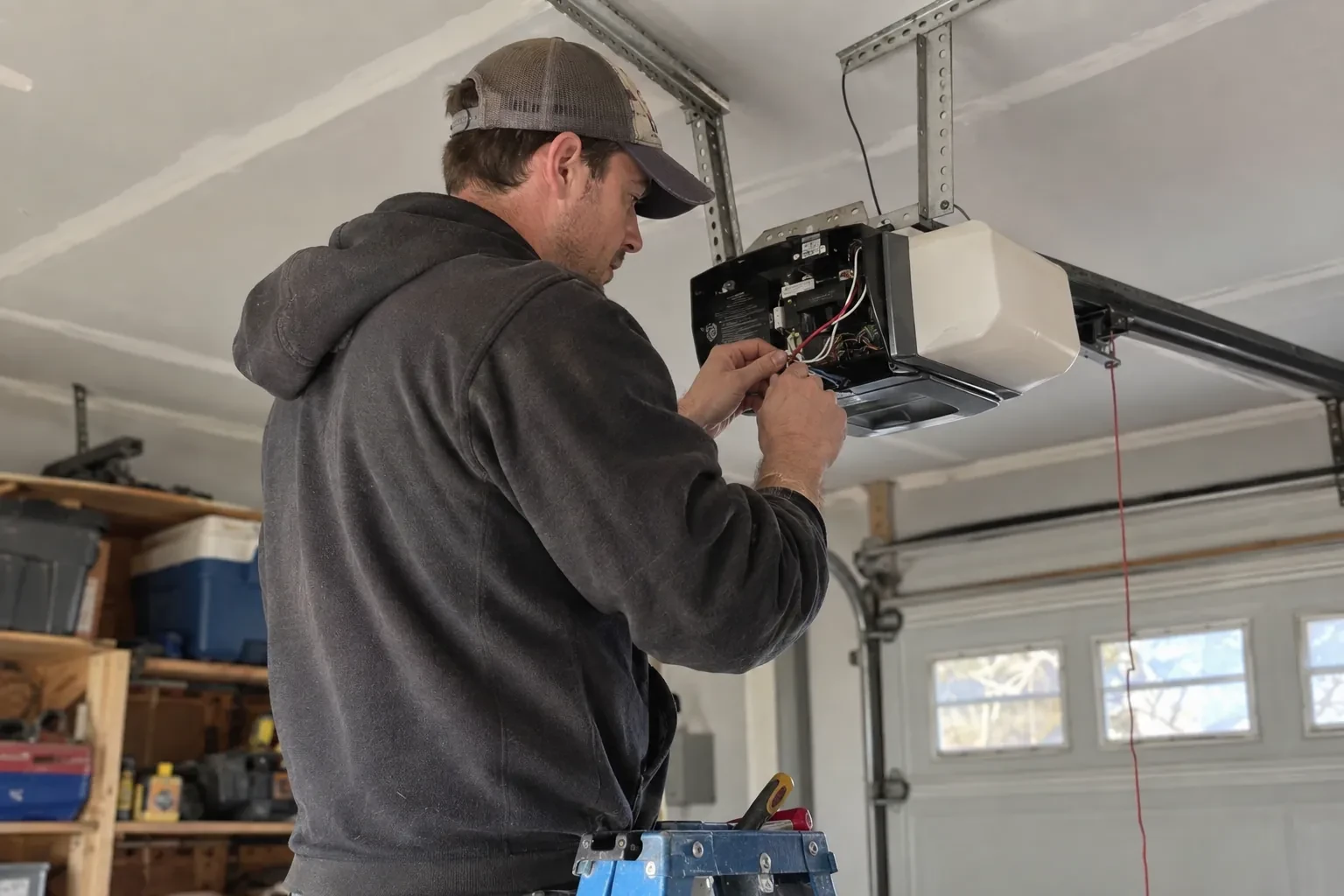
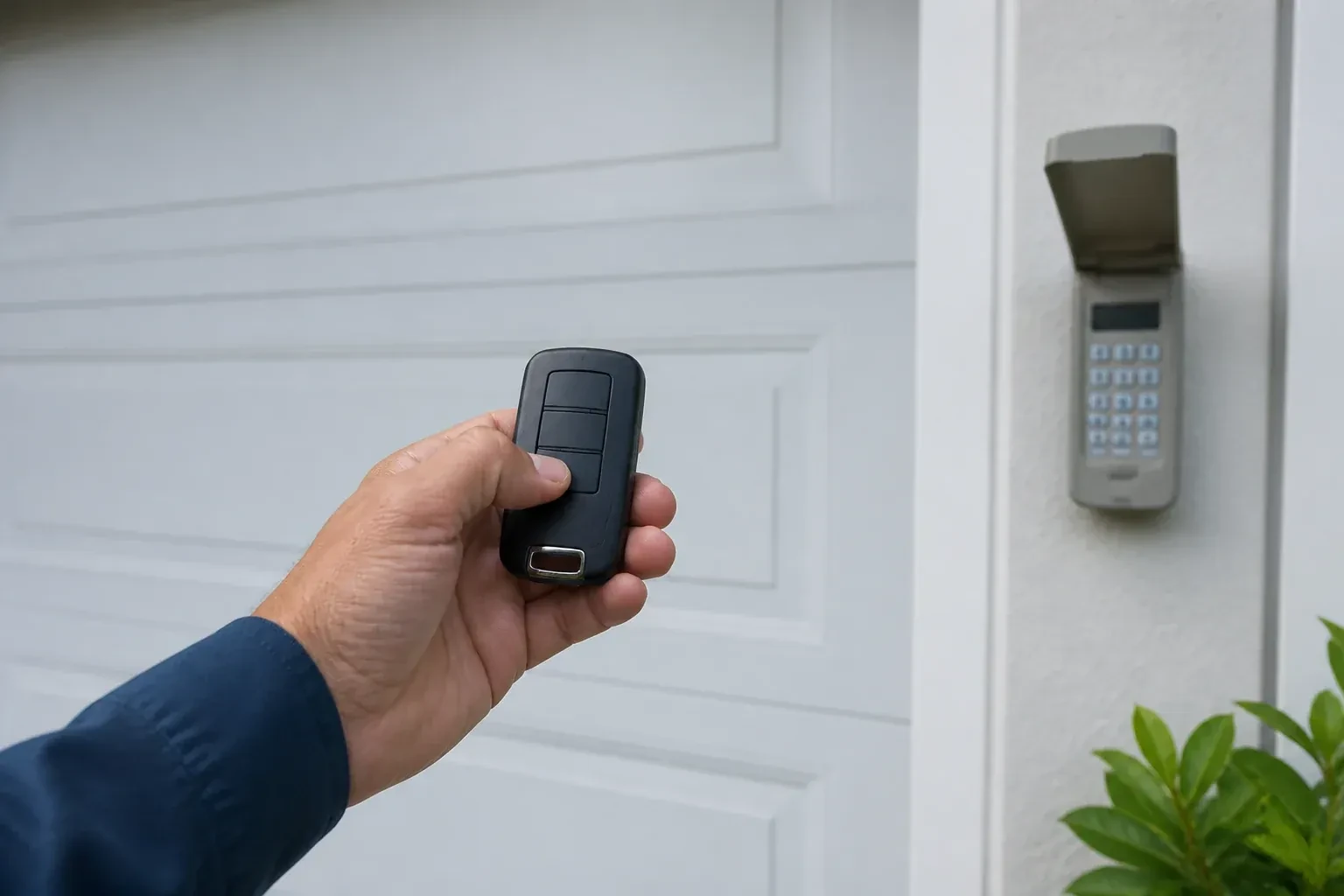
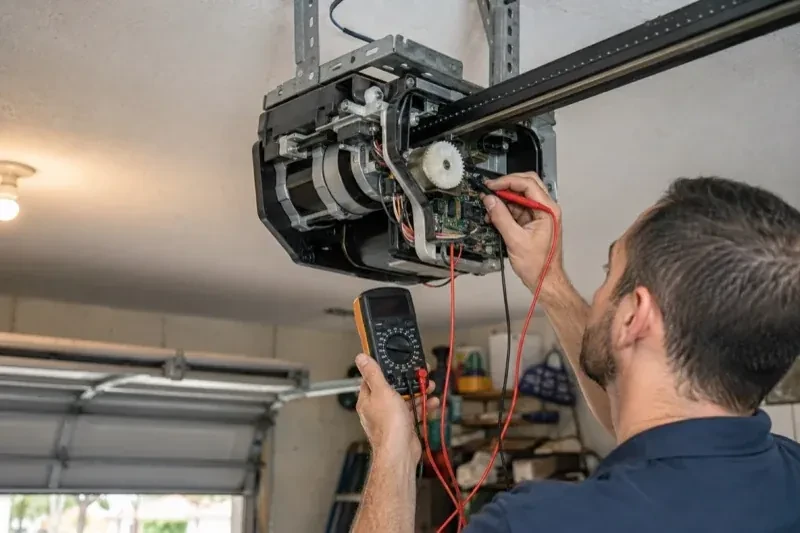
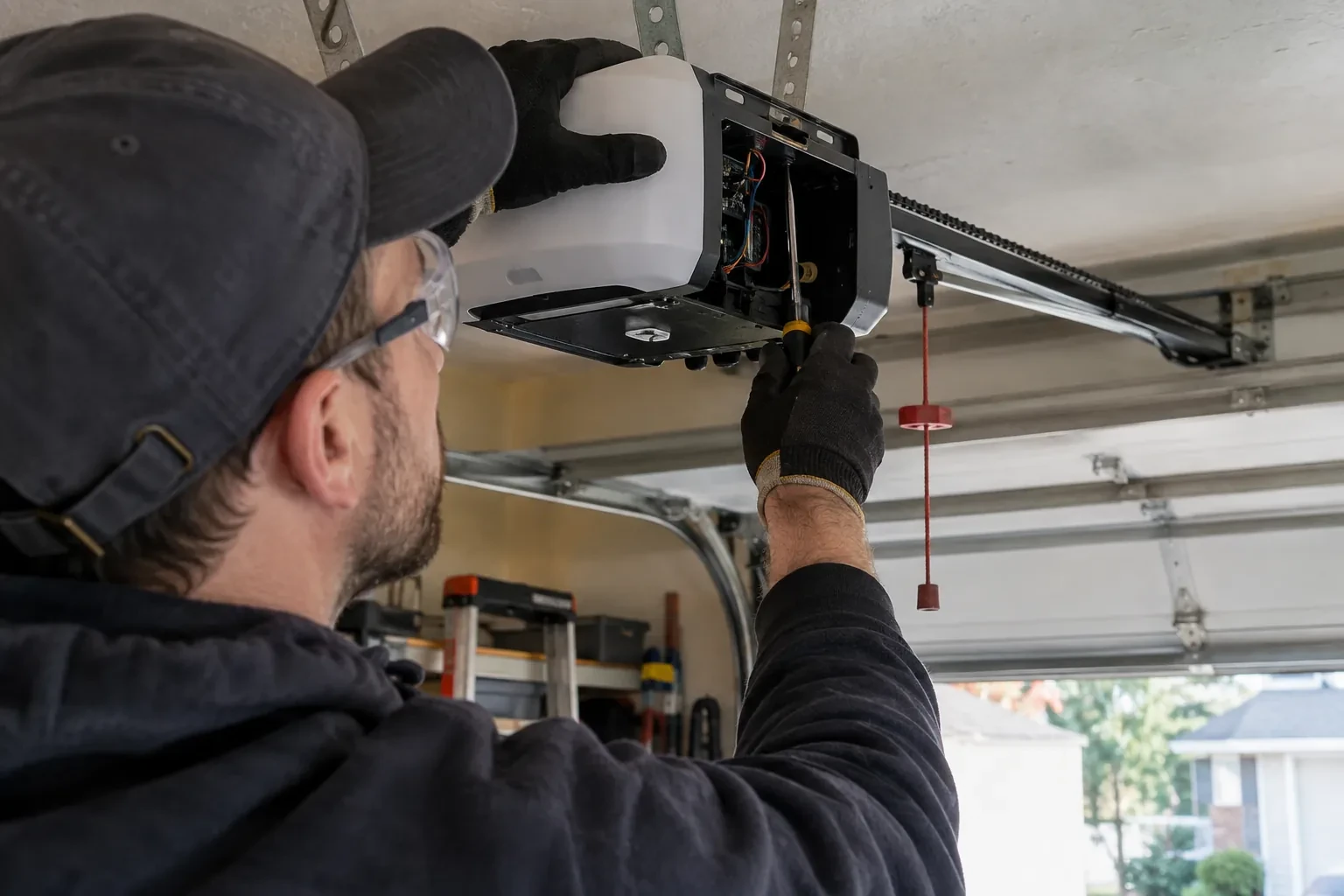
Garage door openers, remotes and keypads are as much a part of our work in Meadowvale West as springs and cables. A door that lifts by hand but ignores the button gets a calm, methodical check: power, board, travel limits, force settings, sensors and the remote itself. New openers are set up completely, including every remote, before the technician leaves your driveway.
23years in business
24/7open every day
Real explanations. Every recommendation comes with the reason behind it, in words that make sense to someone who has never opened an opener.
Care in your space. We work around bikes, tools and vehicles carefully, protect what needs protecting, and leave the garage clean.
No pushing. You hear the choices once, clearly. Whether to go ahead, wait or take a different route is yours to decide.
Get in touch about your garage door in Meadowvale West.
Residential and commercial customers in Meadowvale West come to us for spring and cable replacement, off-track resets, opener diagnosis and replacement, remote and keypad programming, weatherstrip and seal work, balance adjustments, panel repair and new door installation. Each service is explained on its own page in plain language.
About 38% of homes in Mississauga were built in 1980 or earlier, according to the 2021 Census.
A neighbourhood with homes from several decades means a technician meets both generations of garage door in a single day: extension-spring wood doors next to steel sectionals on torsion hardware. The van carries parts for both so either kind of door is repaired on the first visit.
Single-detached houses make up about 37% of homes in Mississauga (2021 Census).
Apartment and condo buildings often have a single heavy door protecting the whole parking level, and when it stops, everyone is affected. We prioritise these calls, carry commercial operator parts, and set up a maintenance interval matched to the number of cycles the door sees each day.
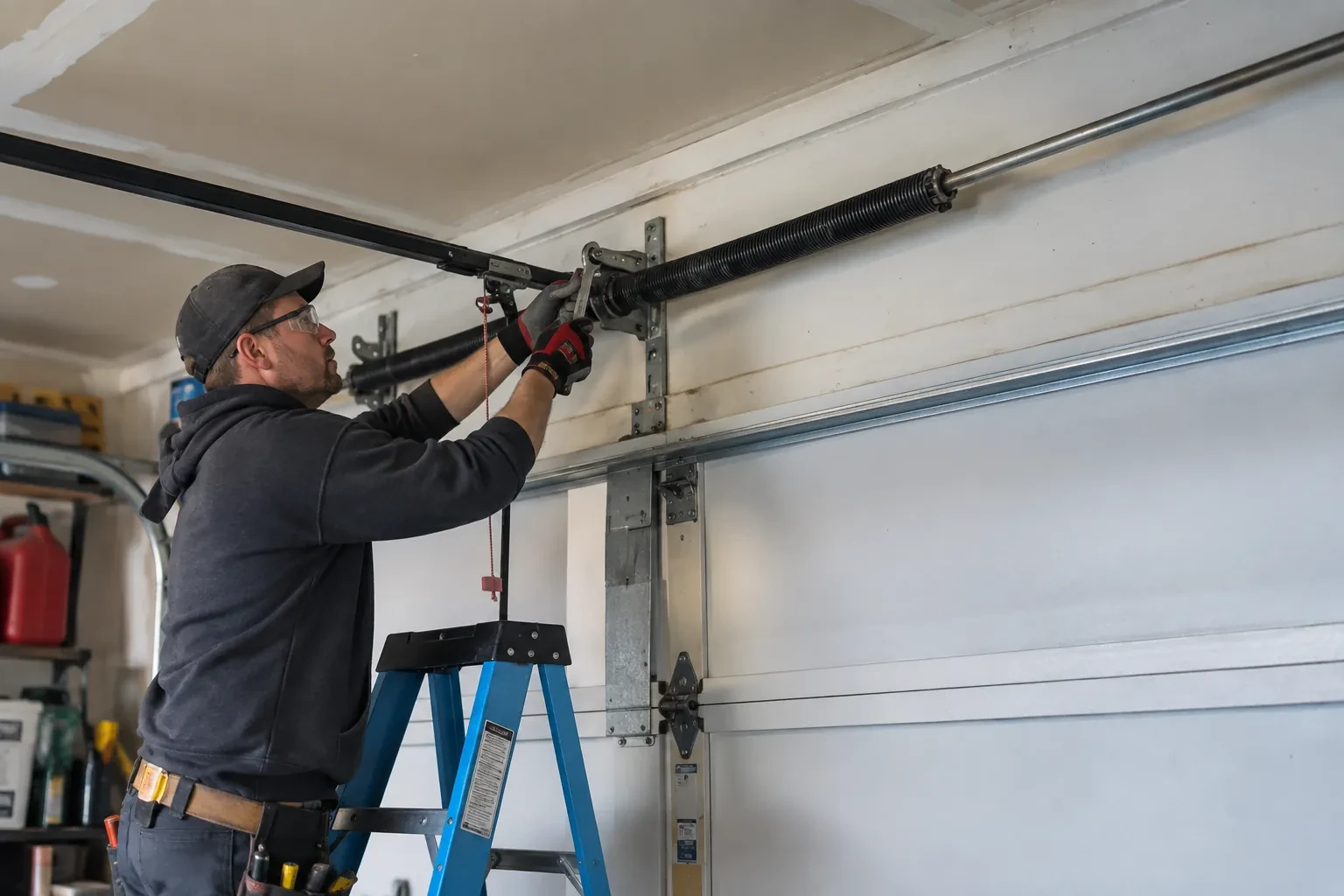
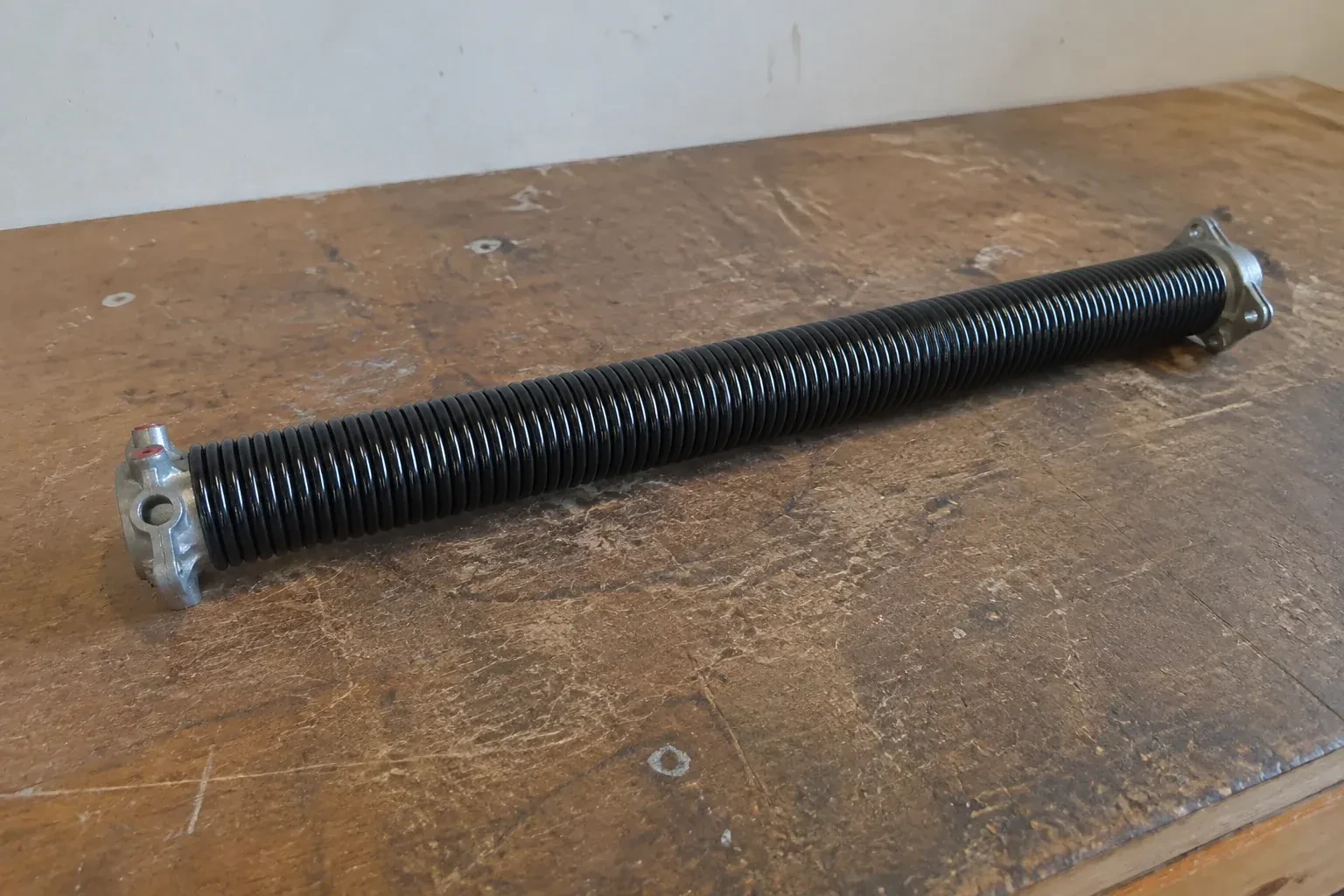
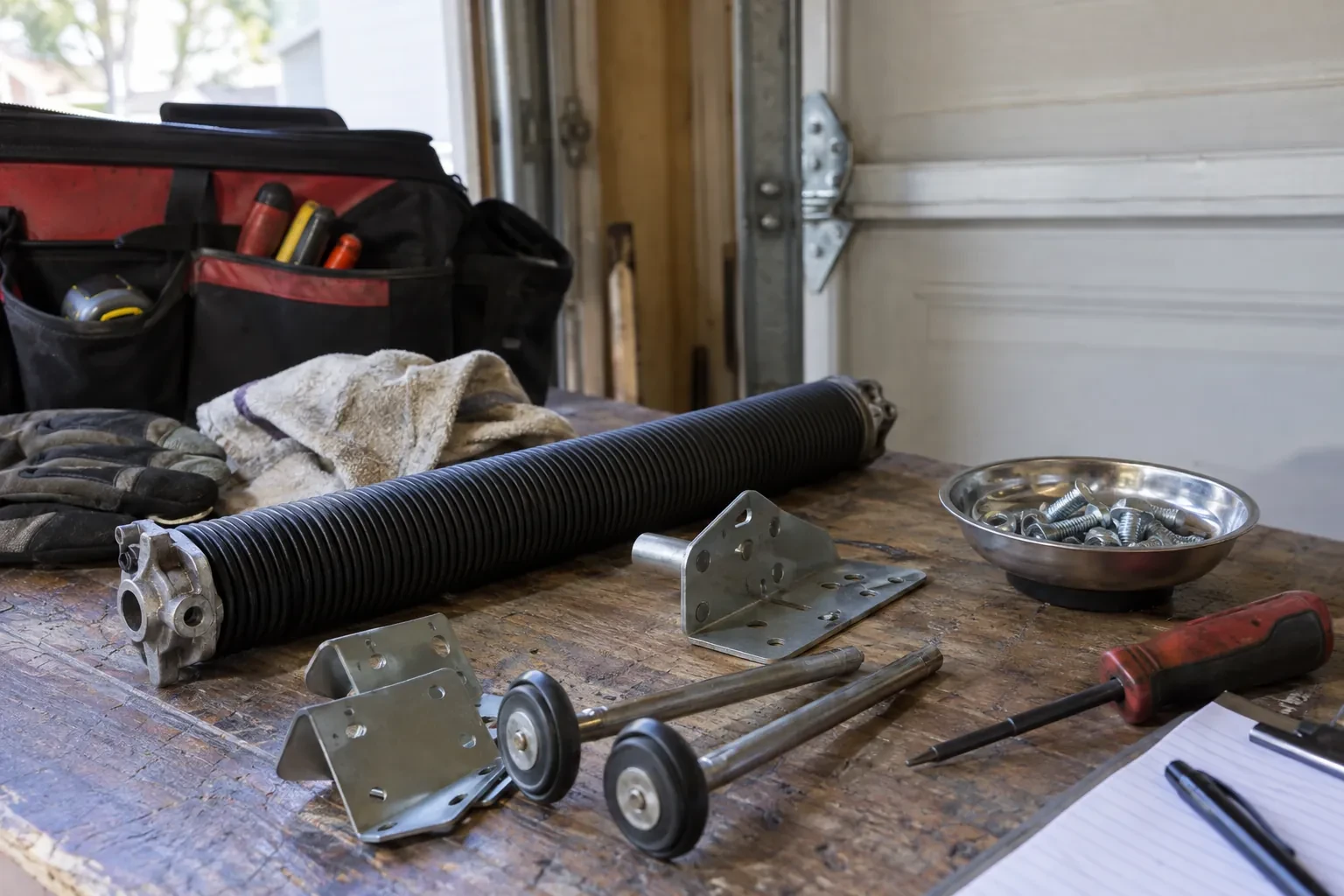
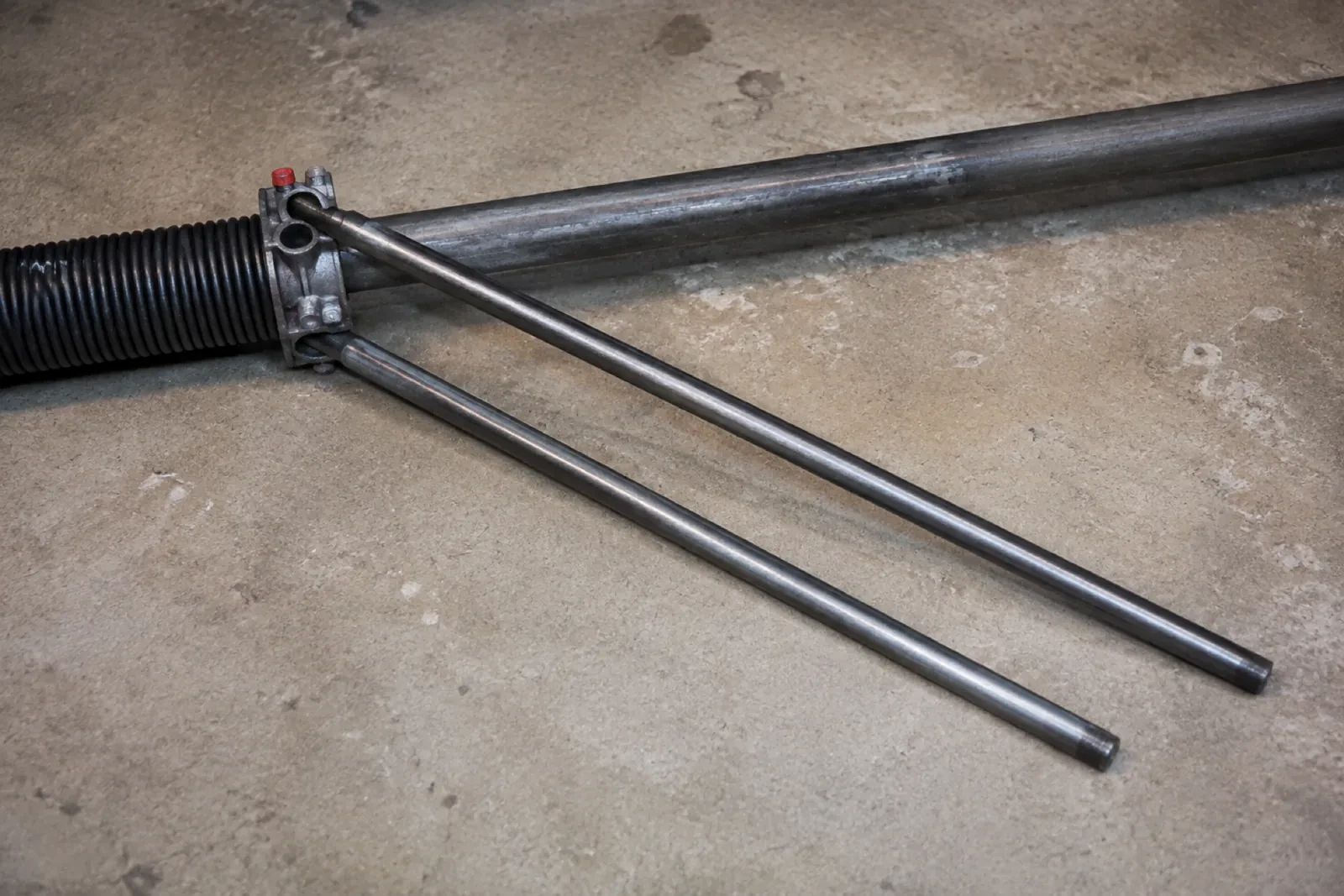
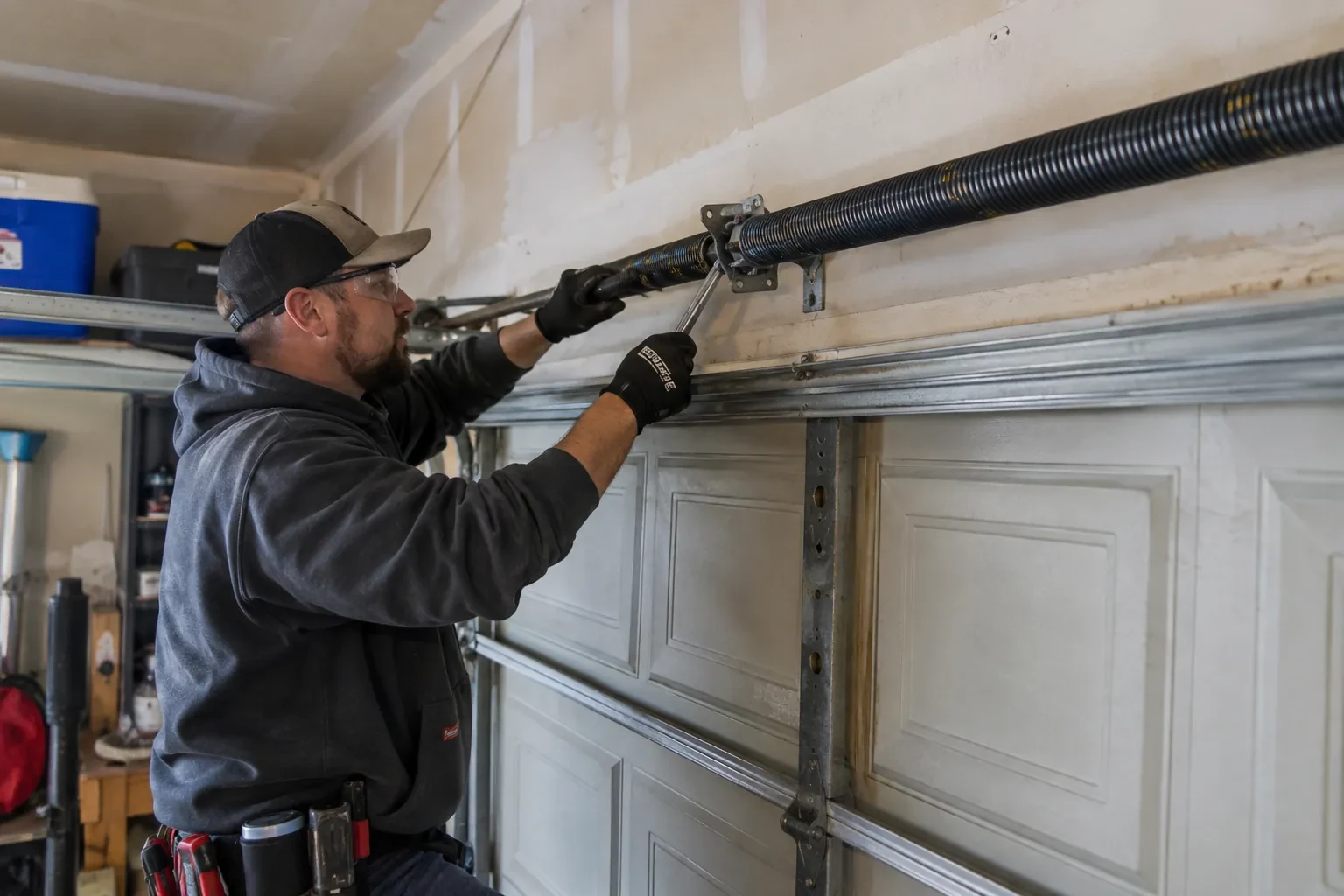
A loud bang from the garage with nobody in it is nearly always a spring letting go. The door will not open properly after that, and it should not be forced. These services get the lifting system rebuilt safely.
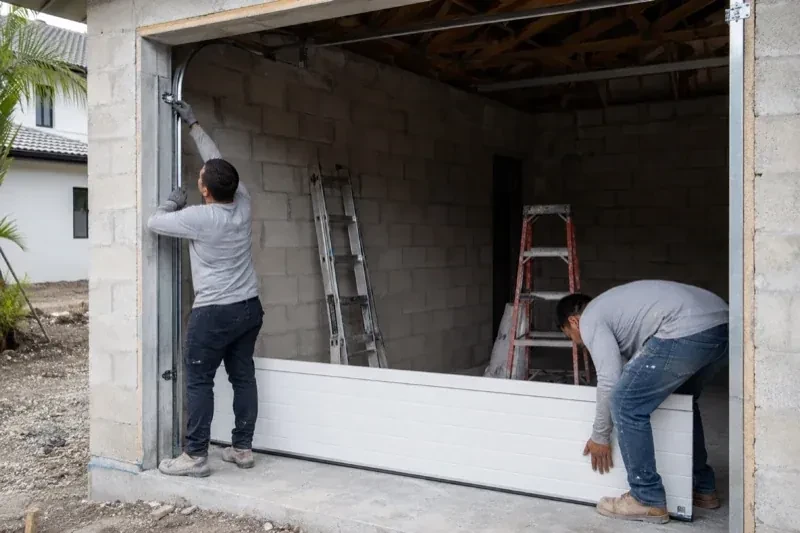
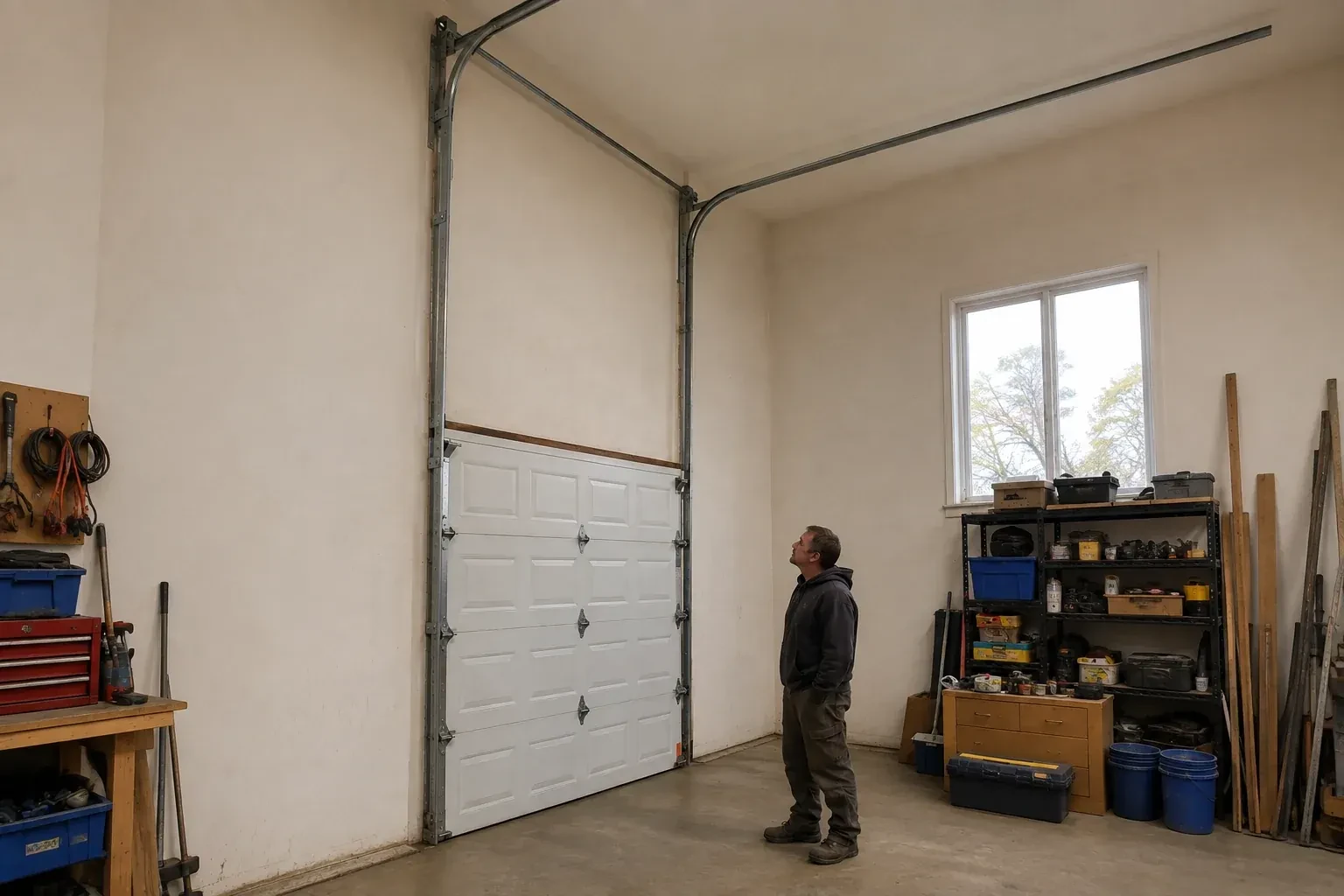
Not every upgrade means a whole new door. New insulated sections, a high-lifttrack conversion for a taller vehicle, exterior hardware for a carriage-house look or a quieter drive system can each change how a garage works.
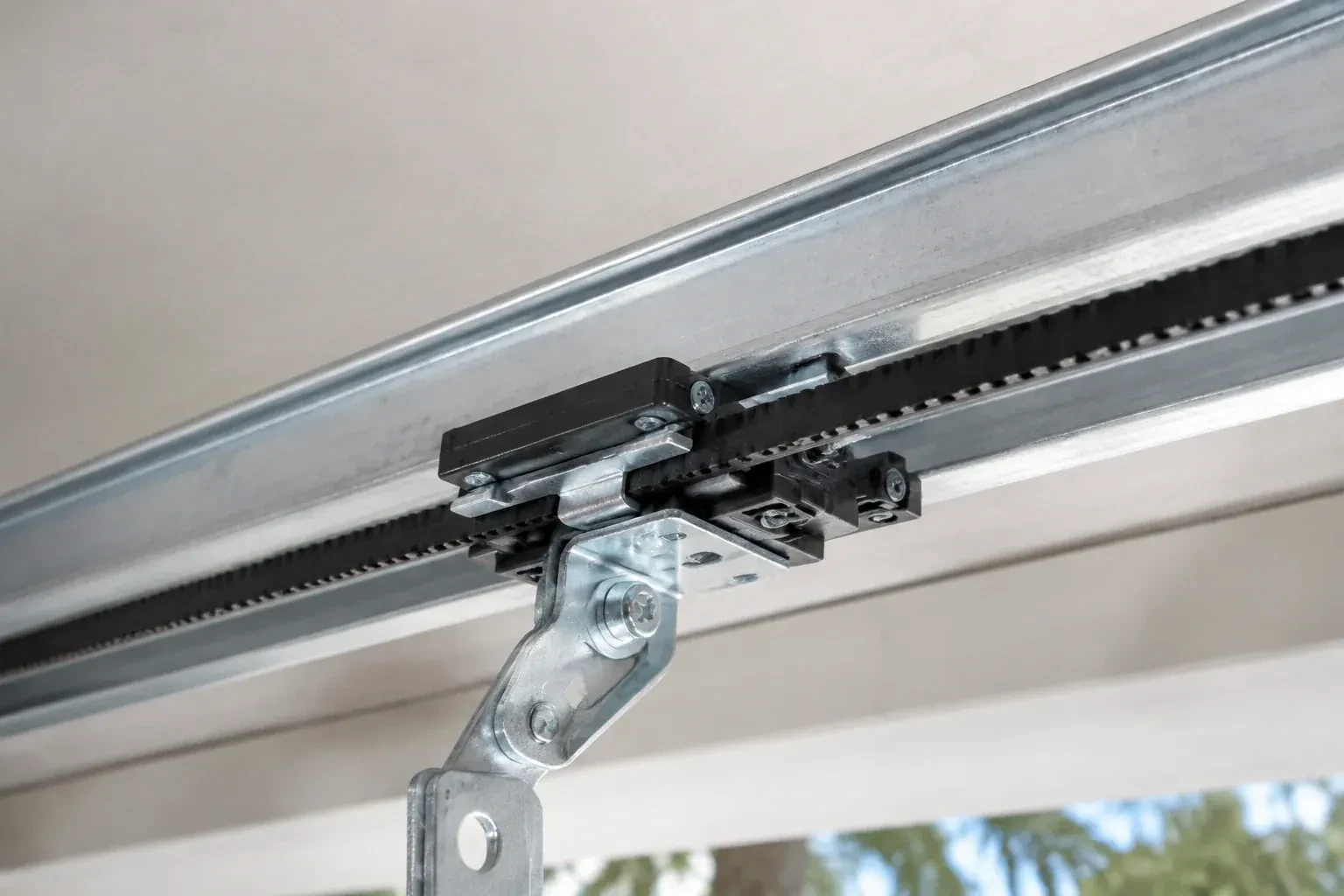
The motor runs, the chain rattles along the rail, and the door does not move a millimetre. You notice the little carriage sliding back and forth on its own.
The door closes, touches the floor, then climbs straight back up as if it hit something. Nothing is in the way, the sensor lights are steady, and it has been doing this since the weather turned.
After the power came back you pulled the red cord to get the car out. Since reconnecting, the door stops short of the floor, and no amount of turning the limit adjustment brings it the rest of the way down.
The remotes only work from the end of the driveway now, and one of them disappeared with a set of keys last month. Inside the remote are tiny switches instead of a learn button, so excluding the missing one means resetting the switch pattern on every remote and the receiver.
There are no sensors at the floor at all, or a previous owner has wired the pair together up beside the motor so the beam never crosses the doorway. A home inspector has just pointed it out.
The house came with a controller already screwed to the garage ceiling and a sensor on the door, but the app insists the device belongs to another account. The seller has moved provinces, the emails go unanswered, and every evening the door still reports to a stranger's phone.
It is the coldest morning of the year. A week of slush and road salt has crusted over the outside release lock, the key will not seat, and the opener inside is silent after the overnight outage.
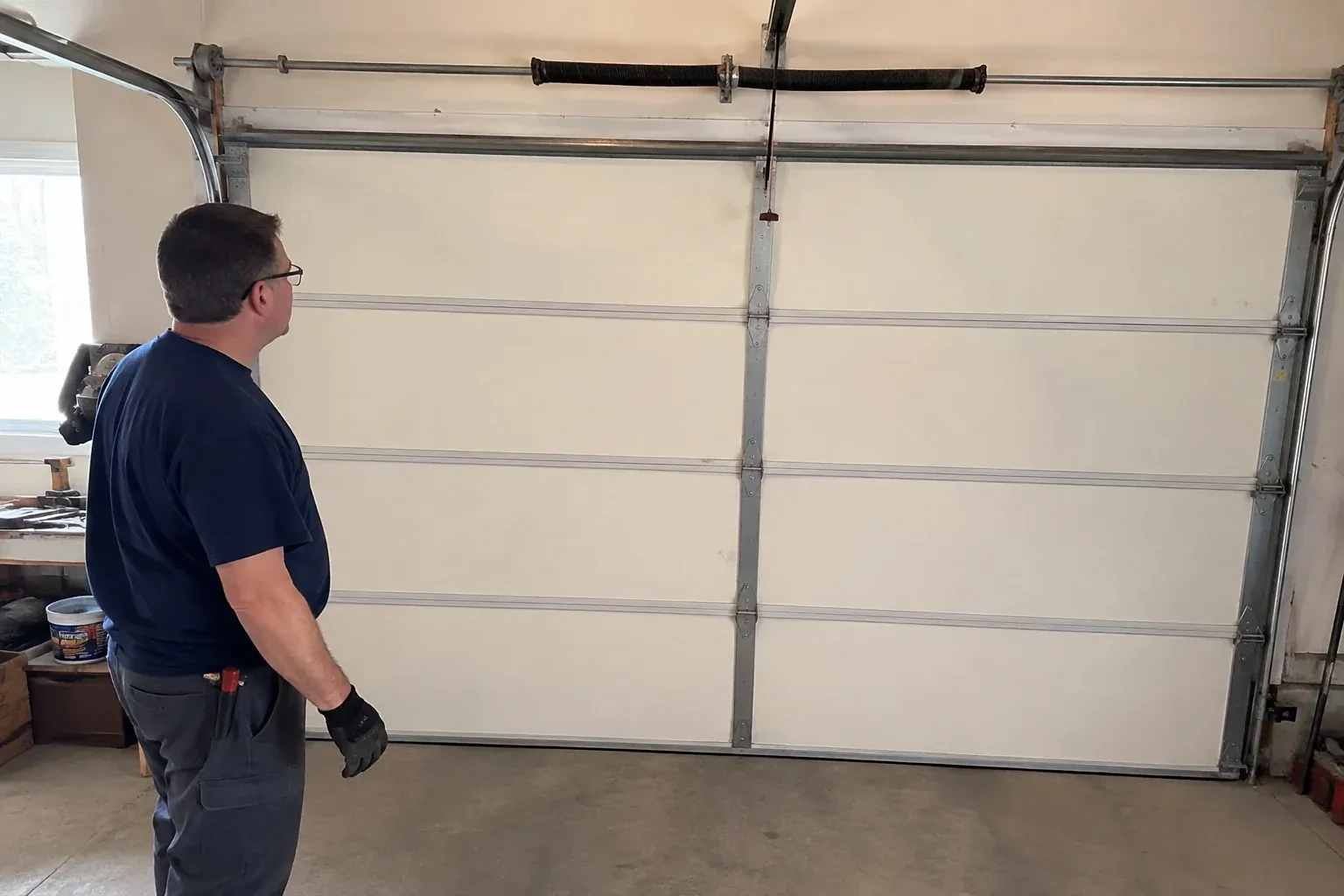
WhyEvery spring is built for a number of open-close cycles, and replacement is a natural moment to choose that number deliberately.
The belt looks fine from a distance, but up close the rubber has cracked across the back in dozens of places and, in one spot, you can see the steel cords showing through.
WhyOlder openers set their code with a row of tiny switches inside the remote and the receiver, and once those remotes stop being made the door seems stranded.
A planned exterior renovation has made the old door stand out for the wrong reasons.
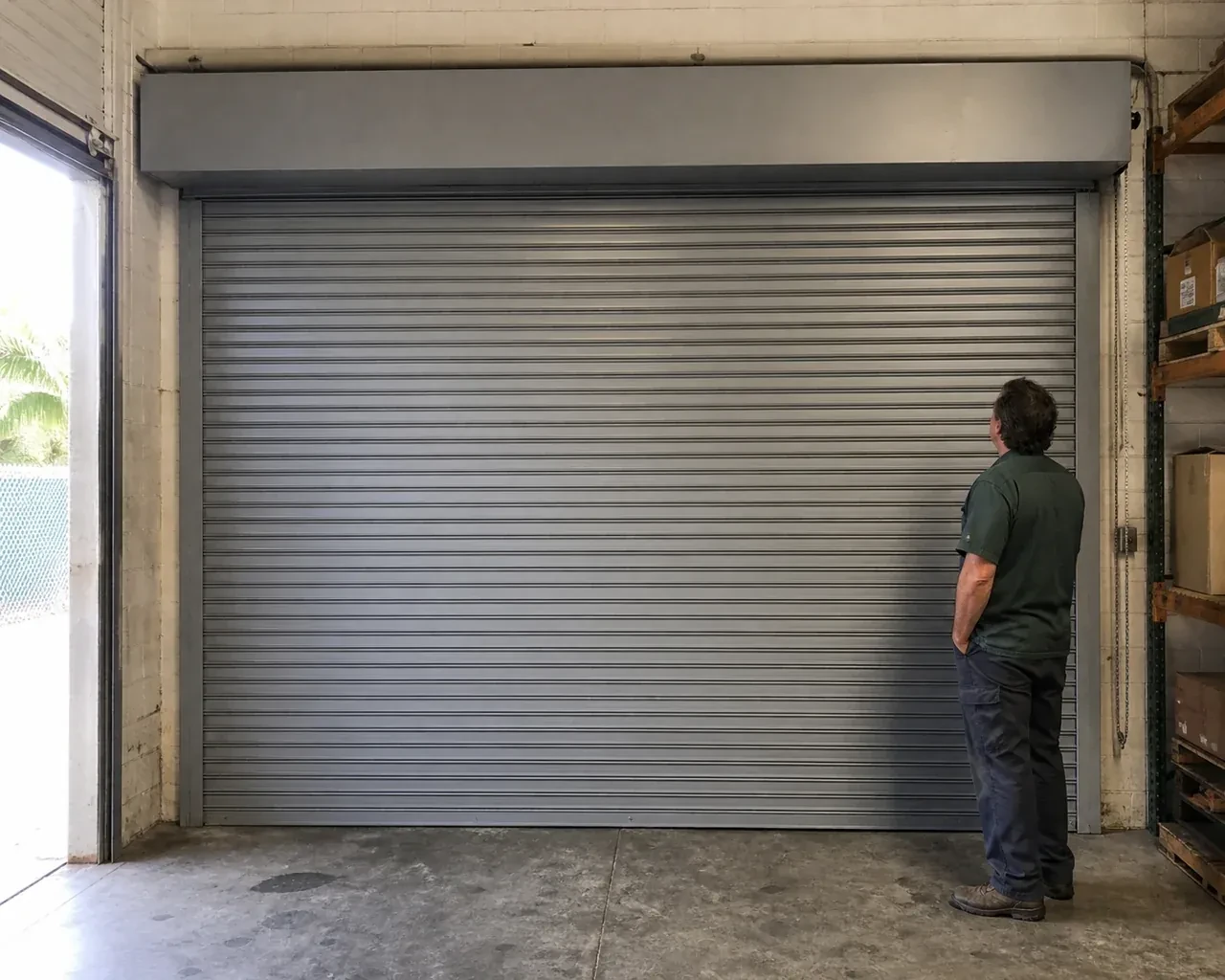
WhyExterior rolling doors work at the boundary between indoor operations and winter weather.
An entrance. Not an afterthought.
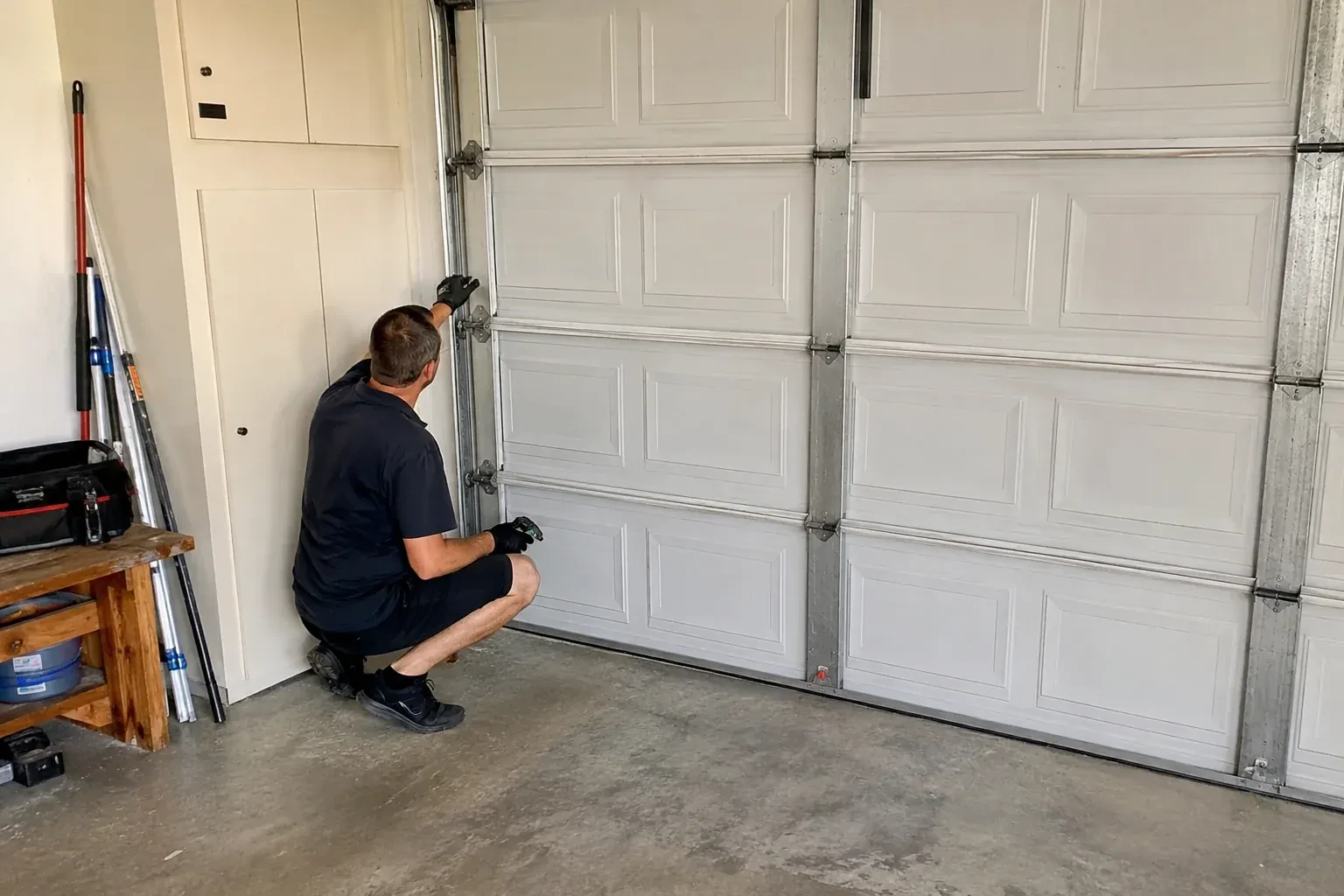
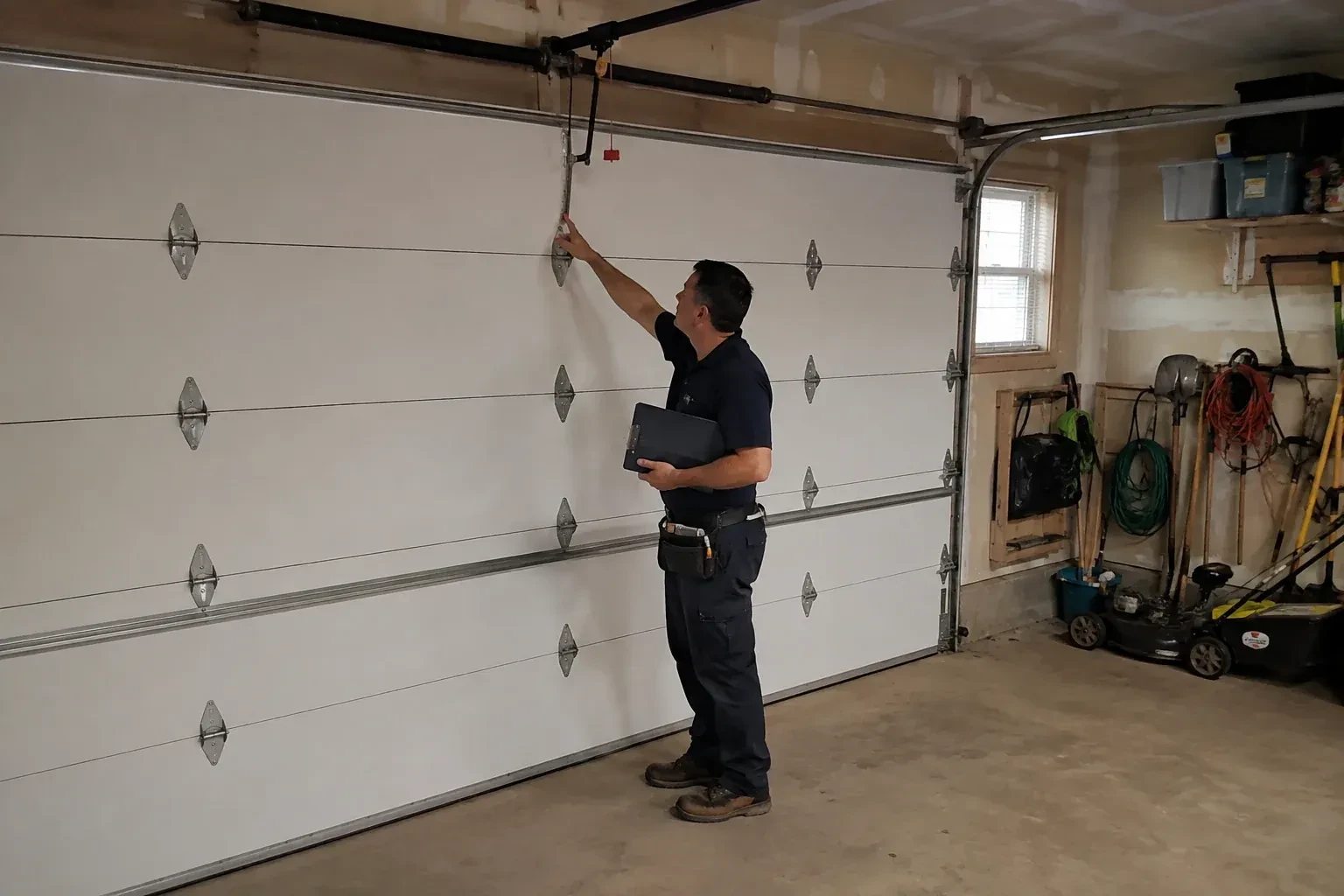
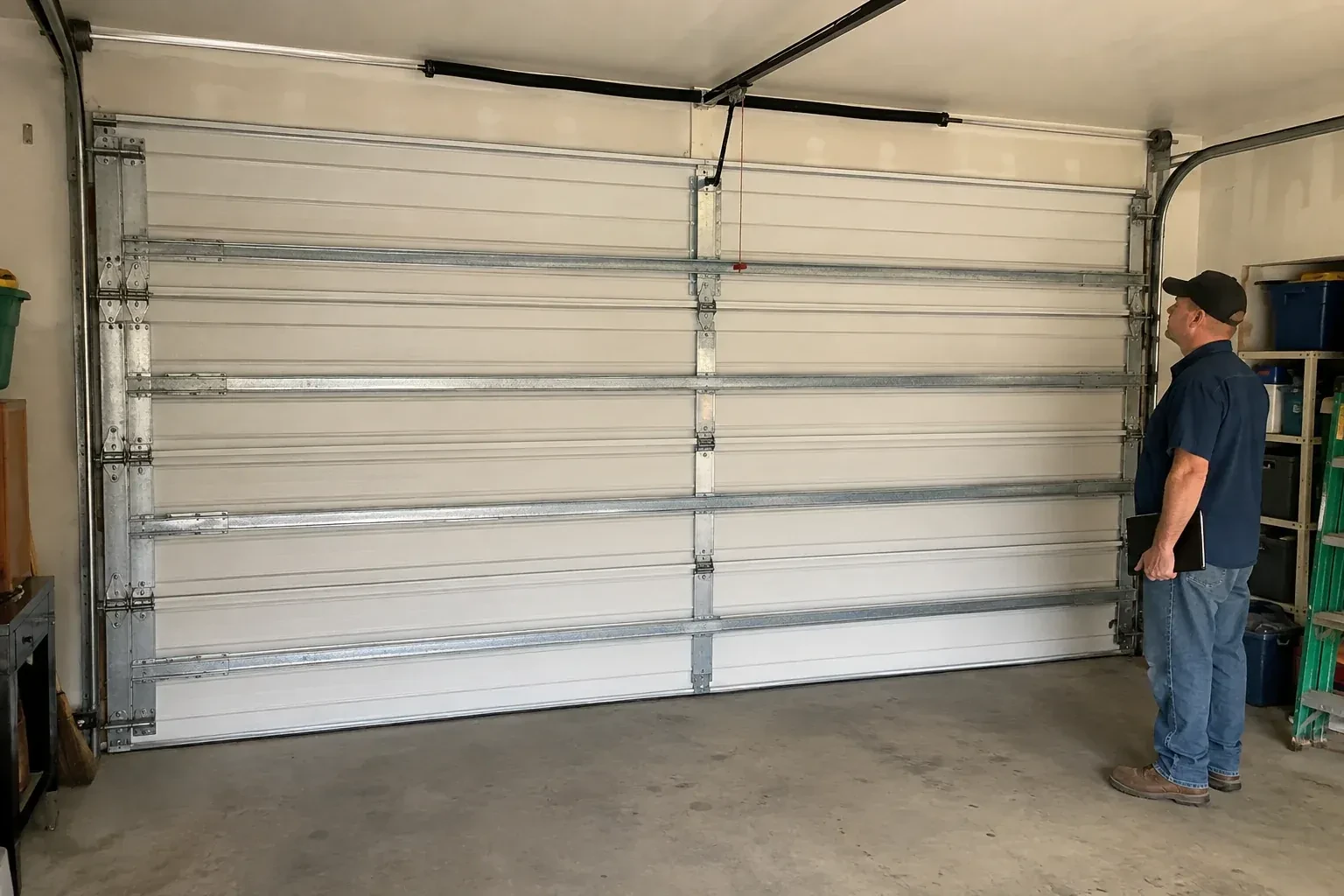
1/10Garage Door Safety Inspection
There is a new sound. Last week the door simply hummed up and down; now there is a bang at the top of travel and a scrape on the way back, and you have started standing well back while it moves.
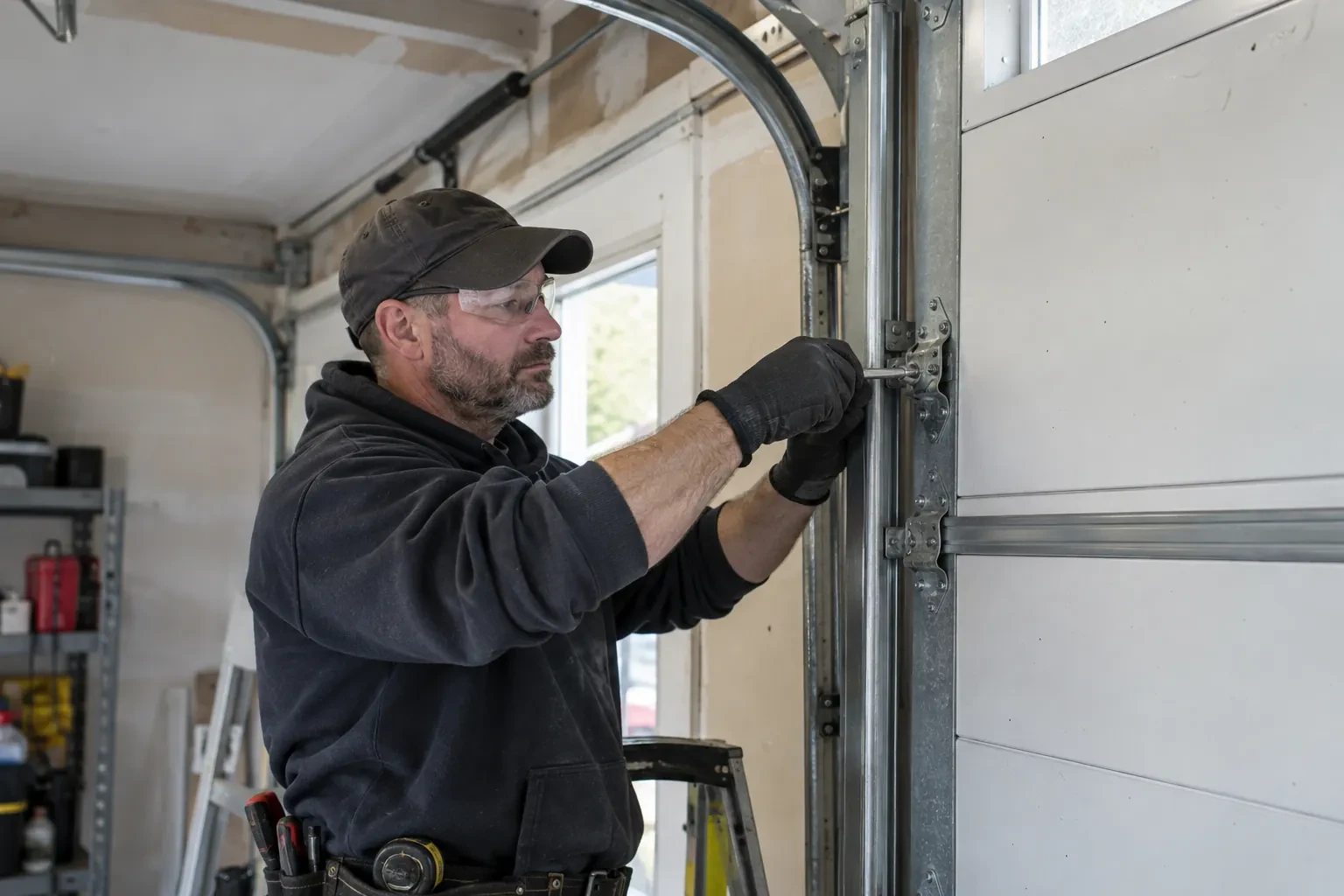
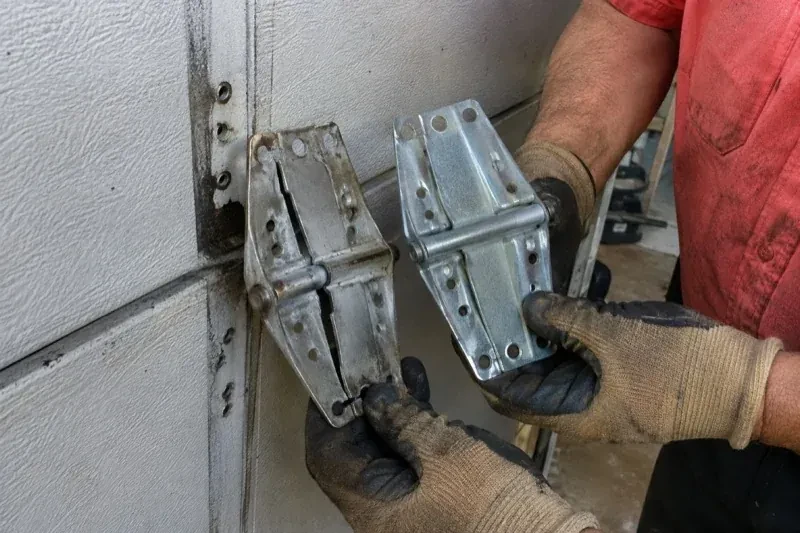
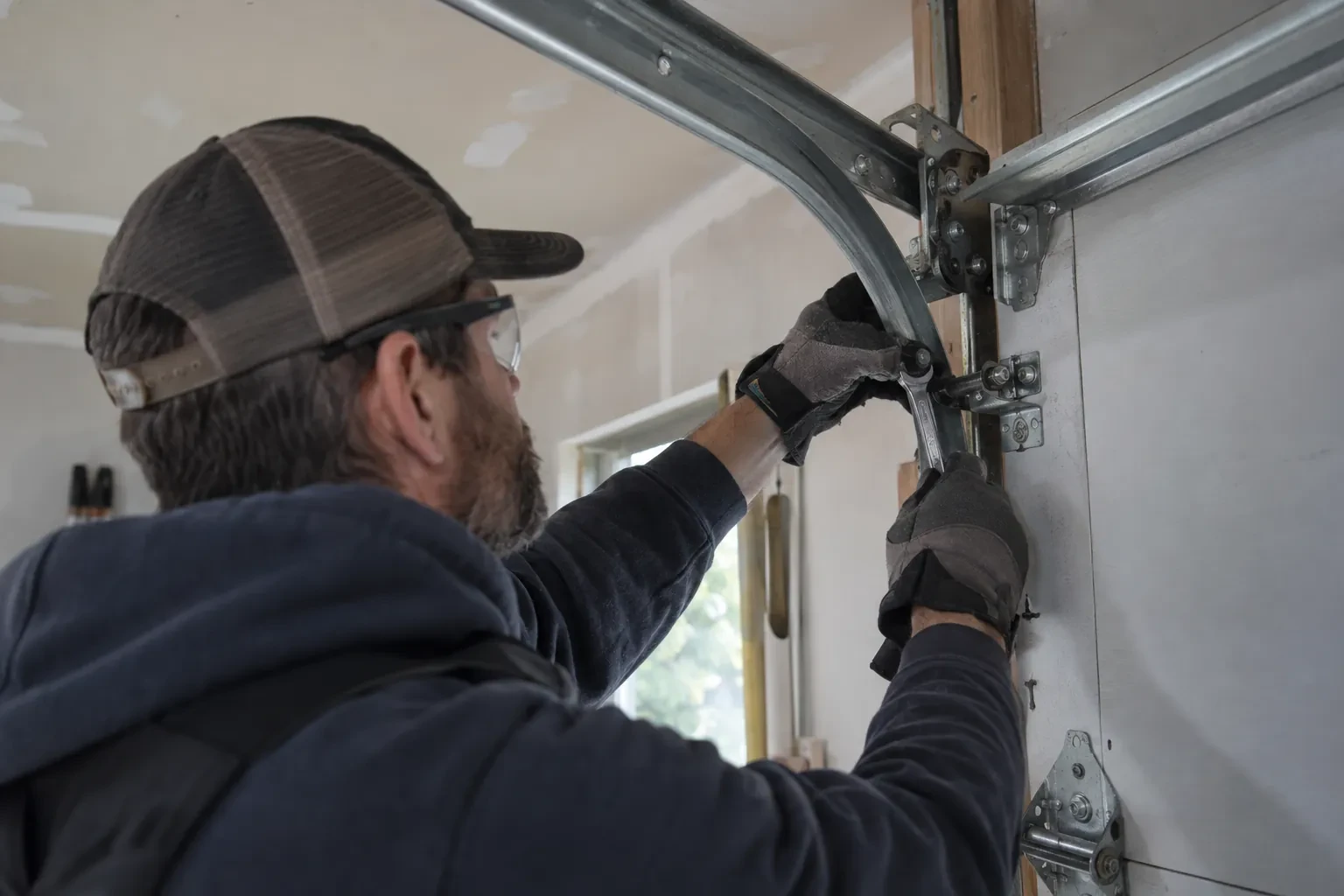
The car nudged the door on the way in. There is a dent low on one end, and above it the hinge that carries the roller is bent so the panel edges rub together and squeal as the door lifts.
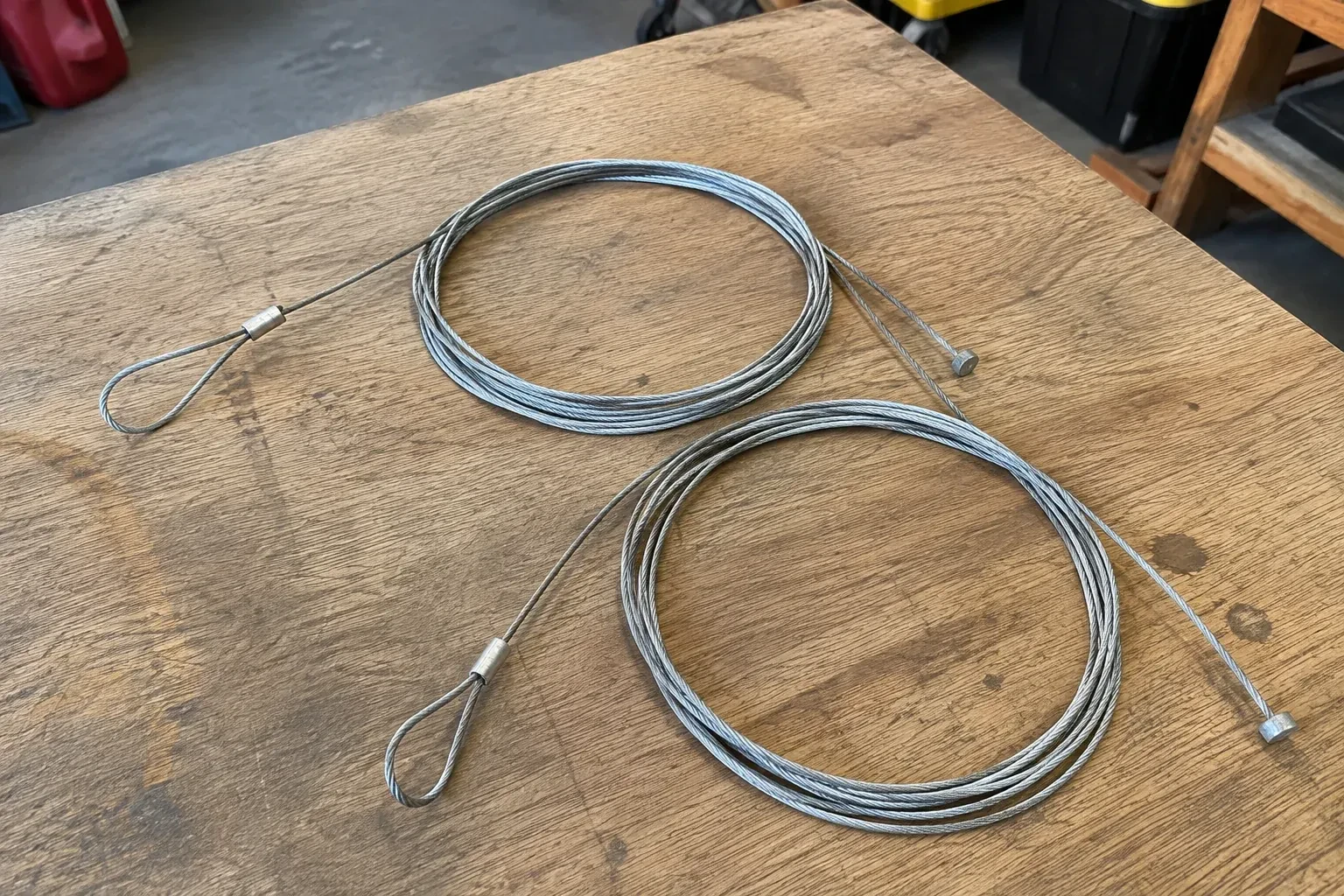
Your older door has springs along the tracks, and one cable has slipped off its pulley and dangles slack. The door lifts crooked and needs a shoulder to close, when it used to glide.
On a cold morning the remote does nothing useful: the light comes on, the motor turns briefly, the door stays shut. There may be a fresh crack in a rusty coil, and flakes of orange on the floor below the shaft.
The belt looks fine from a distance, but up close the rubber has cracked across the back in dozens of places and, in one spot, you can see the steel cords showing through.
The remote opens the door only when you are almost underneath it. From the end of the driveway you press five or six times and nothing happens. It started around the time the bulbs in the opener were changed to LEDs.
A planned exterior renovation has made the old door stand out for the wrong reasons. Its colour, window pattern and panel style no longer suit the house, even though the opening itself remains useful.
Several sections are dented and the bottom edge has begun to rust. Instead of matching another isolated panel, you are ready to choose a complete insulated steel door with new coordinated hardware.
This garage will be heated and used beyond parking, so the opening needs more than a basic closure. Insulated sections, perimeter seals and careful contact at the finished floor matter from the first installation.
The wall control asks the door to close, but the operator hums and stops. The curtain remains overhead while the control light and the photoelectric sensors suggest that the powered system needs a connected diagnosis.
Is the inspection different for an older detached garage with springs along the tracks?
The route is the same and the counterbalance looks different. Extension springs stretch beside the horizontal tracks and pull through pulleys, so the technician examines each spring for stretch and a broken end, each pulley for a grooved wheel or a seized bearing, the cable clips, and whether a containment cable runs through the centre of each spring. Balance, reversal and photo-eye tests are unchanged.
What are the hinges made of?
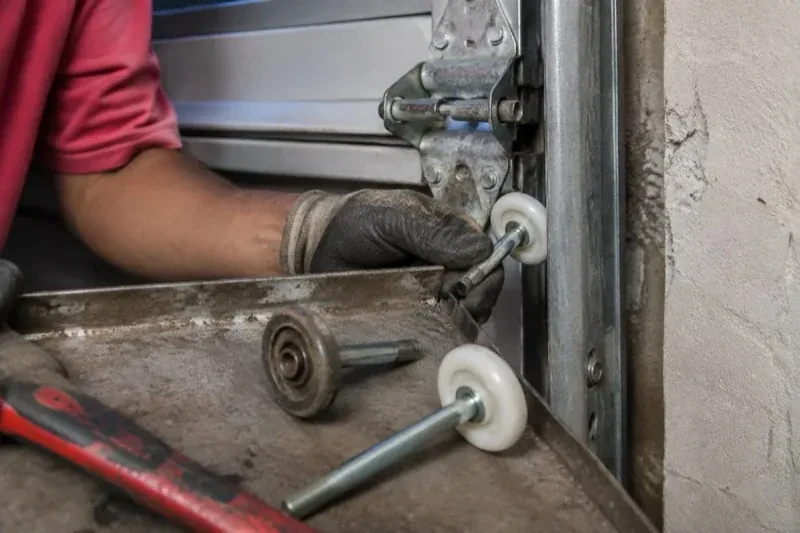
Stamped galvanized steel, formed into two leaves joined by a pin or a rolled tube. The zinc coating is what resists rust in a garage that sees wet cars and salt, and it is why a scratched or bent hinge starts to brown at the damaged spot. Edge hinges include a tube that holds the roller stem. Thickness is given as a gauge, most residential hinges being 14 or 18.
Why is the door sitting crooked in the opening?
Each corner of the door is held by its own cable. When one cable stretches, slips its drum or breaks, that corner loses its lift and drops while the other stays up, so the door tips and usually wedges against the track. Setting both cables to the same length and tension is part of every cable replacement, and it is what brings the door back level.
Do I need to be home for the visit?
It helps to have someone present to open the garage, point out anything you noticed and hear how the door should feel afterwards. The technician needs power at the opener outlet, clear space under the shaft for a ladder, and access to both sides of the door. If a vehicle is inside, it stays until the door is working. Being there also lets you approve any extra items, such as bearings or cables, as they come up.
How often should belt tension be checked?
A look every few months is enough: with the door closed and again with it open, the belt should run level with no sag below the rail. A yearly service that checks tension against the spring length, looks at the sprocket and pulley and runs the balance and reversal tests keeps a belt drive quiet for its whole life. Check again after the first hard cold of the winter.
What is rolling code and why does it matter for programming?
Most openers made from the mid-1990s on change their code every time a remote is pressed, choosing from billions of possibilities, so a copied code is usually useless next time; the technician confirms the actual system from the model, not age. Programming matters because the opener has to learn each remote's sequence at the learn button; a remote cannot simply be set to match. Older fixed-code openers, set by small switches, can be upgraded with an add-on rolling-code receiver.
What happens to my current opener?
Its condition, intended capacity, rail position and connection geometry are reviewed against the proposed door. If it is suitable and included in the scope, it can be reconnected after the new door passes manual travel and balance checks. Limits, photo eyes, reversal response and emergency release are then tested for the completed system.
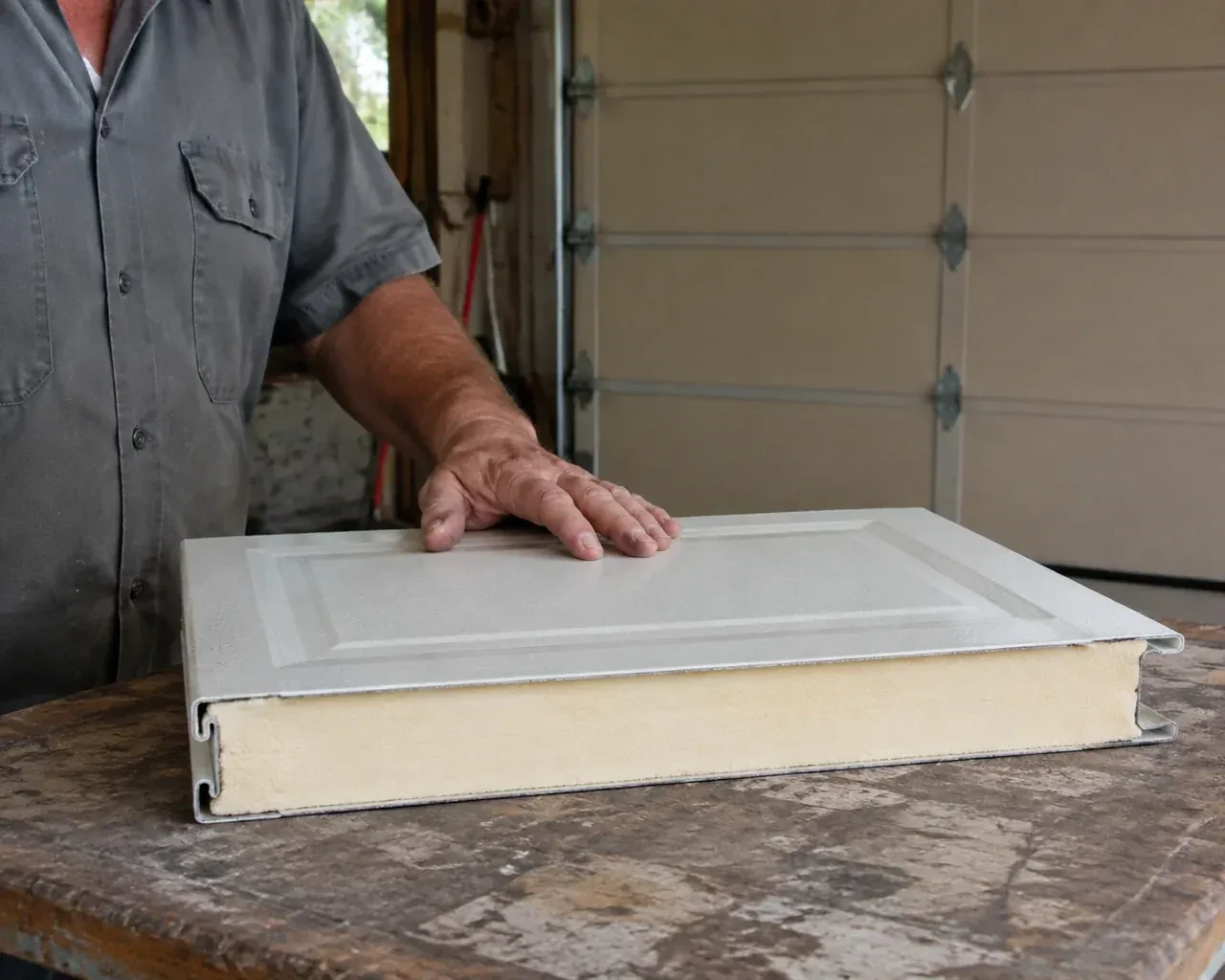
What makes a steel garage door insulated?
Insulated steel sections contain a core material between or behind steel skins, depending on the product construction. The core reduces heat flow through each section and often adds rigidity. Section joints, glazing and perimeter seals also influence how the complete opening performs, so compare published information for the exact assembled door rather than judging by thickness or appearance alone.
Can the finished door still be operated manually?
Yes. A properly counterbalanced sectional door is checked by hand, whether or not an electric operator is added. With powered equipment, a manual release disconnects the operator so the designated handle can be used; the door is closed first, since an open or unbalanced door can move unexpectedly once released. Handover includes a demonstration of disconnection, movement and reconnection under the product instructions. The release path and lifting area should remain accessible rather than being blocked by storage.
What makes a rolling door different from a sectional overhead door?
A rolling door uses interlocking slats or a flexible sheet that coils around a barrel above the opening. A sectional door uses hinged panels that travel along horizontal or vertical tracks. Their guides, counterbalance arrangements, clearances and repair parts differ, so identifying the construction before service is an important first step.
Request a visit
Our commercial customers in Meadowvale West run shops, warehouses and service bays that depend on their doors. We set up maintenance visits at intervals that suit the door's cycle count, keep records of the springs and operators on each door, and turn up with the right parts so downtime stays short.