Openers · Meadowvale West
Garage Door Remote and Keypad Programming in Meadowvale West
The outdoor keypad worked all summer.
In plain words
Older openers set their code with a row of tiny switches inside the remote and the receiver, and once those remotes stop being made the door seems stranded. It is not. An add-on receiver wires to the same two terminals as the wall button and plugs into the ceiling outlet, giving the old motor a modern rolling-code radio along with new remotes and a keypad. The door mechanics stay as they are, provided the opener already has photo eyes near the floor. Where it has none, the conversation turns to a new opener, and the reasons are explained plainly.
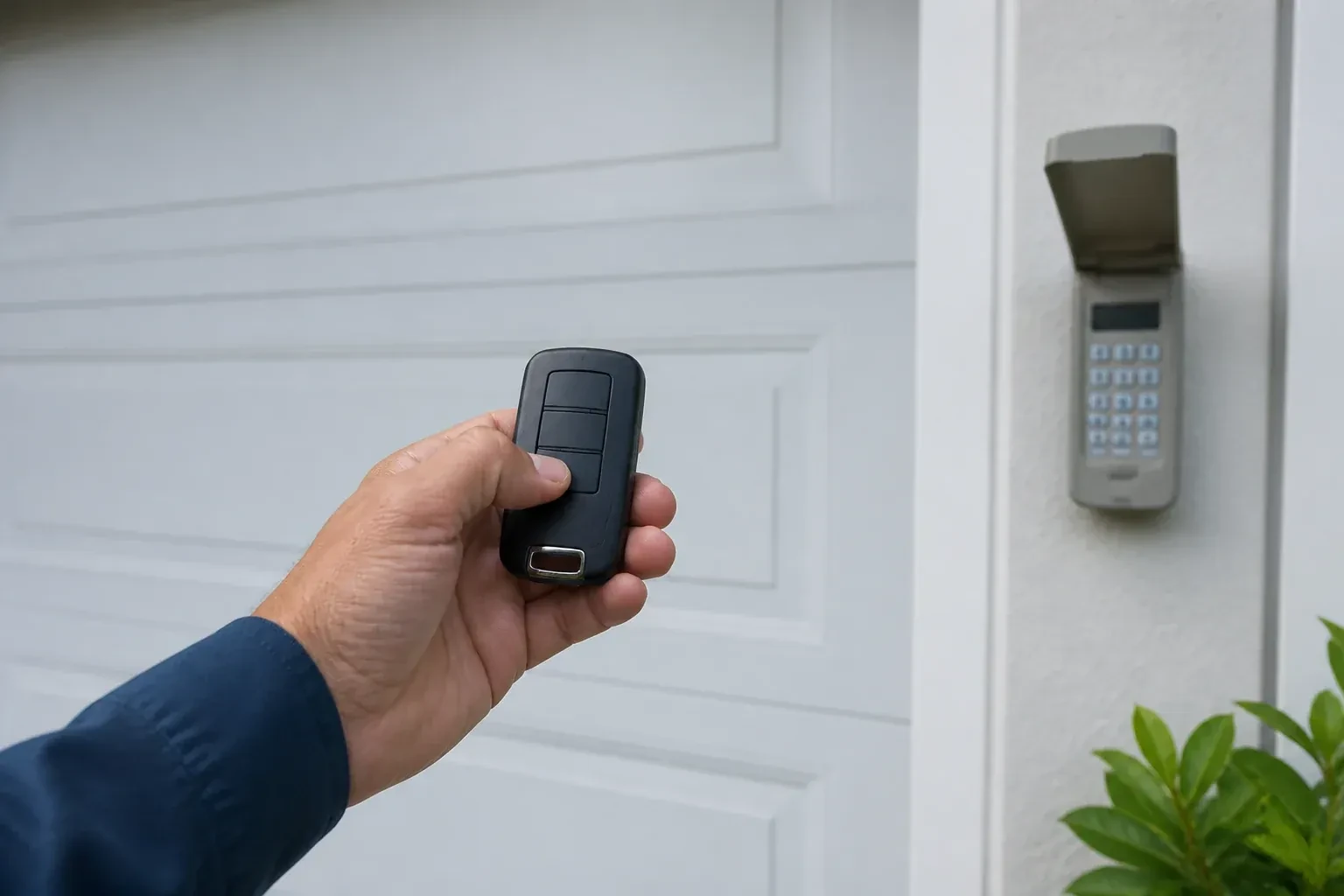
How the visit goesThe remote opens the door only when you are almost underneath it. From the end of the driveway you press five or six times and nothing happens. It started around the time the bulbs in the opener were changed to LEDs.
Garage Door Remote and Keypad Programming
How the visit goes
Range, bulbs and the antenna
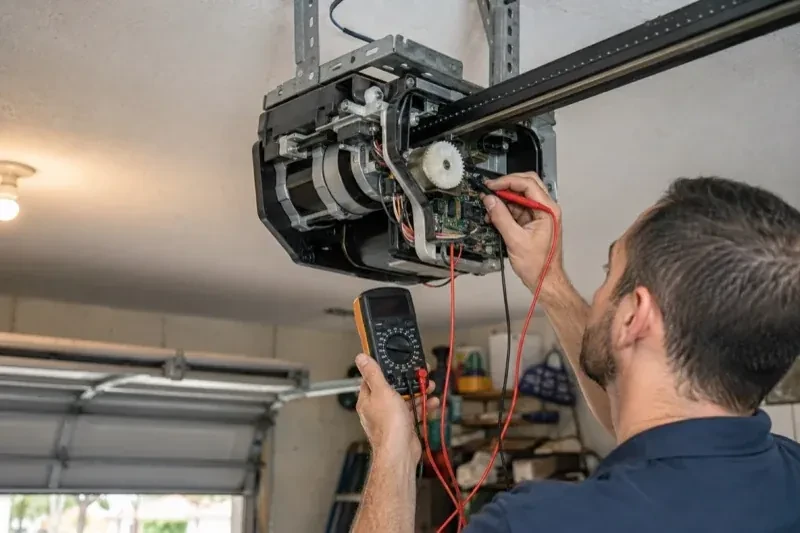
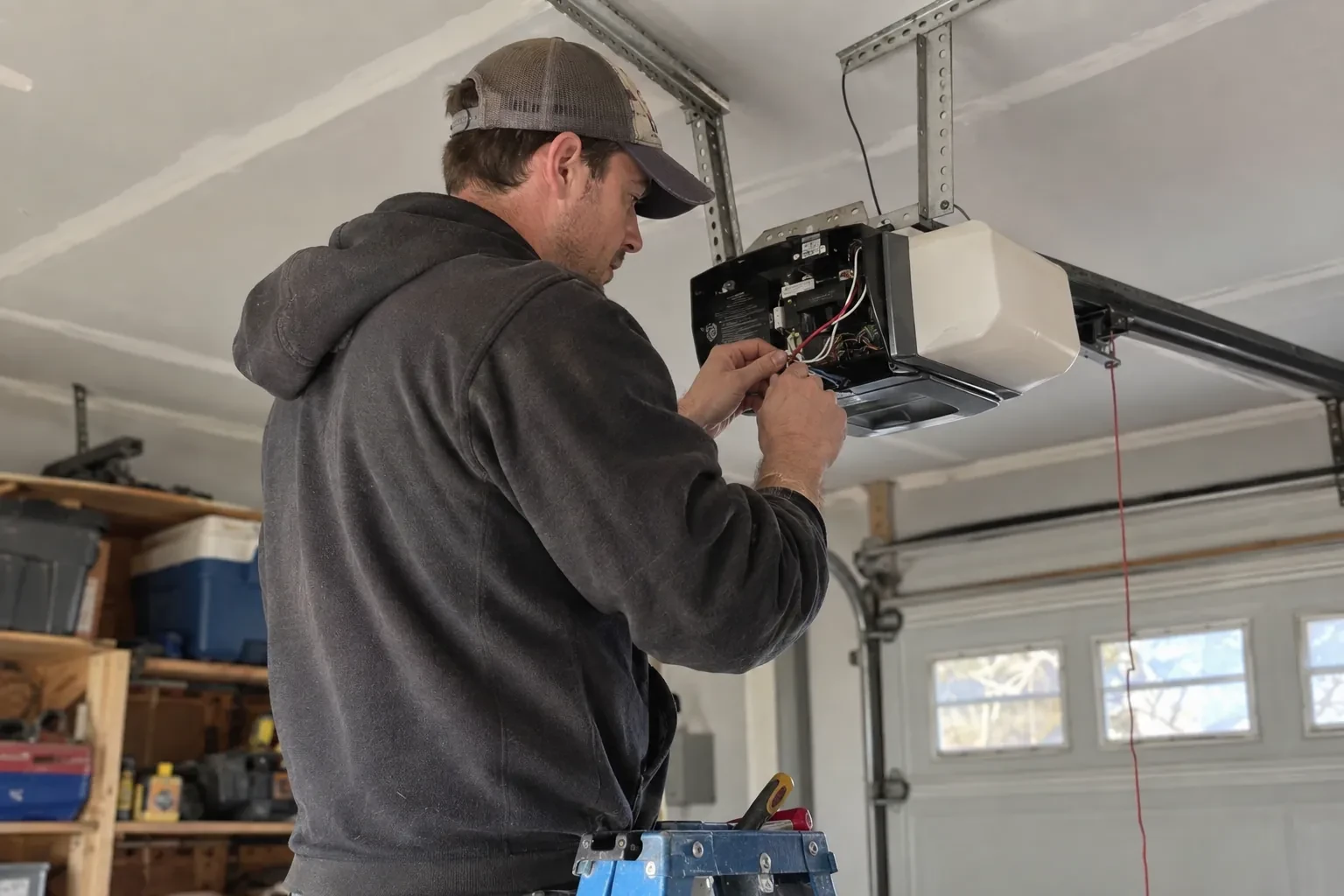
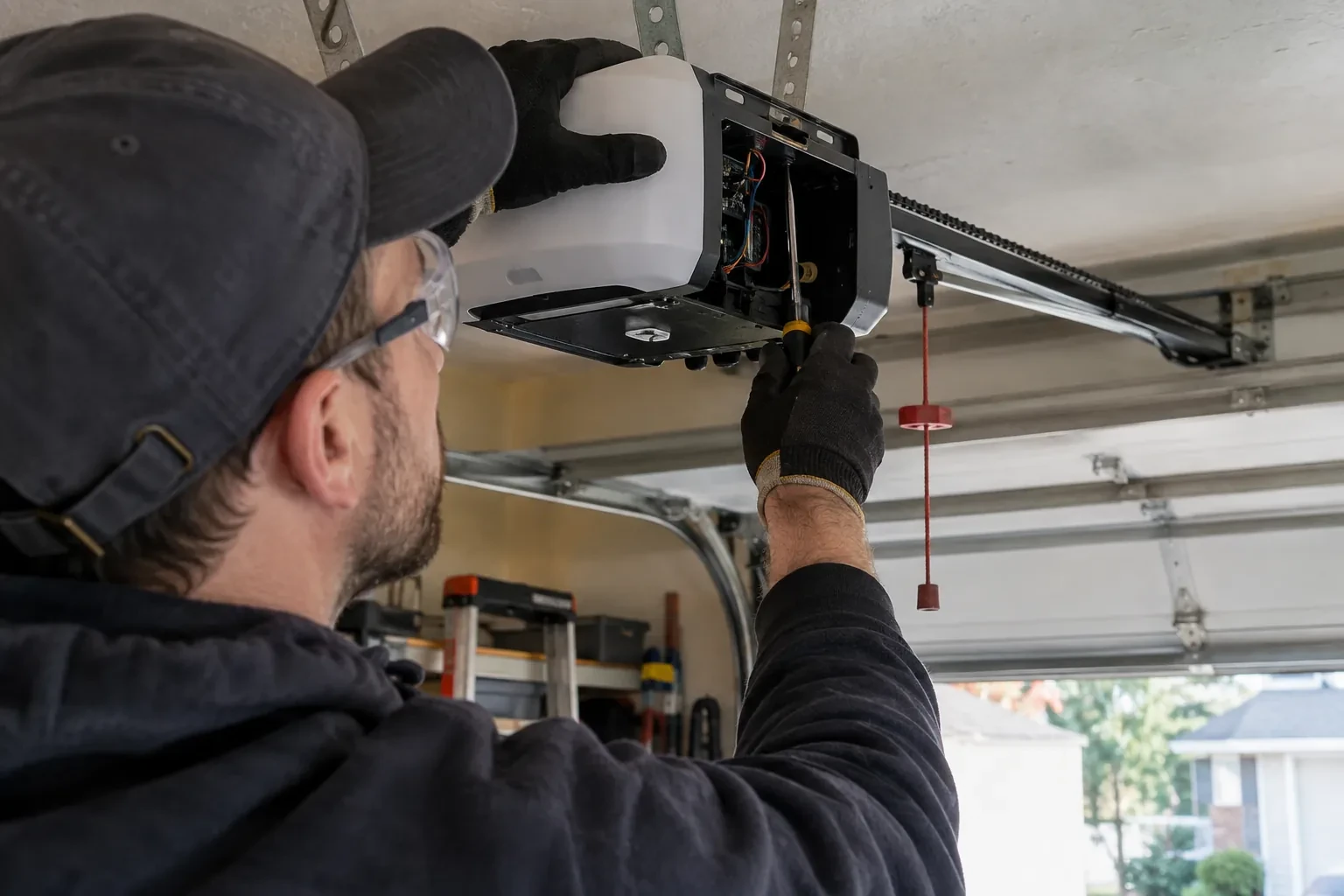
When remotes work only from directly beneath the opener, the technician checks the radio environment. LED bulbs, especially ones screwed into the head unit's own sockets, can emit noise that swamps the receiver, and swapping in a different bulb often restores range on the spot. The antenna wire should hang straight down from the head unit, not be coiled up or tucked behind the cover. Nearby electronics, a new metal shelving unit or a car parked with its own transmitter can also matter. A range test with a fresh remote at set distances puts numbers on the problem before any part is blamed.
Training the buttons in the car
A vehicle's built-in garage button often learns in two stages on rolling-code openers. First the car learns the remote: with the handheld remote carrying a fresh cell held close to the mirror or console, the vehicle button and the remote button are pressed together until the indicator changes. Second, the opener learns the car: the technician presses the head unit's learn button and returns to the vehicle inside the window that follows to press the trained button until the door moves. Some vehicle systems follow a different sequence with no handheld remote, so the vehicle and opener instructions are checked first. Where an older in-car system cannot hear a newer opener, a small bridge module is added.
Every control tested in your hand
Before the technician leaves you operate each device yourself: the remote from each car, the keypad with your new code, the vehicle button from the driver's seat, the wall control. You see the door open fully and close to a gentle seal from each one. If a remote has two or three buttons, you know which door or gate each drives, and a small label says so. You also watch the reversal tests performed, so you know the door backs off an obstruction and stops for the sensor beam. Nothing is left as something to try later on your own.
Garage Door Remote and Keypad Programming
In the van
AAA and nine-volt keypad batteries
Universal multi-generation remote
Receiver transformer and two-conductor wire
Wireless outdoor keypad
In-vehicle compatibility bridge module
Garage Door Remote and Keypad Programming
What affects the quote
Distance to your door
Travel is part of the visit, and a house across town and a property well outside it involve different driving time.
Connected features
Linking or unlinking a phone app, or checking that a previous owner's account is removed, is quoted as its own step alongside the remotes and keypad.
Access to the head unit
A high ceiling, a storage loft or a car that cannot be moved from under the opener means extra ladder work to reach the learn button.
What to have ready
- How many cars need built-in buttons trained, and what model years are they?
- Are you adding a control, replacing a lost one, or starting fresh after a move?
- Do you own the home, rent it, or is the garage shared with other units?
Garage Door Remote and Keypad Programming: questions
QuestionsWill unplugging the opener reset the remotes?
No. The stored controls survive a power cut or a long unplugging; the opener remembers them when power returns, and manufacturers say this plainly. Removing a control is done at the learn button, following the model's sequence, either by erasing the whole memory or, on some models, by deleting a single device through a supported wall control or app. That is reassuring after an outage and important after a lost remote.
What is rolling code and why does it matter for programming?
Most openers made from the mid-1990s on change their code every time a remote is pressed, choosing from billions of possibilities, so a copied code is usually useless next time; the technician confirms the actual system from the model, not age. Programming matters because the opener has to learn each remote's sequence at the learn button; a remote cannot simply be set to match. Older fixed-code openers, set by small switches, can be upgraded with an add-on rolling-code receiver.
Where should the keypad and wall control be mounted?
Out of children's reach and in sight of the door. The door industry's checklist puts wall-mounted push buttons at least about one and a half metres above the floor, in clear view of the door and away from moving parts, and outdoor keypads follow the same idea beside the door. Keypads are programmed before mounting, then fixed with the screws and anchors suited to the wall.
Related services
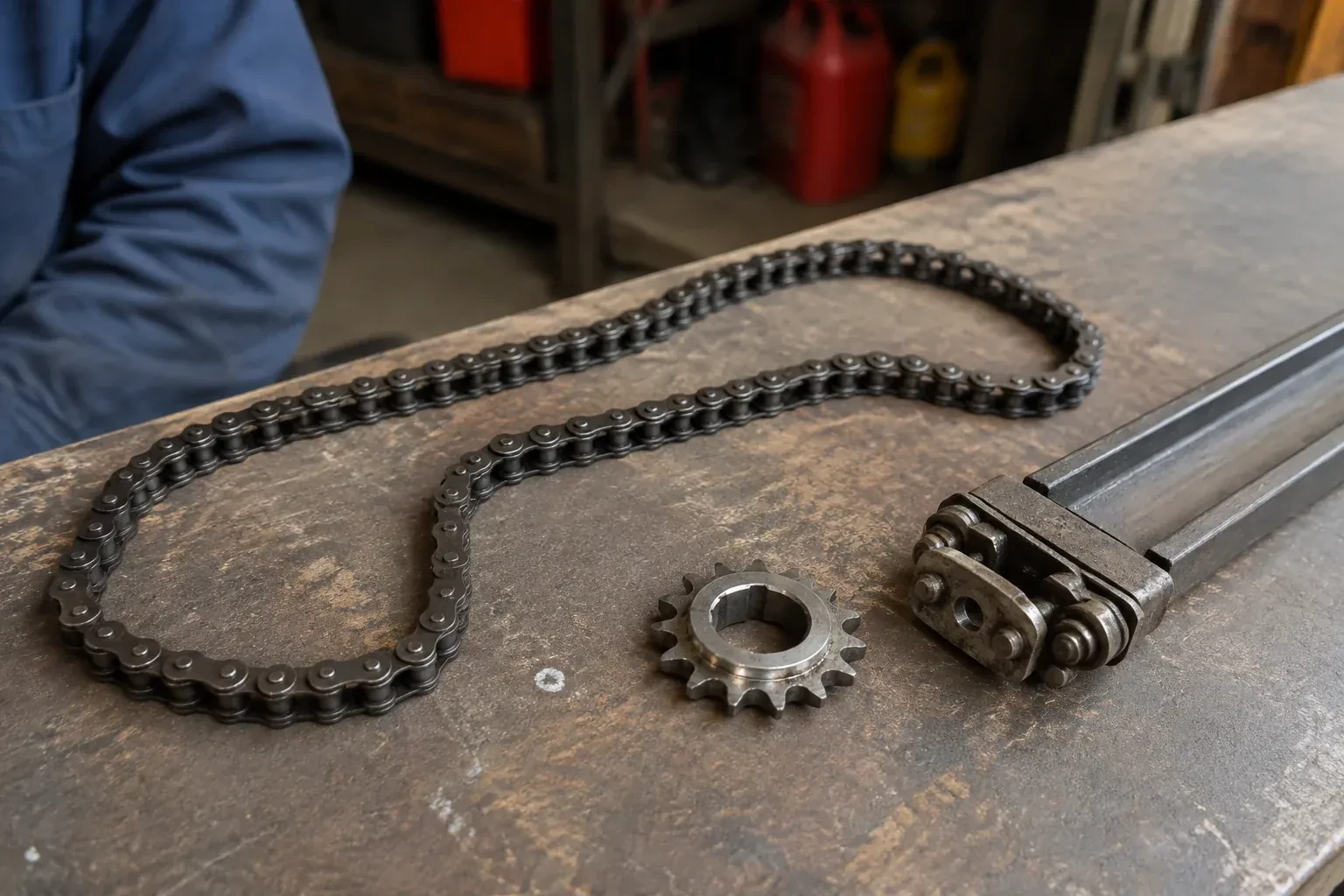
- Chain-Drive Opener RepairThe door closes, touches the floor, then climbs straight back up as if it hit something.
- Belt-Drive Opener RepairAfter the power came back you pulled the red cord to get the car out.
- Garage Door Opener ReplacementThe remotes only work from the end of the driveway now, and one of them disappeared with a set of keys last month.