Repairs · Mississauga
Garage Door Manual Lock Repair
Someone slid the inside lock across before bed, and in the morning someone else pressed the remote.
In plain words
The cylinder in a garage T-handle is a small pin-tumbler lock, much like a front door's. If the key is lost, or a previous owner kept it, the cylinder is rekeyed to a fresh combination or swapped for a new one and keys are cut on the spot. Where the keyway matches the house locks, the garage handle can often be pinned to the same key, so one key runs the property. Worn keys that need a wiggle are replaced by keys cut to the new pinning rather than copied. All of it happens in the same visit as any mechanical repair.
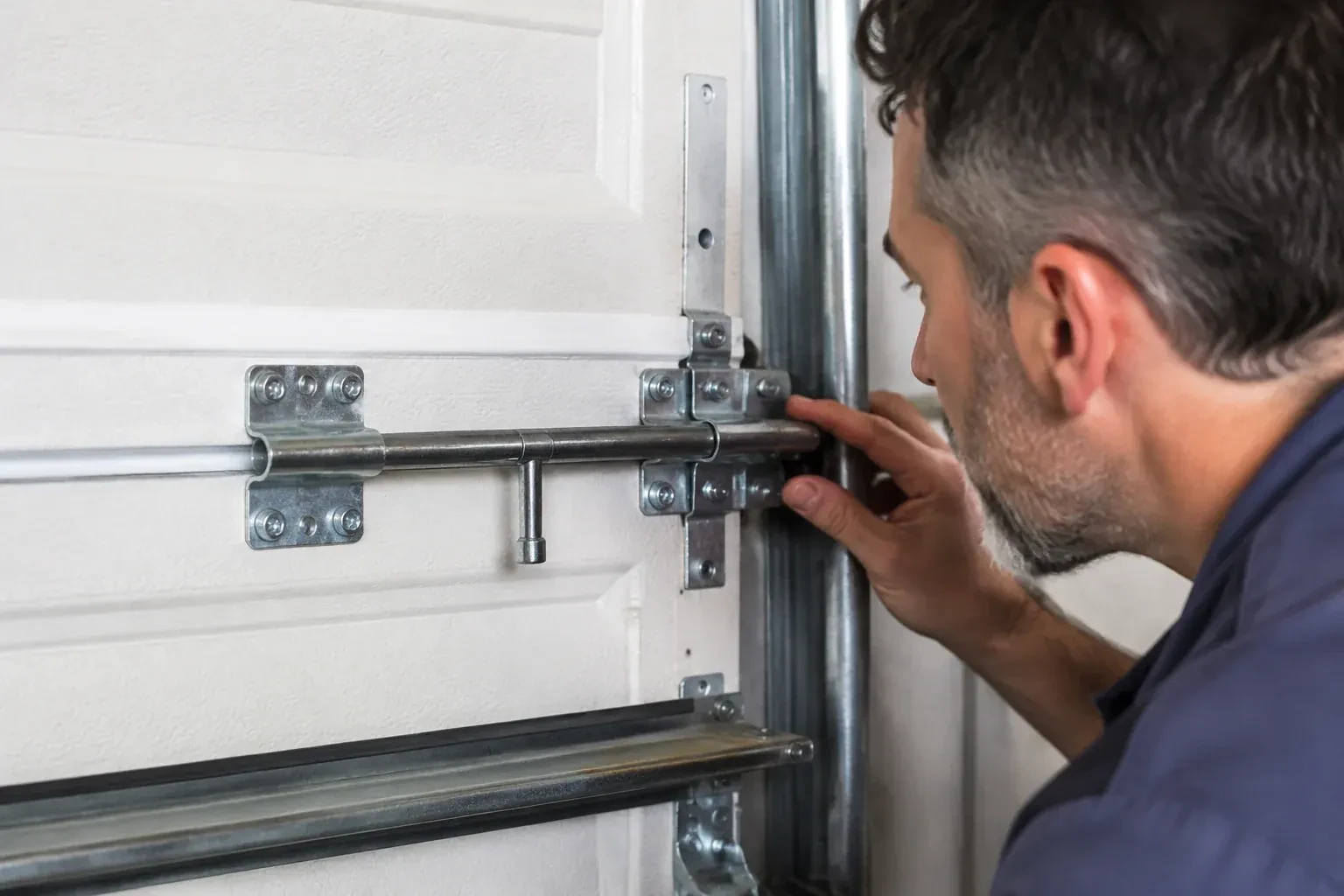
How the visit goesThe power is out in a storm, you pulled the red cord and lowered the door by hand, and now you want to lock it. The slide bolt on the inside edge is welded in place by years of rust and refuses to budge.
Garage Door Manual Lock Repair
How the visit goes
Following the bars to the tracks
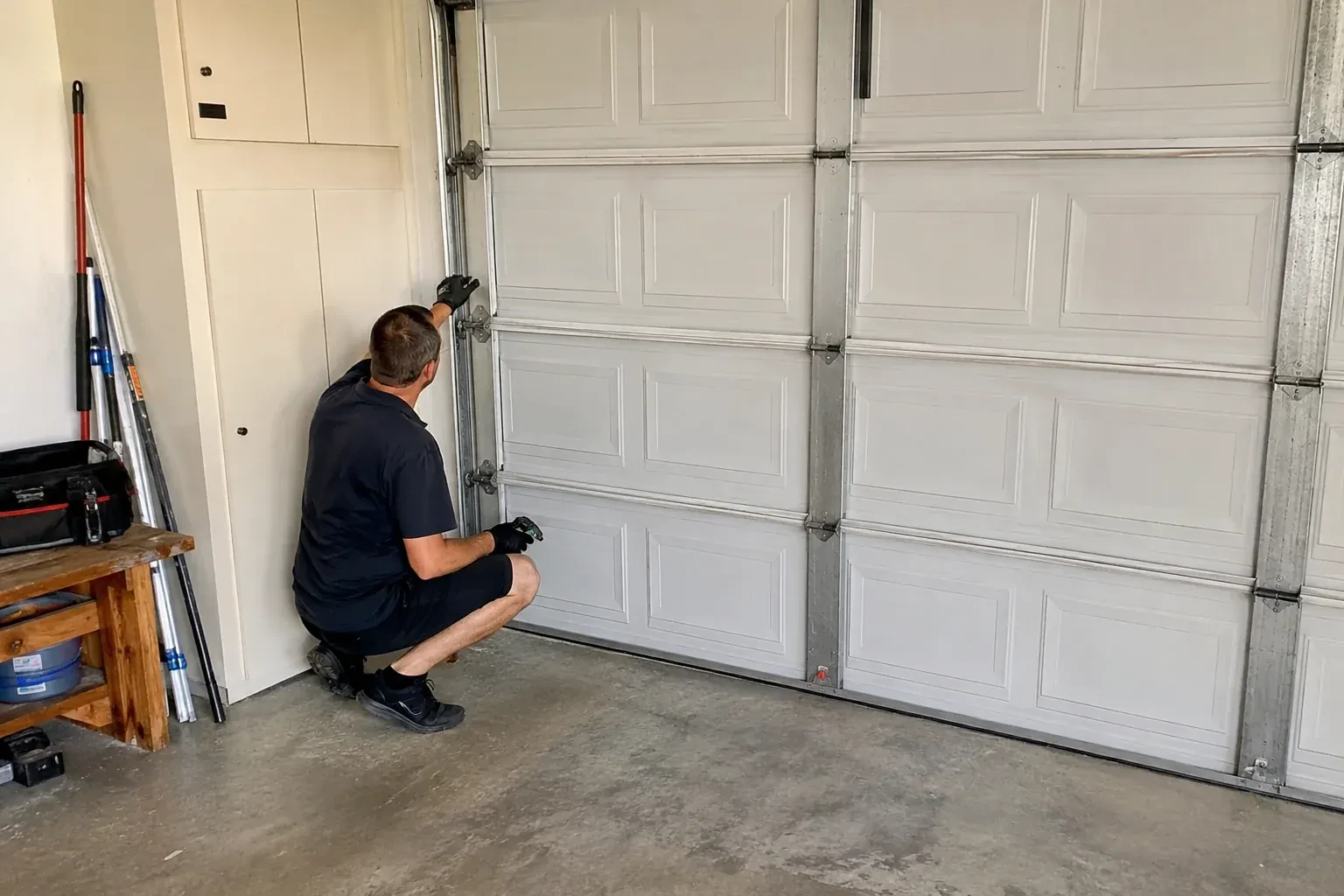
With the door shut, each bar is worked by hand while the technician watches its far end. It should travel smoothly through its guide, pass cleanly through the slot in the track, and come back the same way with no catching. A bar that binds points to rust in the guide or a guide that has been knocked out of line. A bar that reaches the track but not the slot points to alignment. A bar that is bent, kinked or hanging loose usually tells the story of an opener run against the lock. Both sides are checked even when only one is complained about, and the slots themselves are inspected for burrs, distortion and rust.
Replacing an inside slide lock
A slide bolt that is bent, seized or missing is replaced with a new lock of the same style, fixed to the door's edge stile so its bar lines up squarely with the slot in the track. Spring-loaded snap latches, which lock by themselves when the door closes, are set so they engage on closing and can be held open with their catch when the door is to be used with an opener. The fixing screws go into solid steel or wood, with through-bolts where the material is thin. The bolt is then thrown and released several times with the door down, and the technician confirms it clears the track fully so the door can rise without catching.
One rule at the wall button
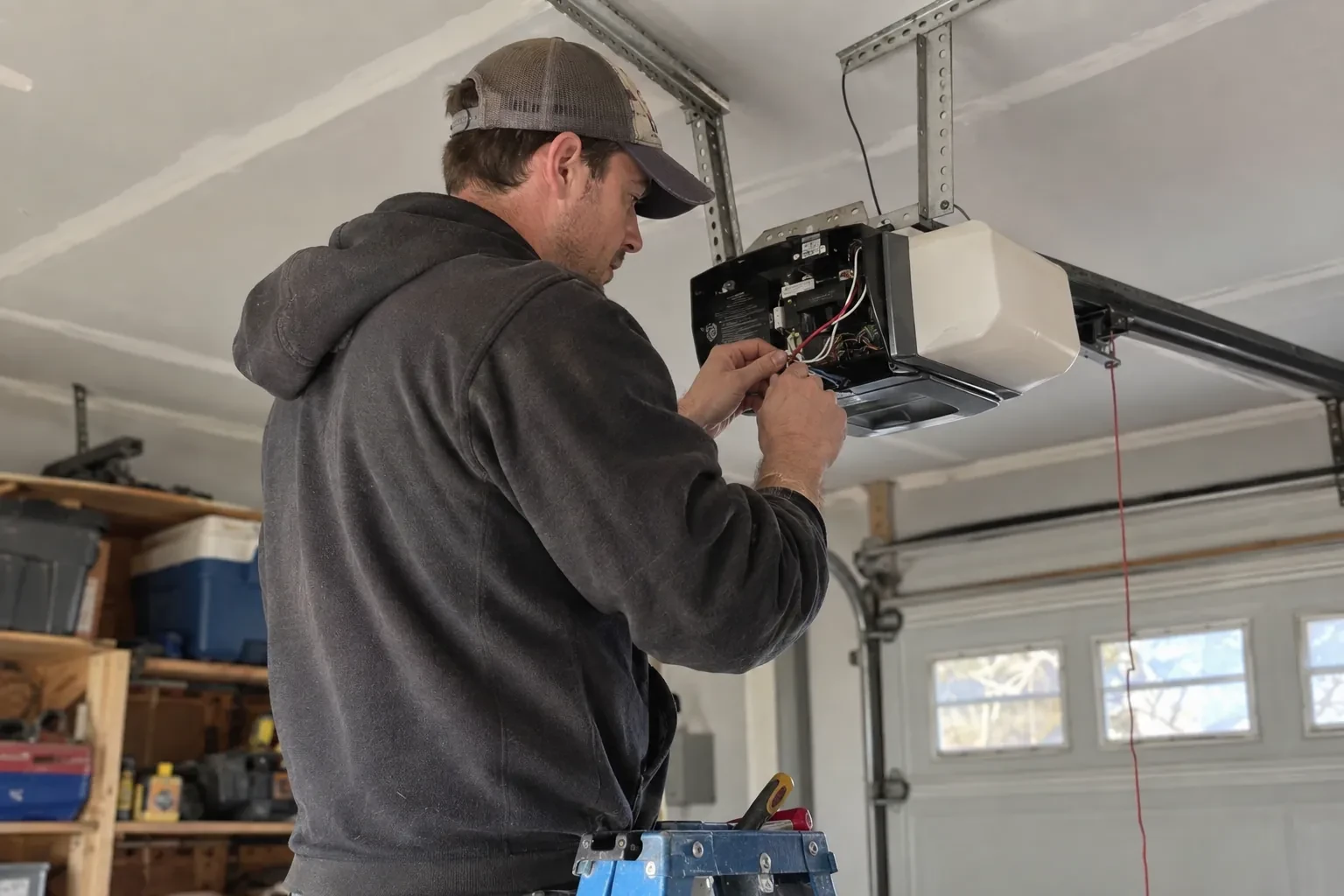
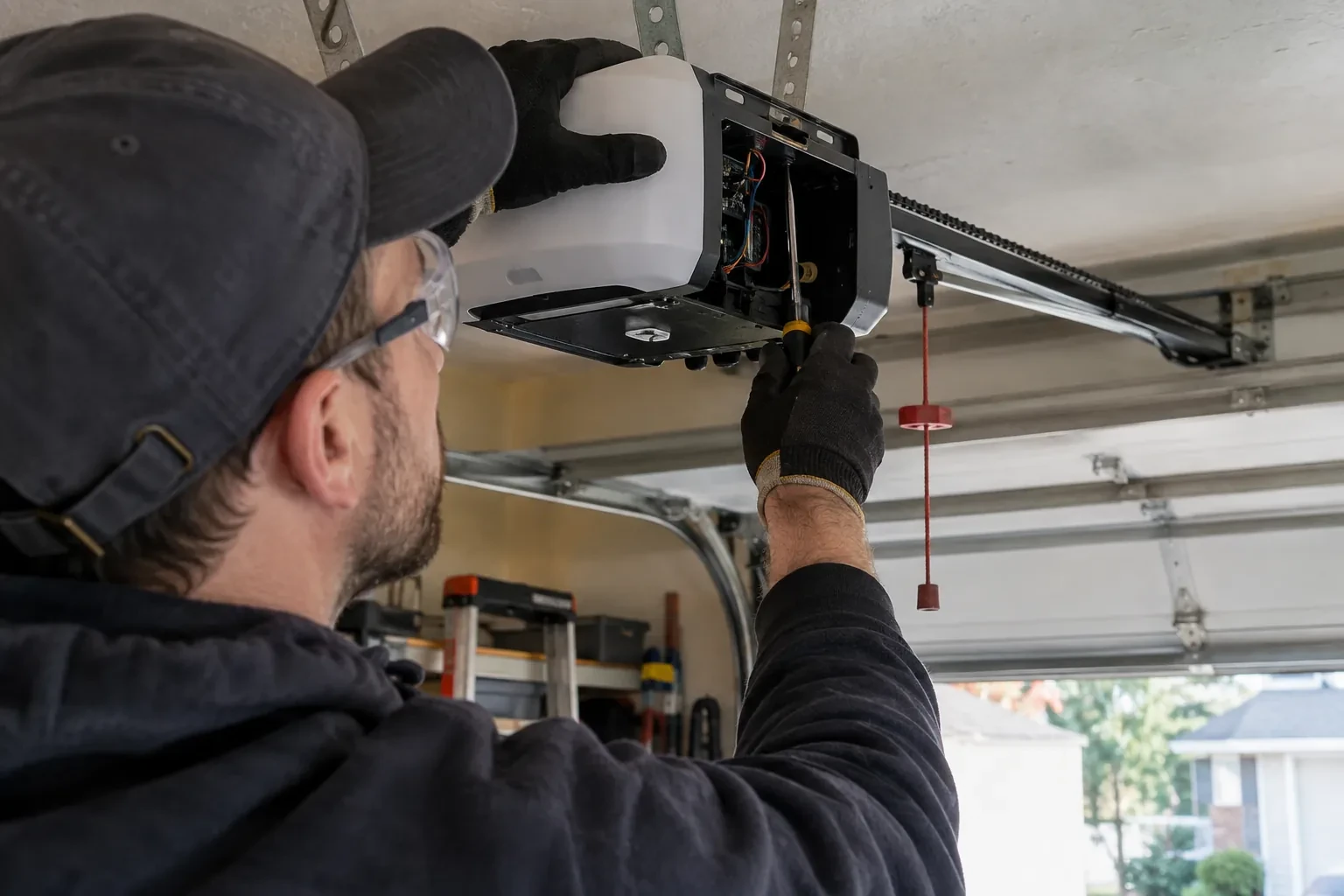
Where an opener shares the door, opener makers direct that the manual lock be removed or positively disabled rather than left in service on habit alone. The technician demonstrates the opener's own lock-out feature at the wall control and shows everyone who uses the garage how to tell at a glance whether the bars are in or out. Spring-loaded snap latches are left with their holding catch explained, since they lock on their own when the door closes. Most families settle into the routine after a few days, and the label is there for visitors, house-sitters and the one morning when someone is half asleep.
Garage Door Manual Lock Repair
In the van
Lock cylinder with tailpiece
Key blanks and rekeying pins
Track lock-slot punch
Inside turn handle and spindle
Inside slide bolt or snap latch
Garage Door Manual Lock Repair
What affects the quote
Related hardware noticed on the way
Worn rollers, a loose track bracket or a tired bottom seal seen while the door is being aligned are pointed out and offered as optional items, since they are easy to do in the same visit.
Door alignment behind the fault
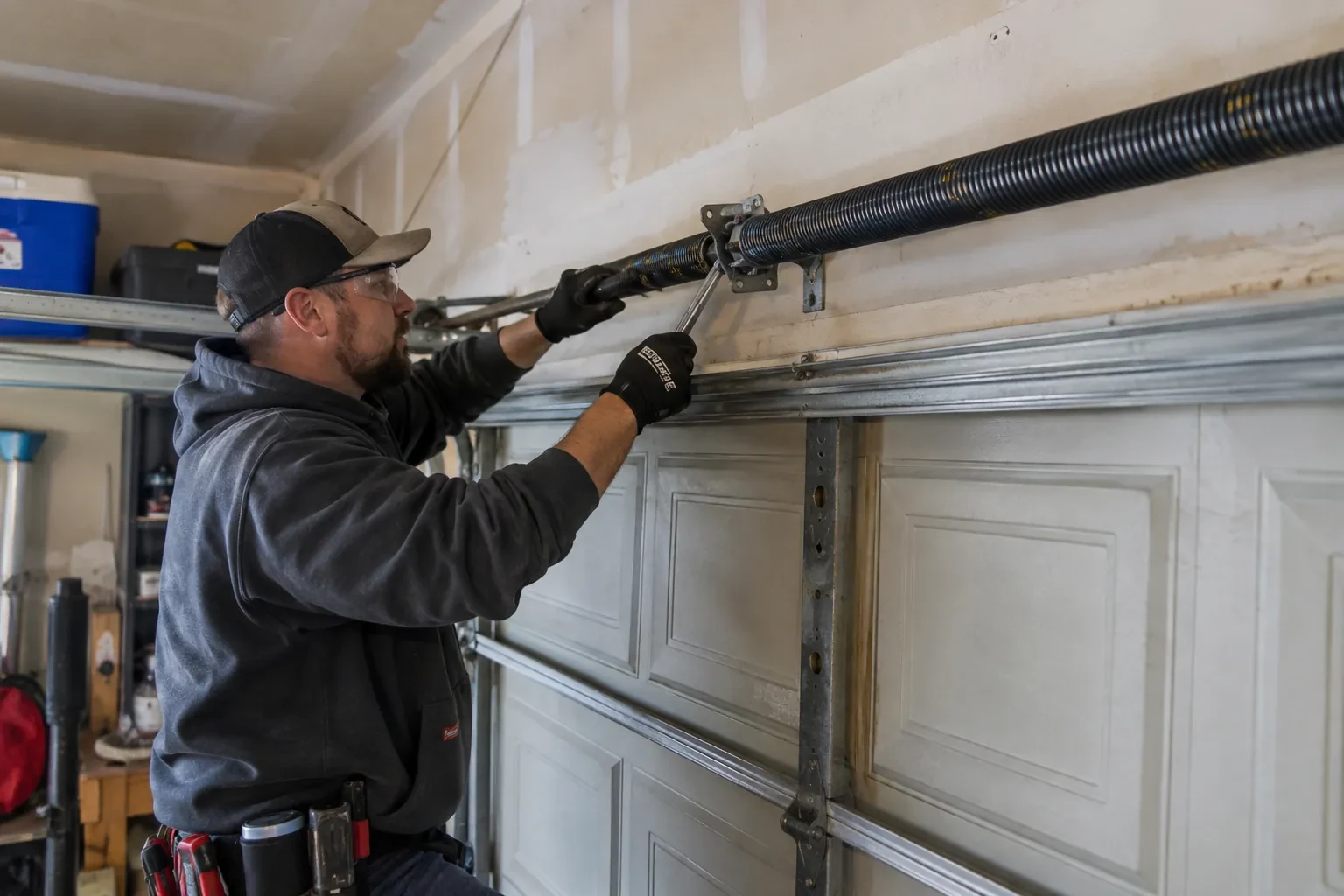
When the bar misses its slot because the door sits high or crooked, the fix reaches into track brackets, opener limits or the door's closed position, and that adjustment is quoted alongside the lock work.
One door or two
A garage with two single doors, or a house with a second garage, doubles the hardware to check and often the parts to fit. Doing both in one visit is efficient and quoted as such.
What to have ready
- Do you have a key for the lock, and how many keys would you like?
- Has the opener ever been run while the lock was engaged?
- Are the lock bars bent, rusty or hanging loose?
Garage Door Manual Lock Repair: questions
QuestionsCan a bent lock bar be straightened?
It is better replaced. Lock bars are spring steel, and once one has been bent by an opener pulling against it, it takes a set and tends to bind in its guide or kink again under load. New bar stock is cut to the door's width so the bar reaches through the track with a margin and pulls fully back when released. Both bars are set to the same throw.
Why does my slide lock stop short of the hole in the track?
Because the door is not resting where it rested when the lock was fitted. A heaved or settled slab, a loosened track bracket, a flattened bottom seal, packed snow at the threshold or an opener limit set a little high all move the door a few millimetres, and a few millimetres is all it takes. The technician corrects the door's closed position or resets the guide so the bar finds its slot again.
Will new holes have to be cut in the track?
Rarely. The slots are already there on most tracks, and a bar that misses one is usually a sign the door or a guide has moved. Restoring the door's closed position and resetting the guide brings the bar back to the existing slot. A new slot is punched only when a lock is added to a door that never had one, or an old slot is badly damaged.
Related services
- Garage Door Tune-UpOn windy nights the door rattles in its frame, there is a line of daylight along one side, and the bottom seal has gone hard and flat.
- Off-Track Garage Door ResetThe rollers on the door have been squealing for months.
- Garage Door Panel ReplacementAfter an overnight freeze the door stuck to the slab, the opener strained, and something gave.