Springs · Mississauga
Garage Door Roller Replacement
A roller near the top corner is riding on the lip of the track rather than inside it, and the section above leans back a little more each week.
In plain words
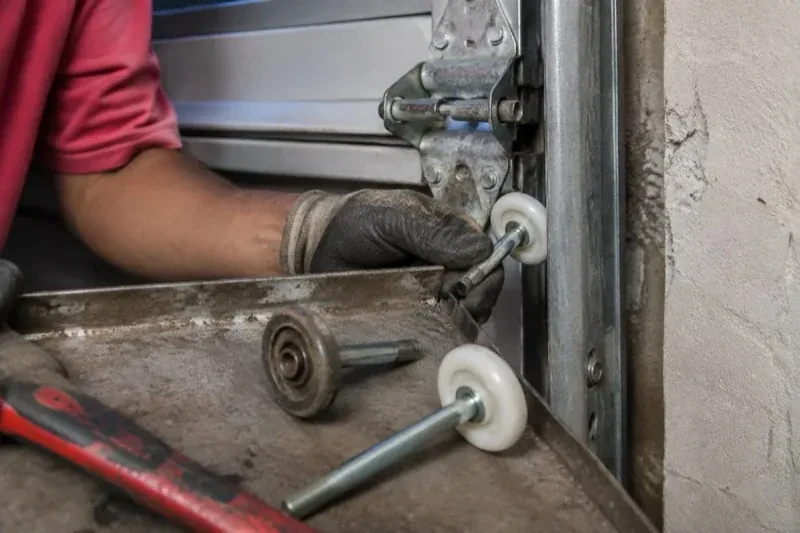
Winter is hard on rollers. Slush carried in on the tires freezes in the foot of the track, wheels skid across the ice instead of turning and wear flat spots, and salt eats into steel stems and bearings at the lowest positions first. By spring a door that was merely a little noisy is juddering. Roller replacement after a hard season puts fresh wheels and bearings under the door, and the technician clears the salt from the lower track and inspects the bottom brackets and cables that share the same wet corner, so the door heads into the next winter in better shape.
How the visit goesNew springs went in last year and the door balances well, yet it still clicks along the ceiling track like a train over rail joints. The wheels are the originals, worn to an oval, and the noise follows them from one end of the travel to the other.
Garage Door Roller Replacement
How the visit goes
Counting hinges and measuring stems
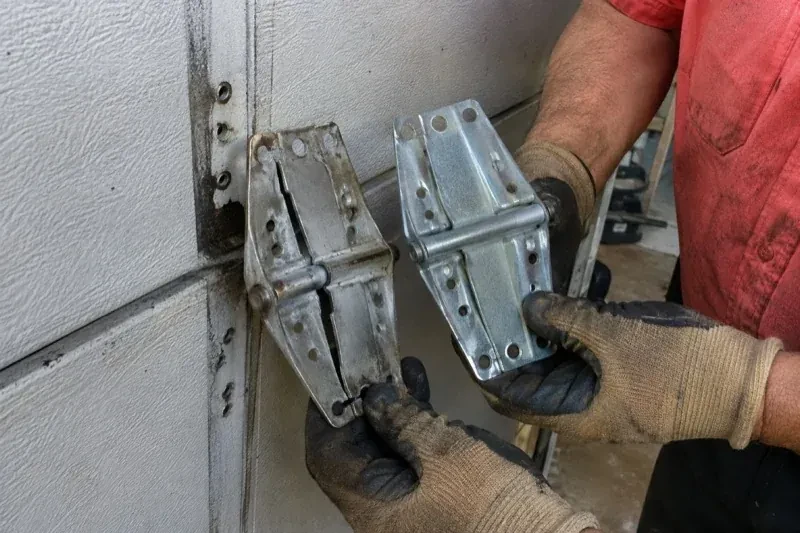
The right replacement depends on numbers taken from your door, not from a catalogue. The wheel diameter is measured across its face: residential track takes a two-inch wheel, while commercial track can take a two-inch or a three-inch wheel depending on the system. The stem is measured from the wheel to its end, and the hinges at each end stile are counted, because a single hinge takes a four-inch stem while two hinges stacked together on a heavier door call for a seven- or ten-inch stem that reaches through both. Stem diameter is confirmed too, since most doors built since the 1980s share one standard size but older doors may not. These measurements decide which set goes in.
Middle rollers, one hinge at a time
The rollers at the section joints sit in the edge hinges, and each is changed in turn. The technician loosens the hinge fasteners just enough to swing the hinge leaf and ease the old roller out of the track, seats the new roller in the hinge, guides its wheel back into the channel and refastens the hinge with the section held square. Because every other roller stays put while one is out, the door never loses its alignment. Numbered hinges go back to their own rows, since each row holds its wheel at a slightly different offset to follow the graduated spacing of the track.
A record of what was fitted
You should know what is on your door. The technician leaves you with the roller type and material, wheel size, stem length by position, bearing count and load rating, along with any hinges, fixtures or brackets replaced and any track adjustment made. Keep this with the owner's manual and the date of the last spring replacement. It answers the questions that come up later, such as which stem length to order if a single wheel is ever damaged, and it lets a future technician see at a glance what the door carries and when it went in.
Garage Door Roller Replacement
In the van
Bottom brackets
Track clamps or locking pliers
Steel ball-bearing rollers
1-1/2 inch reversal test block
Long-stem rollers for double hinges
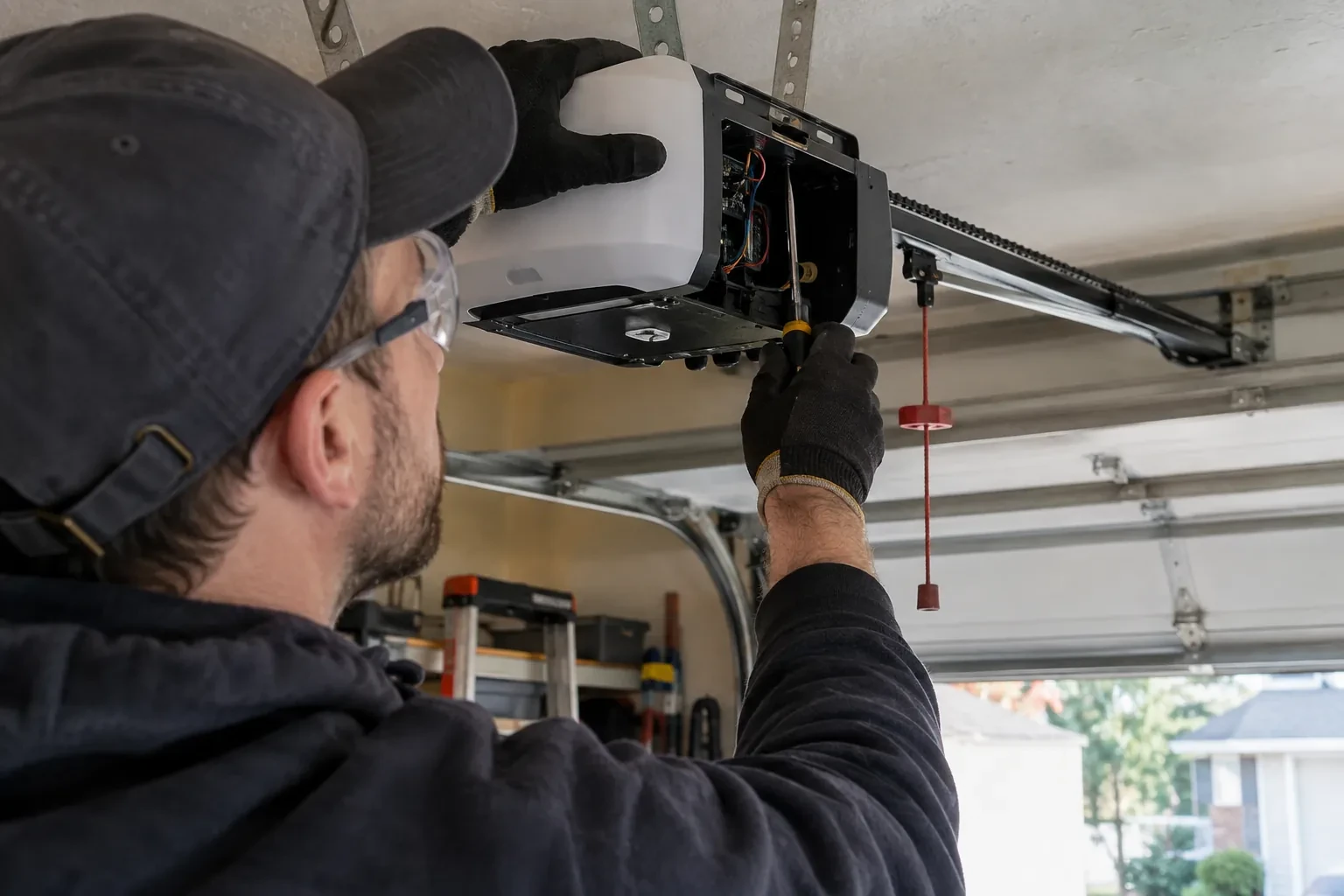
Garage Door Roller Replacement
What affects the quote
Combining with spring or cable work
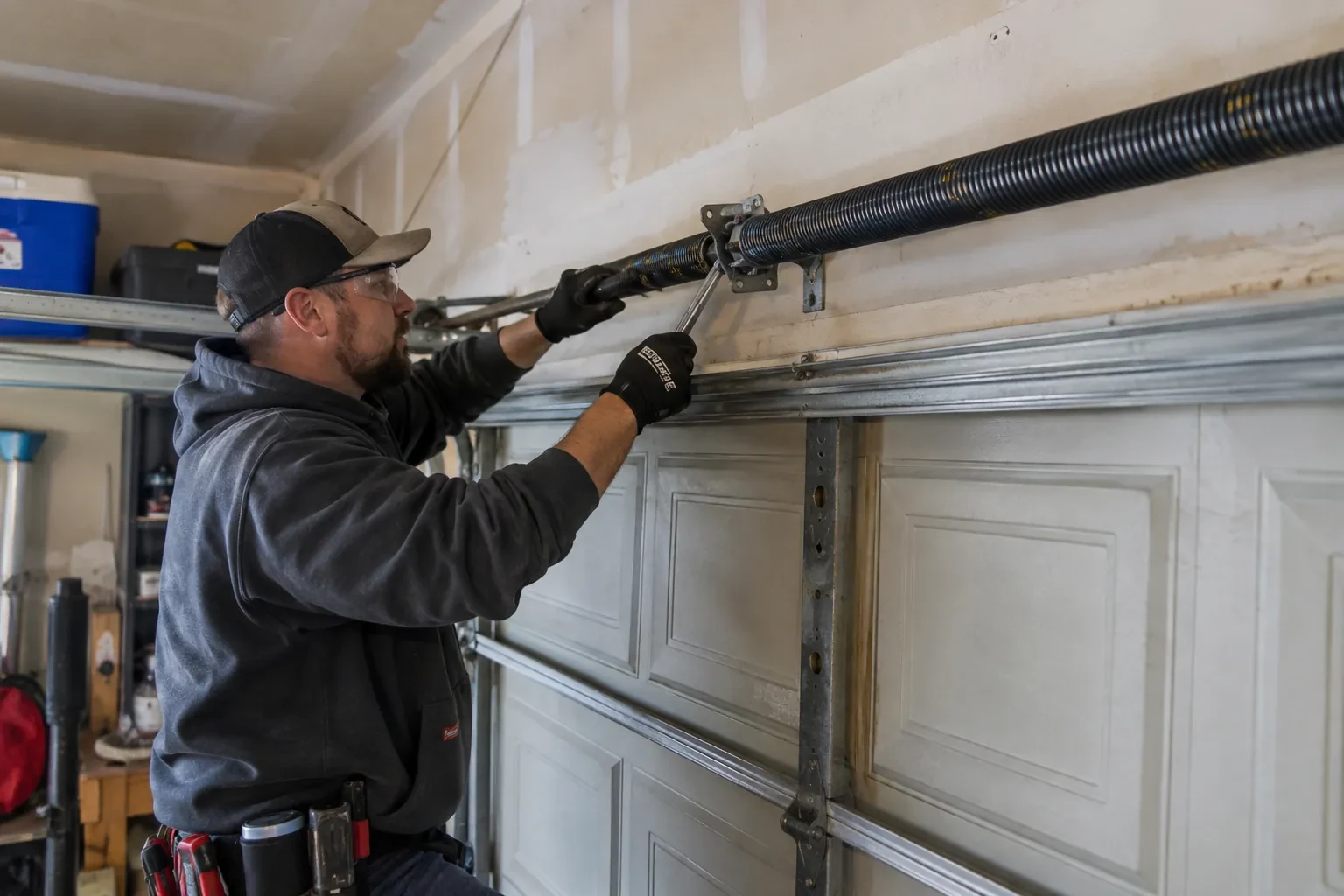
If springs or cables are being replaced in the same visit, the door is secured once and the roller set is added to that job, which is often more economical than a separate call.
Residential or commercial track
Three-inch commercial track takes larger, heavier rollers and usually a heavier door behind them, and both the parts and the method of securing the door differ from a residential job.
When the visit is booked
Evening, weekend and holiday calls cost the same amount as a weekday appointment for roller replacement. The technician confirms the exact figure once the rollers, hinges and track have been looked at on site.
What to have ready
- Is the track the two-inch residential size or a wider commercial track?
- Are there two hinges stacked at the ends of each section, or one?
- How many sections does the door have, and is it wood, insulated steel or single-skin?
Garage Door Roller Replacement: questions
QuestionsWhat does stem length mean and why does it matter?
The stem is the steel shaft that passes through the hinge or fixture and carries the wheel. Most residential doors use a four-inch stem through a single hinge. Heavier doors have two hinges stacked at the ends of each section, and those need a seven- or ten-inch stem so the shaft reaches through both. A short stem in a double hinge sits loose, lets the wheel lean, and is a common reason a door leaves its track. The technician counts the hinges before choosing the set.
Should I replace rollers when the springs are replaced?
It is a common and sensible pairing. Rollers and springs are the two most frequently replaced parts on a door and wear on similar timelines, so a door that has used up its springs has usually worn its rollers too. Doing both in one visit means the door is secured and the opener disconnected once, and the bottom brackets, which are handled for spring work anyway, receive new rollers while they are accessible. Ask for the rollers to be checked whenever spring work is booked.
How long do garage door rollers last?
It depends on what they are made of and how often the door moves. Builder-grade plastic wheels with no bearings often show wear after only a few years. Steel and nylon rollers with seven to thirteen ball bearings are typically rated for ten to fifteen thousand cycles, roughly the life of a torsion spring, which for many households means seven to ten years. Sealed-bearing nylon rollers are rated far higher. A door used many times a day, or one living with salt and slush, shortens all of those.
Related services
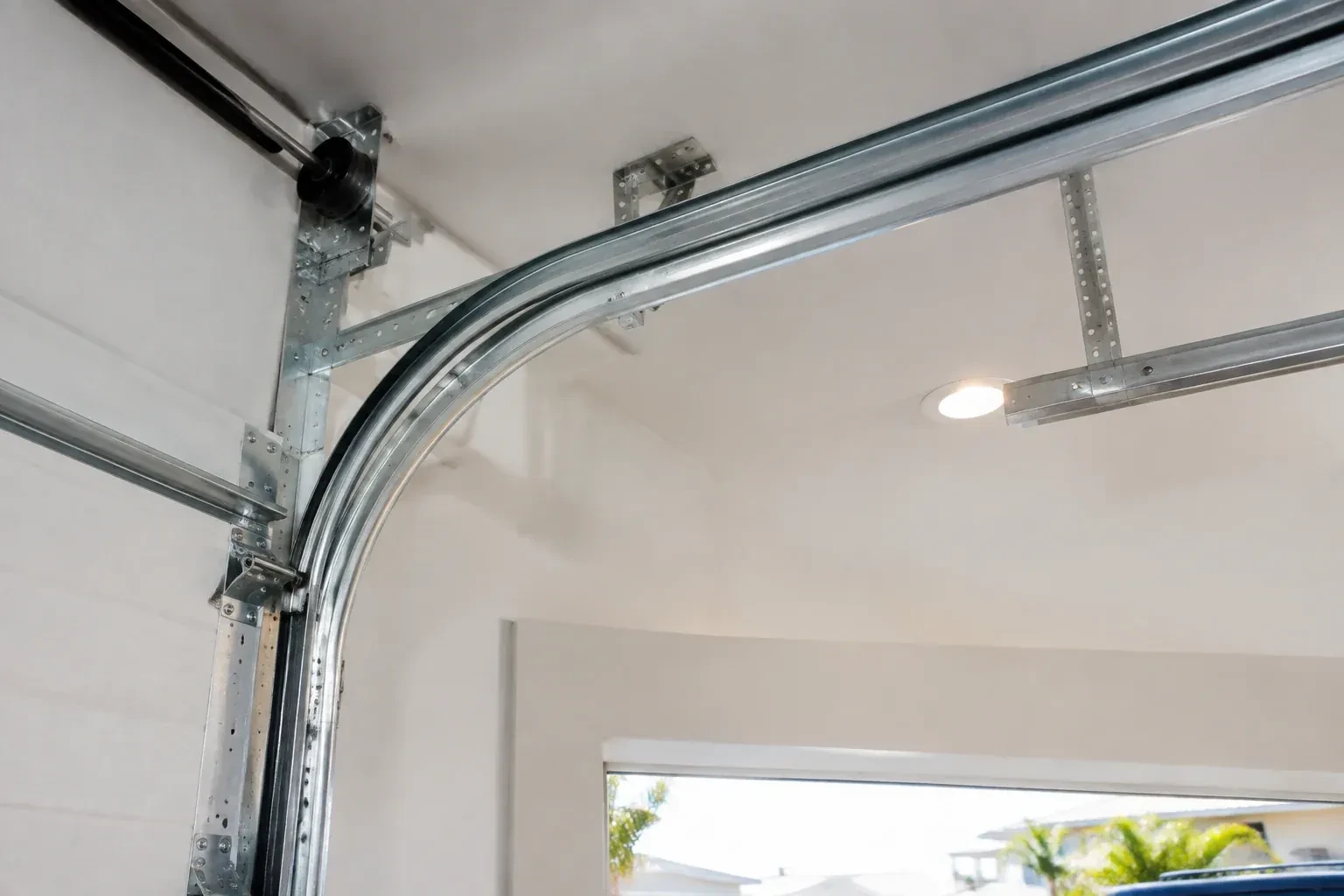
- Garage Door Track Repair or ReplacementAfter a decade of slushy winters the bottom foot of the track is flaking rust.
- Garage Door Cable ReplacementThe door went up as usual this morning, then stopped a third of the way with one corner higher than the other.
- Torsion Spring ReplacementOne side of the door sits higher than the other in the tracks, and a lift cable is hanging slack or has jumped off its drum.