Repairs · Mississauga
Garage Door Safety Inspection
There is a new sound.
In plain words
For a home you have just bought, or one you are about to sell, the inspection gives the door a starting point. The report records the door and opener models, the spring type, the condition of every wearing part and the results of the balance and safety tests, all against a date. Anything that needs attention is listed with a suggested order. From then on you have something to compare against: a noise that appears next year means something changed since the record, not a mystery, and a buyer or an insurer asking about the door gets a factual answer instead of a shrug.
How the visit goesOn bright afternoons the door goes down a metre, stops, and climbs back up while the light on the opener blinks. After dark it closes perfectly. Nothing has changed except the weather.
Garage Door Safety Inspection
How the visit goes
Watching one full cycle under power
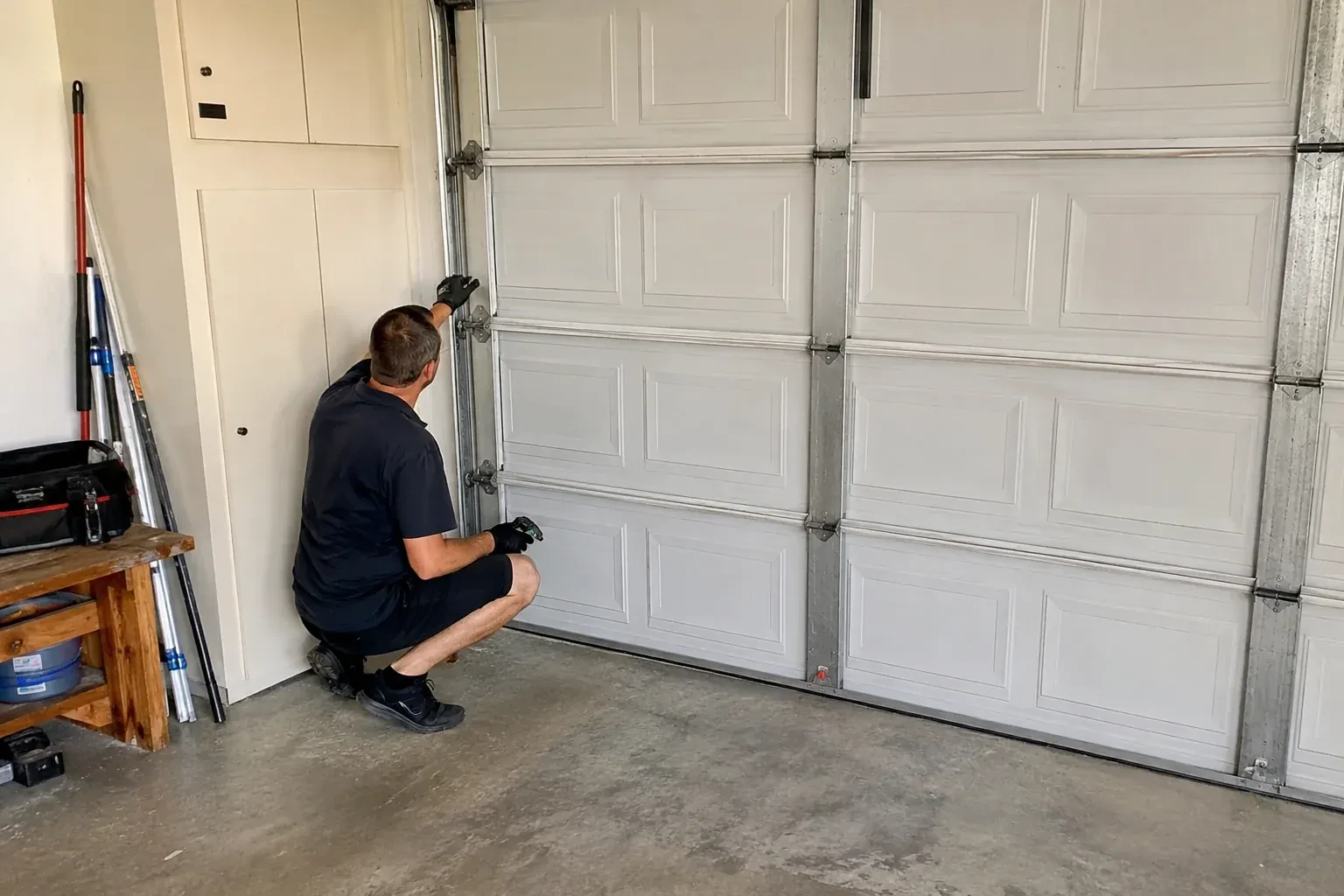
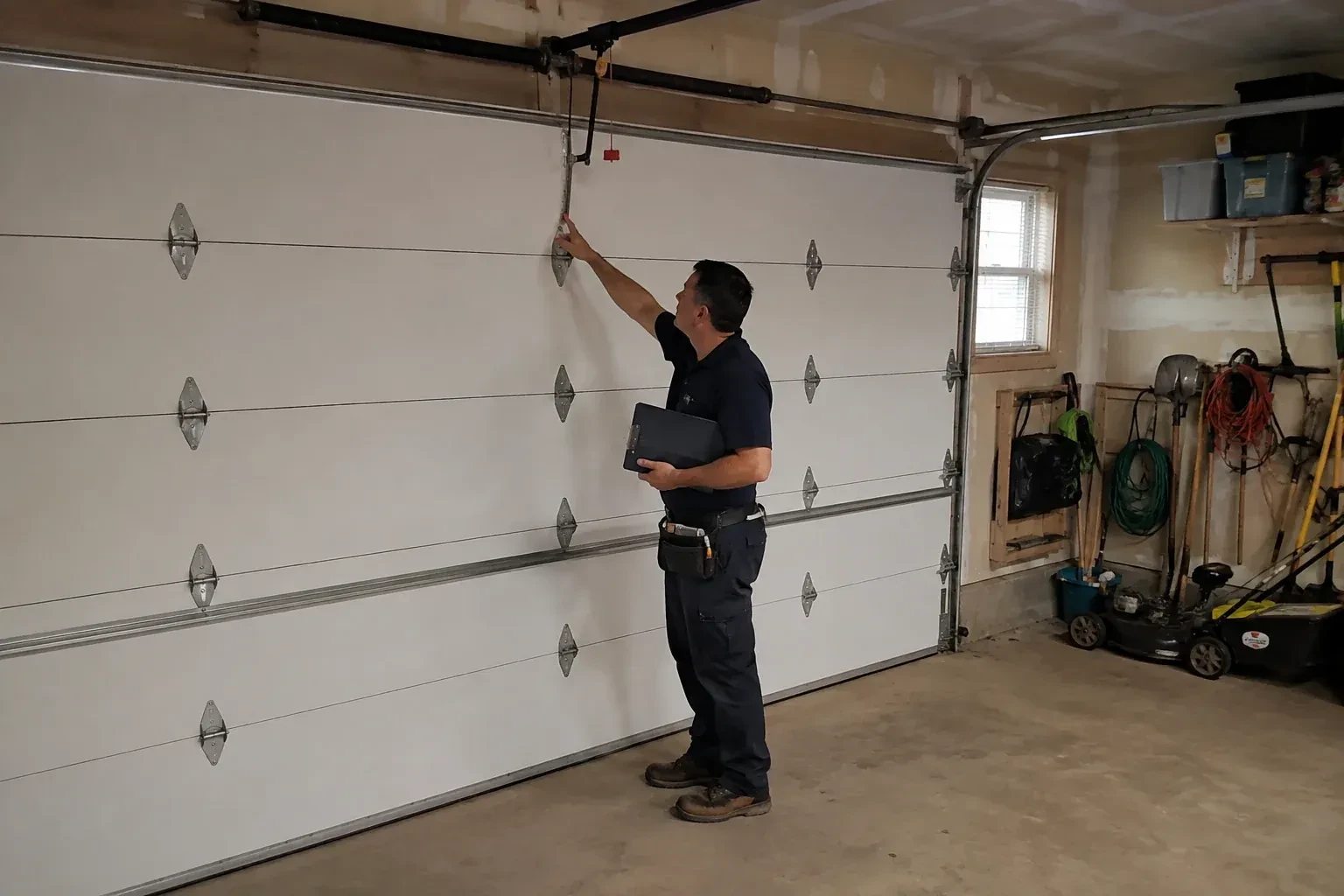
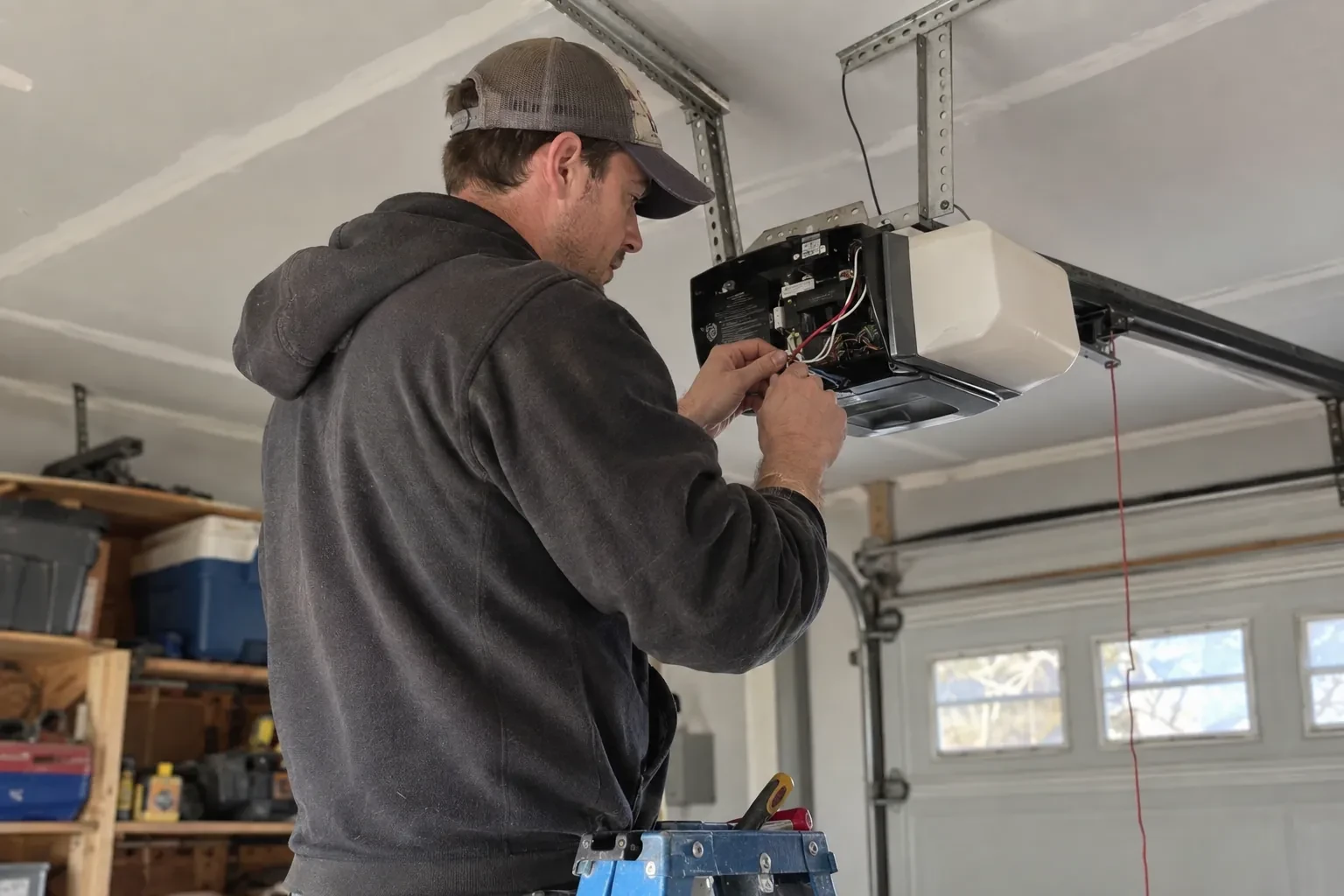
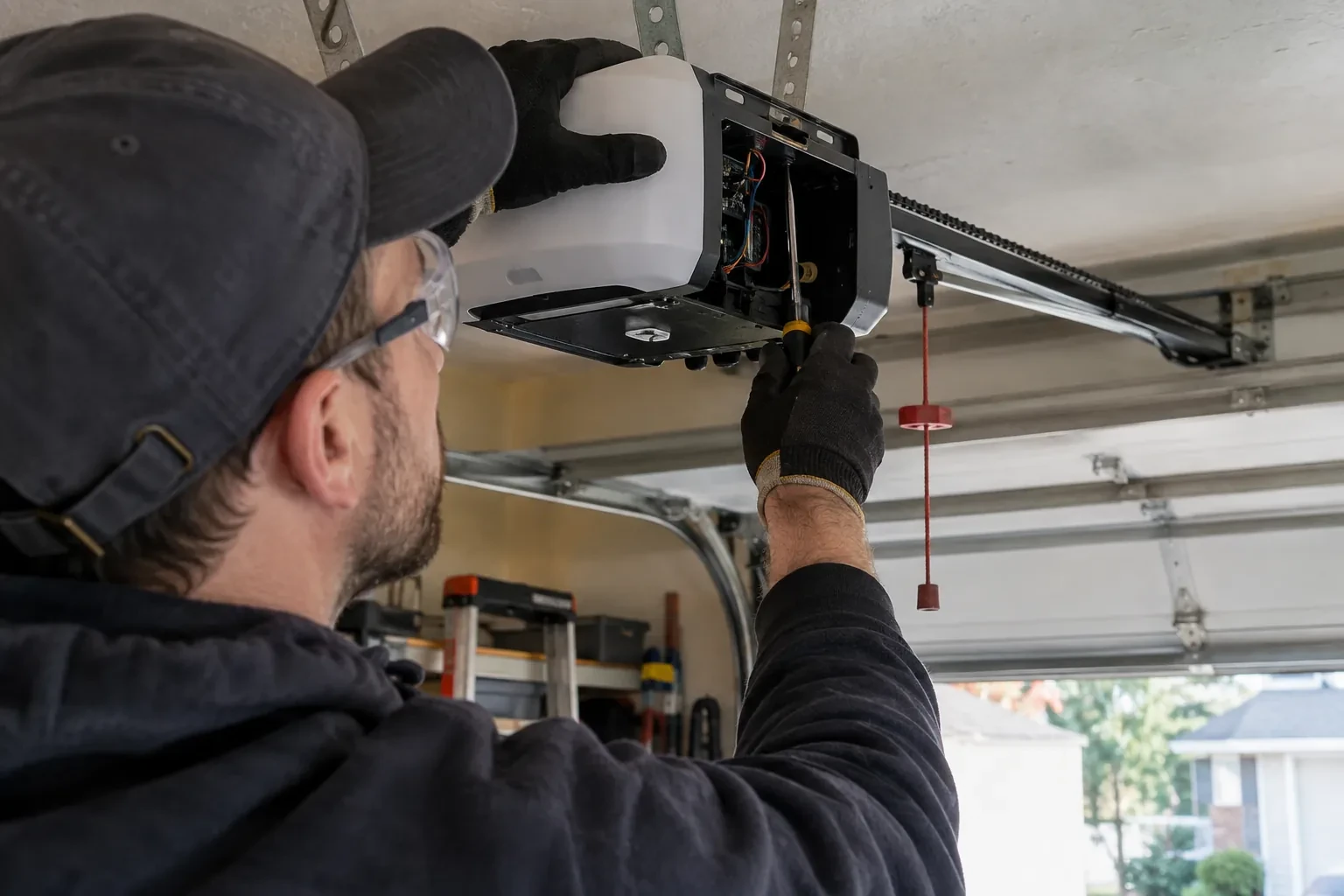
Before anything is measured, the technician stands back and runs the door through a full open and close, listening as much as watching. A healthy door sounds even from bottom to top; a knock at the turn into the horizontal track, a squeal at a particular hinge, a grinding drum or a motor that changes pitch under load each point somewhere specific. The eyes follow both bottom corners to see whether they leave the floor together, the top section as it passes the curve, and the final inch of closing, where the door should settle onto its seal without a thud. This one cycle often tells the technician where to spend the rest of the visit.
The balance test, by hand
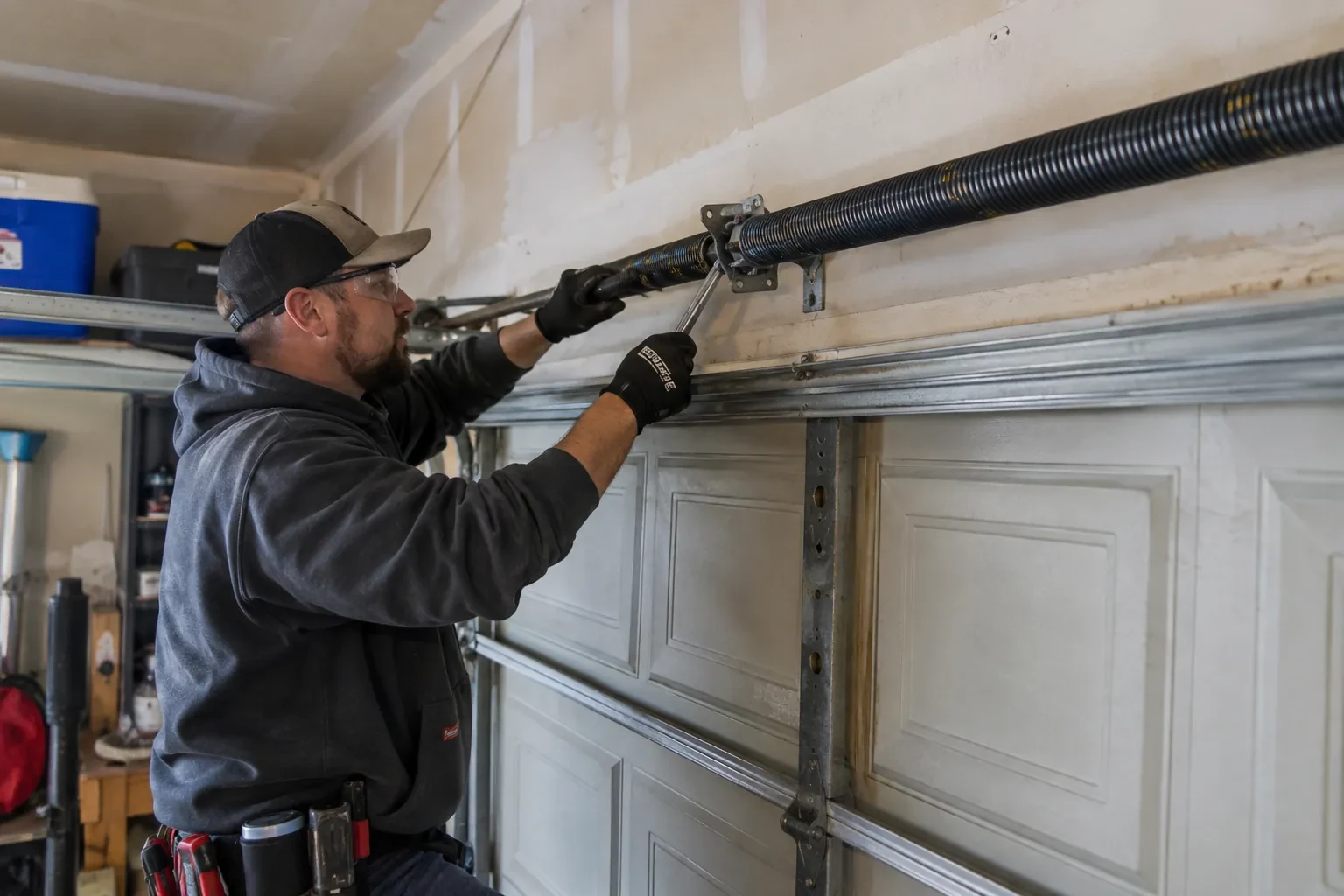
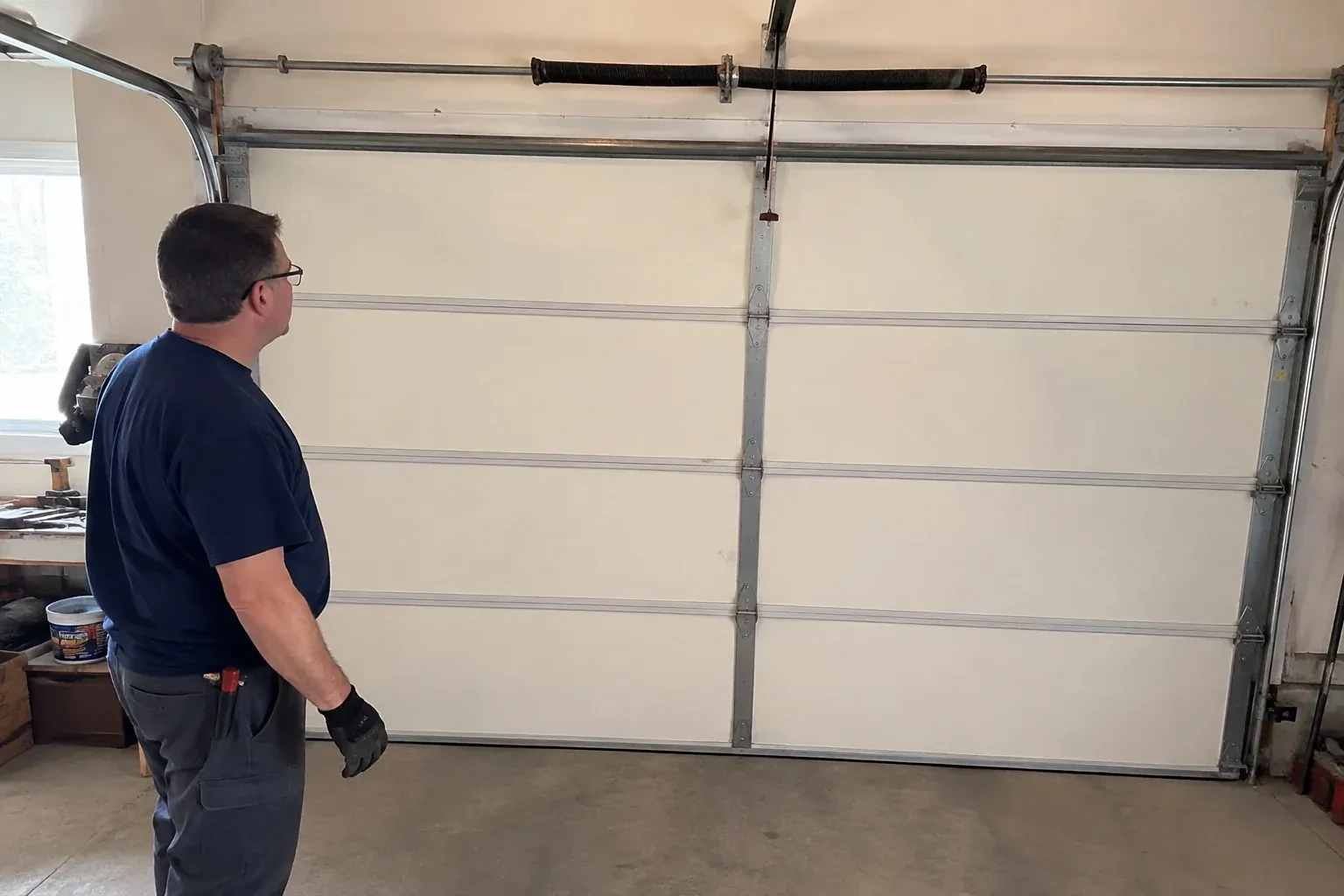
With the door fully closed, the technician pulls the release cord to disconnect the opener, then lifts the door by its handle or a safe grip on the bottom section. It should rise with light, even effort, stay put when let go around waist height, and lower to the floor without slamming. A door that drifts up is over-sprung; one that sinks or feels heavy is under-sprung or bound somewhere in its travel. Binding at a particular height points at a roller, a hinge or a track rather than the springs. The result is recorded as a finding; any change to spring tension is quoted as separate work, done under controlled torque with proper winding bars and the door secured.
Carrying the door through winter
The technician leaves you with the handful of habits that matter in a cold climate. Keep the threshold clear of packed snow so the door closes on the floor and not on a ridge of ice. On a mild day, wipe the salt off the bottom brackets, the lowest hinges and the bottom stretch of each cable, then give them a light mist of lubricant. Wipe the photo-eye lenses when the grime of a slushy week builds up. If the bottom seal freezes to the slab, free it by hand before running the opener rather than asking the motor to tear it loose. These take minutes across a season and spare the cables, the seal and the opener.
Garage Door Safety Inspection
In the van
Flat 2x4 test board
Work light and inspection mirror
Socket set and nut drivers
Tape measure and level
Replacement hinge and track fasteners
Garage Door Safety Inspection
What affects the quote
Distance to the property
Travel is part of every visit. A property across town and one at the end of a rural road involve different driving time, and the quote reflects the trip.
Single or double door
A double door is wider and heavier and commonly adds centre hinges and reinforcement a single door does not carry, with a heavier counterbalance to test, so it takes longer to walk and to write up; section count itself follows the door's height rather than its width.
Small parts replaced on the spot
A missing hinge bolt, a stripped track lag or a remote battery can be replaced from the van. Parts fitted this way are listed individually rather than folded into the inspection.
What to have ready
- Has a vehicle or anything else struck the door or the tracks?
- Do you have the door and opener manuals?
- How many doors need inspecting, and are they all at the same address?
Garage Door Safety Inspection: questions
QuestionsDoes winter change what you look for?
Yes, mostly at floor level. Months of slush and road salt reach the lowest hinges, the bottom brackets and the loop of each cable before anything else on the door, so those get a close look for rust. The technician also checks whether the bottom seal has been freezing to the slab, how the drive has coped with cold, stiff starts, and whether frost or salt film has been blinding the sensors near the floor.
Is the inspection different for an older detached garage with springs along the tracks?
The route is the same and the counterbalance looks different. Extension springs stretch beside the horizontal tracks and pull through pulleys, so the technician examines each spring for stretch and a broken end, each pulley for a grooved wheel or a seized bearing, the cable clips, and whether a containment cable runs through the centre of each spring. Balance, reversal and photo-eye tests are unchanged.
What is in the written report?
The date, the door and opener model numbers, the spring type and dimensions, and a line for each component with its condition. Findings are sorted into in good order, maintenance done, planned repair and stop-use. Measurements such as seal gaps, track spacing and photo-eye height are recorded, and photographs of anything worth showing are attached. It is written so a future technician can quote from it and a future inspection can compare against it.
Related services
- Off-Track Garage Door ResetThe rollers on the door have been squealing for months.
- Garage Door Panel ReplacementAfter an overnight freeze the door stuck to the slab, the opener strained, and something gave.
- Garage Door Bottom Seal ReplacementAfter a spring rain there is a puddle inside the door that reaches the tires.