Springs · Mississauga
Garage Door Track Repair or Replacement
After a decade of slushy winters the bottom foot of the track is flaking rust.
In plain words
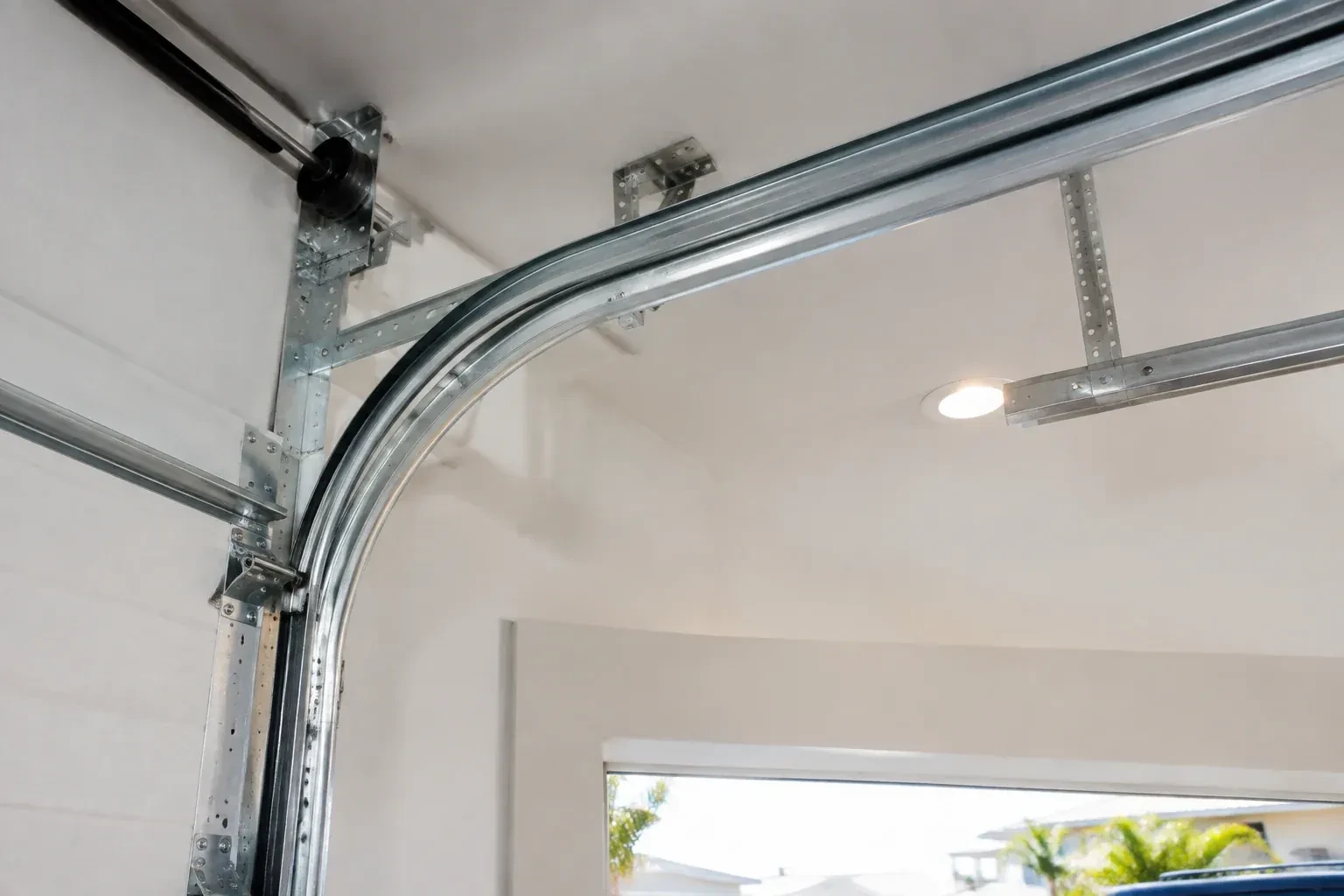
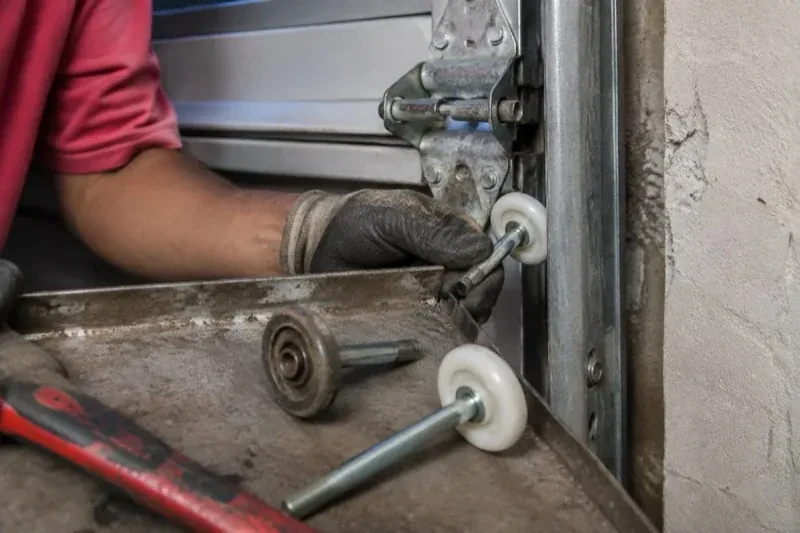
A track visit follows a set order. The opener is disconnected and the door clamped so it cannot move while hardware is loose. Then the whole path is checked: plumb and spacing of each vertical run, the state of the jamb wood and lag screws, the curve, the level of the horizontal run and the hangers holding it, and each roller's seat in the channel. Damaged pieces are dressed or replaced, brackets and hangers are refixed into solid framing, and the two sides are set square to each other. Rollers are reseated, spring tension is returned, and the door is run by hand, balanced, and the opener tested.
How the visit goesThe garage floor has settled at one corner, and the door now scrapes the concrete on that side while daylight shows at the other. The track on the low side sits crooked against a jamb that has split.
Garage Door Track Repair or Replacement
How the visit goes
Securing the door before the track is touched
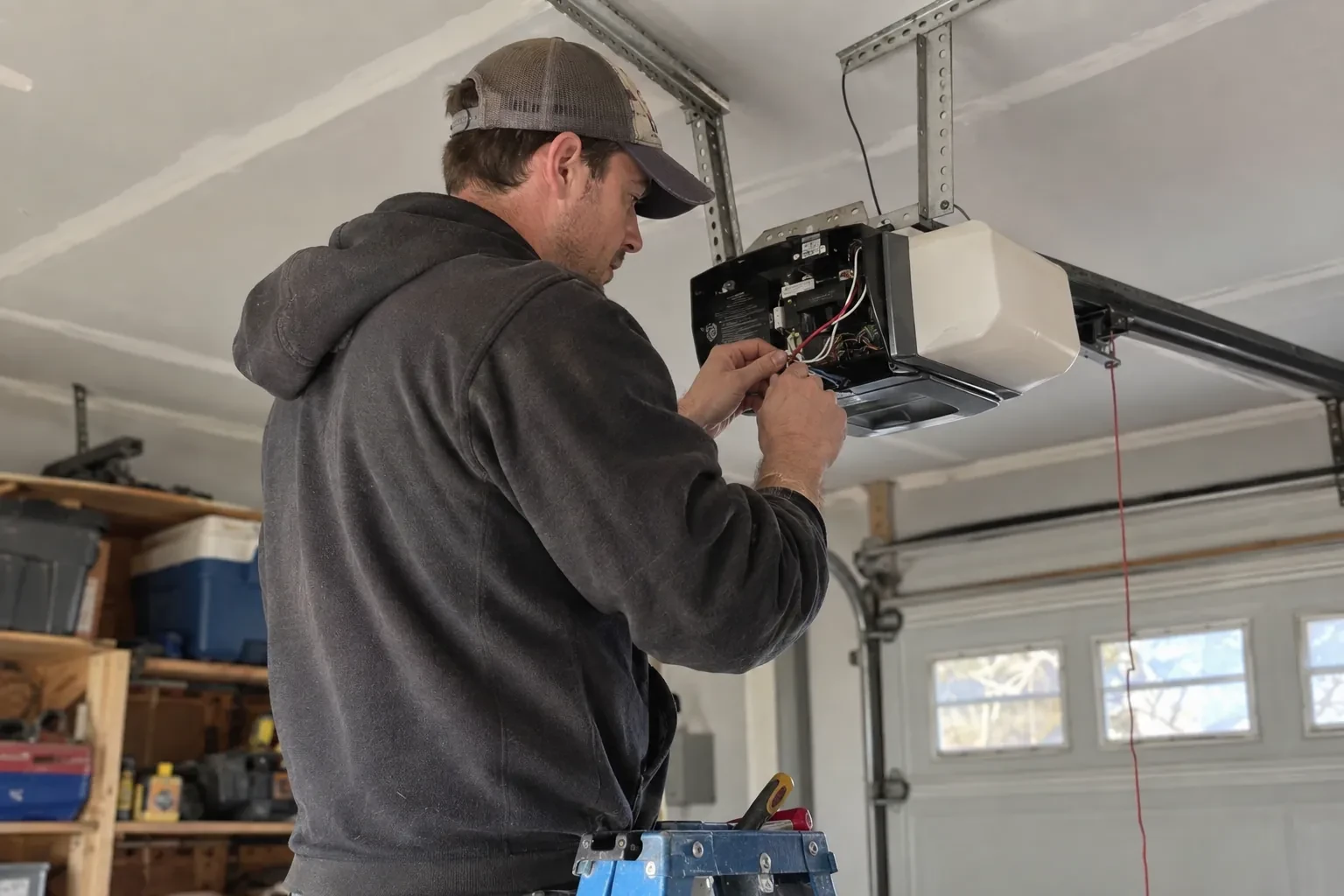
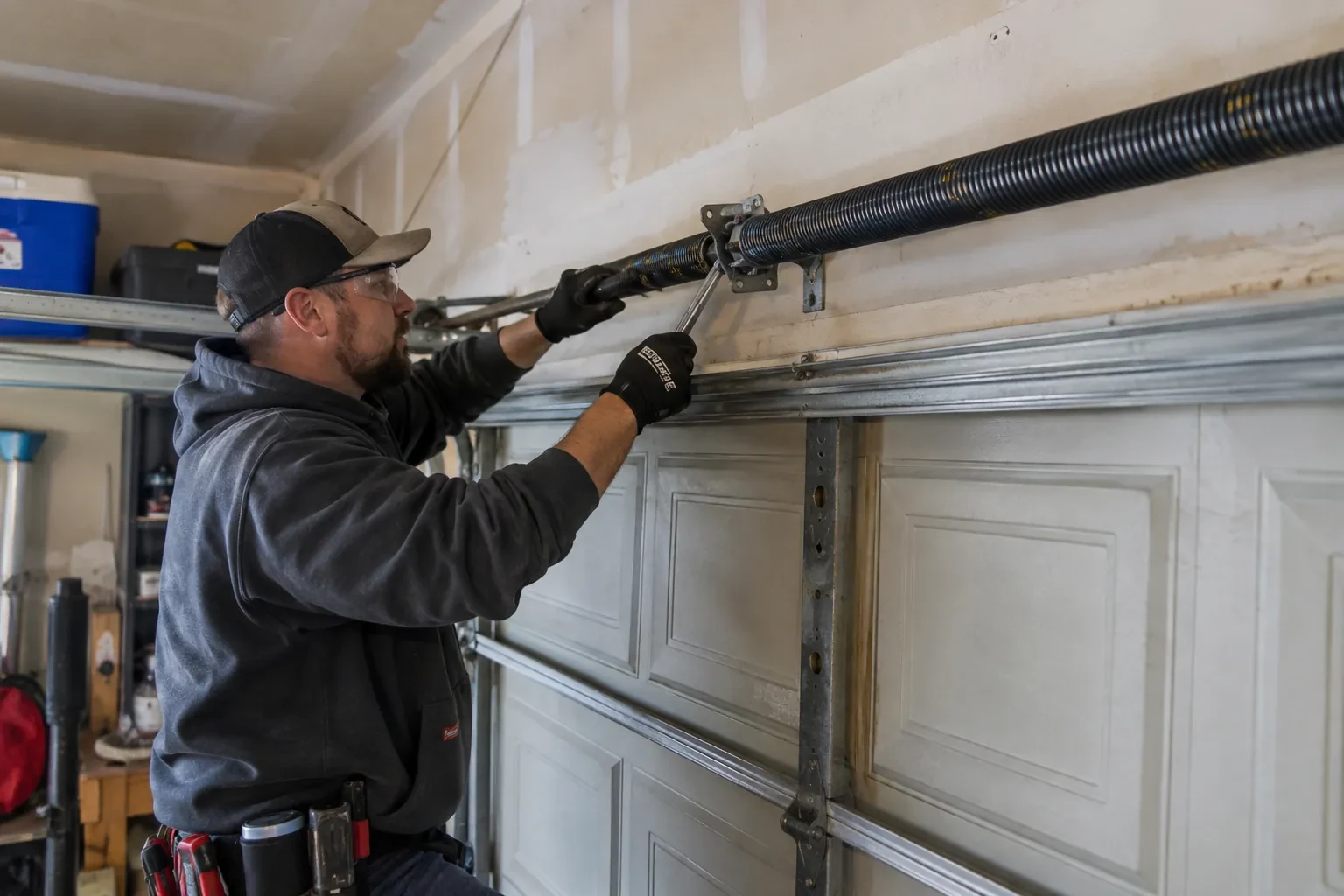
The track is what keeps the rollers, and therefore the door, where they are, so nothing on it is loosened until the door is held some other way. If the door is not fully closed, it is restrained first, a track clamp under a roller so it cannot drop, or a prop, before the release is pulled and the opening cleared. A door jammed on a bent section is often resting its weight on one roller and cable, so that weight goes onto the clamp or support first. With the door still, the brackets, hangers and fasteners can be examined and loosened one at a time without the door shifting, and the rest of the visit becomes calm, methodical work.
Replacing a vertical section
A kinked, cracked or rust-thinned vertical track comes off in one piece. The jamb brackets or continuous angle are unbolted, the old track is lifted clear with the rollers eased out of it, and the new piece, cut or ordered to the same height, profile and mounting style, is bolted to the brackets. The joint with the curve at the flag bracket is aligned so a roller passes with no step, and the track is offered up to the jamb, set plumb with the correct spacing and taper, and lag-screwed into sound wood. The rollers are threaded back in as the door is released from its clamps a little at a time.
A monthly look at the brackets and hangers
Track problems announce themselves early to anyone who looks. Once a month, with the door closed and the light on, run your eye down each vertical track: the brackets should sit flat against the wood with no gap behind them and no screw heads standing proud. Then look up at the horizontal runs and the angle hangers holding them; a hanger that has begun to lean or a run that no longer looks level with its partner is worth a call while it is a small adjustment. Finish by watching the door open once, checking that every roller stays in its channel through the curve, which is the same check the industry checklist asks for.
Garage Door Track Repair or Replacement
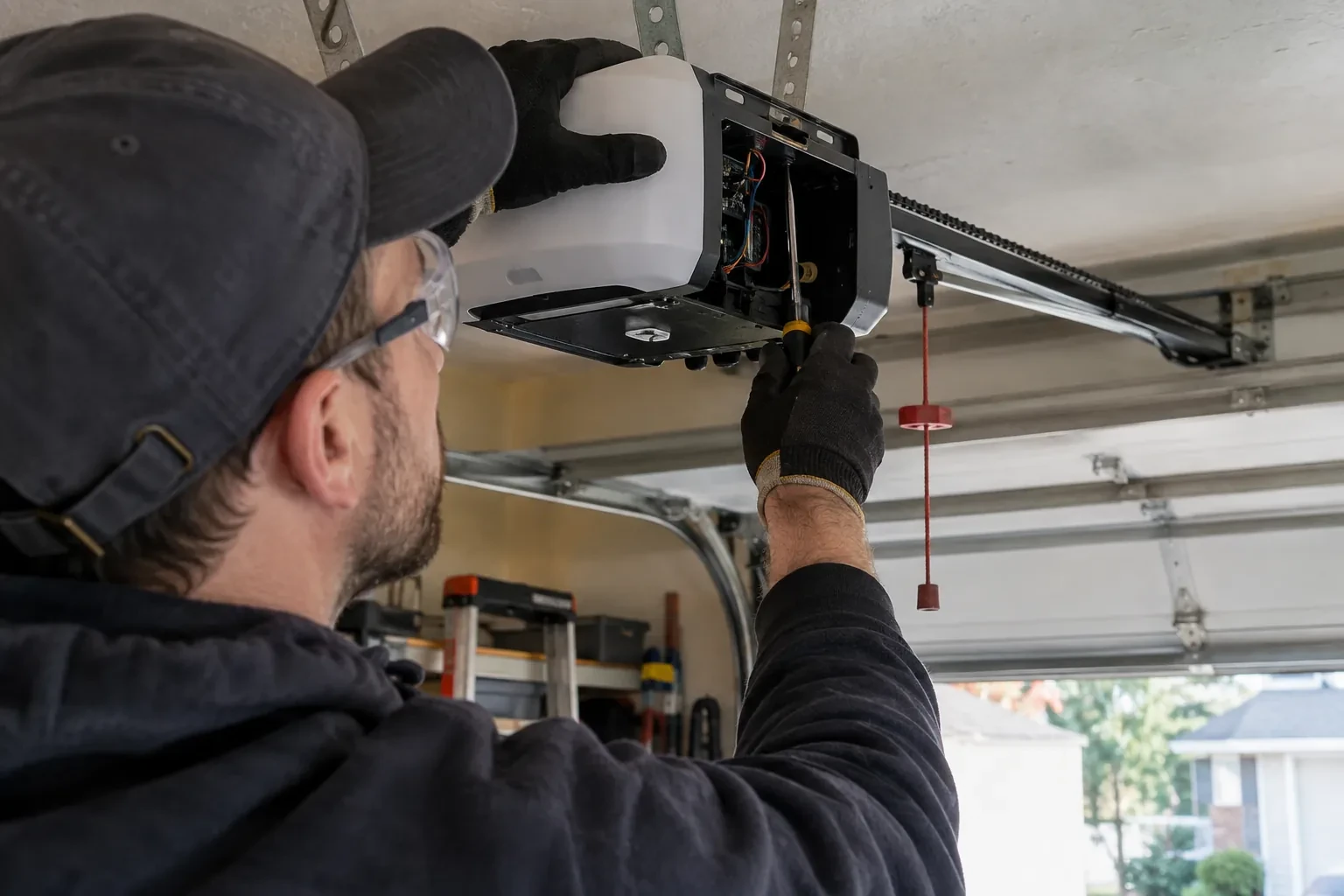
In the van
Lag screws and track bolts
Top fixtures
Perforated angle back hangs
Level, plumb line and square
Track pliers and dead-blow hammer
Garage Door Track Repair or Replacement
What affects the quote
Condition of the jamb wood
Where the jamb is soft or split at the floor, sistering or replacing the lower length is carpentry added to the track work, and the lumber and fasteners are listed on their own line.
Door size and weight
A tall or double door has longer runs of track and heavier loads on the brackets, and a heavy insulated or wood door may call for heavier-gauge track and more substantial hangers.
Ceiling hangers and what they are fixed to
A hanger that has bent or pulled from a joist is replaced, and a run that was only fixed into drywall gets angle reaching to solid framing. Each hanger corrected is named in the quote.
What to have ready
- Where is the damage: near the floor, at the curve, or on the overhead run?
- Has any roller come out of the channel?
- Is anything stored against or hung from the overhead track?
Garage Door Track Repair or Replacement: questions
QuestionsShould I keep using the opener while the track is bent?
It is better to leave the door where it is and use another way in and out. An opener pushing a door through a damaged section pulls rollers out of the channel, twists the top section and can turn a small dent into a jammed door off its track. Industry guidance after any impact is to stop operating the door and have it assessed. Leaving it still keeps the repair small.
How is the vertical track attached to the wall?
Two ways are common. Bracket-mounted track uses several L-shaped jamb brackets, each lag-screwed into the wood jamb, which lets the track be adjusted a little at each bracket. Angle-mounted track bolts to a full-height continuous angle, often chosen where sideroom is tight. In both cases the fasteners bite into the jamb, so the condition of that wood matters as much as the track itself.
My door rubs the frame on one side. Is that a track problem?
Often, yes. The vertical track is meant to stand a fraction further from the jamb at the top than the bottom, so the closed door seals on its stop and swings clear as it rises. If a bracket has loosened or the track was set flat to the wood, the door drags along the stop moulding every trip. Resetting the spacing and taper, and tightening the brackets into sound wood, usually ends the rub.
Related services
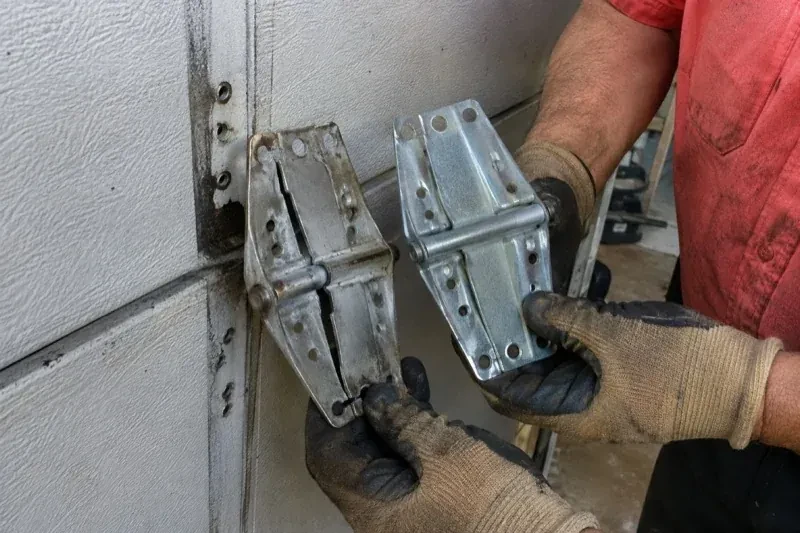
- Garage Door Hinge ReplacementWatching from inside as the door opens, you can see the gap between the second and third panels open up on one side as they turn the corner into the ceiling, then close again.
- Garage Door Cable ReplacementThe door went up as usual this morning, then stopped a third of the way with one corner higher than the other.
- Torsion Spring ReplacementOne side of the door sits higher than the other in the tracks, and a lift cable is hanging slack or has jumped off its drum.