Springs · Lisgar
Garage Door Track Repair or Replacement in Lisgar
After a decade of slushy winters the bottom foot of the track is flaking rust.
In plain words
What you get back is a door that runs its full height without a catch, hesitation or bang, with every roller seated in its channel and both sides rising together. The track sits plumb and firm on the jambs, the horizontal runs hold level from solid hangers, and the door seals along the stop when closed. Because the track was set to the door and the springs re-tensioned to it, the door balances by hand and the opener works lightly. You also leave with a note of the track profile, radius and lift type, which makes any later part a simple match.
How the visit goesThe door climbs crooked, one side clearly ahead of the other. Nothing looks broken, but the two tracks sit different distances from the door, and one leans in toward the opening near the top.
Garage Door Track Repair or Replacement
How the visit goes
Jamb brackets, lag screws and the wood behind them
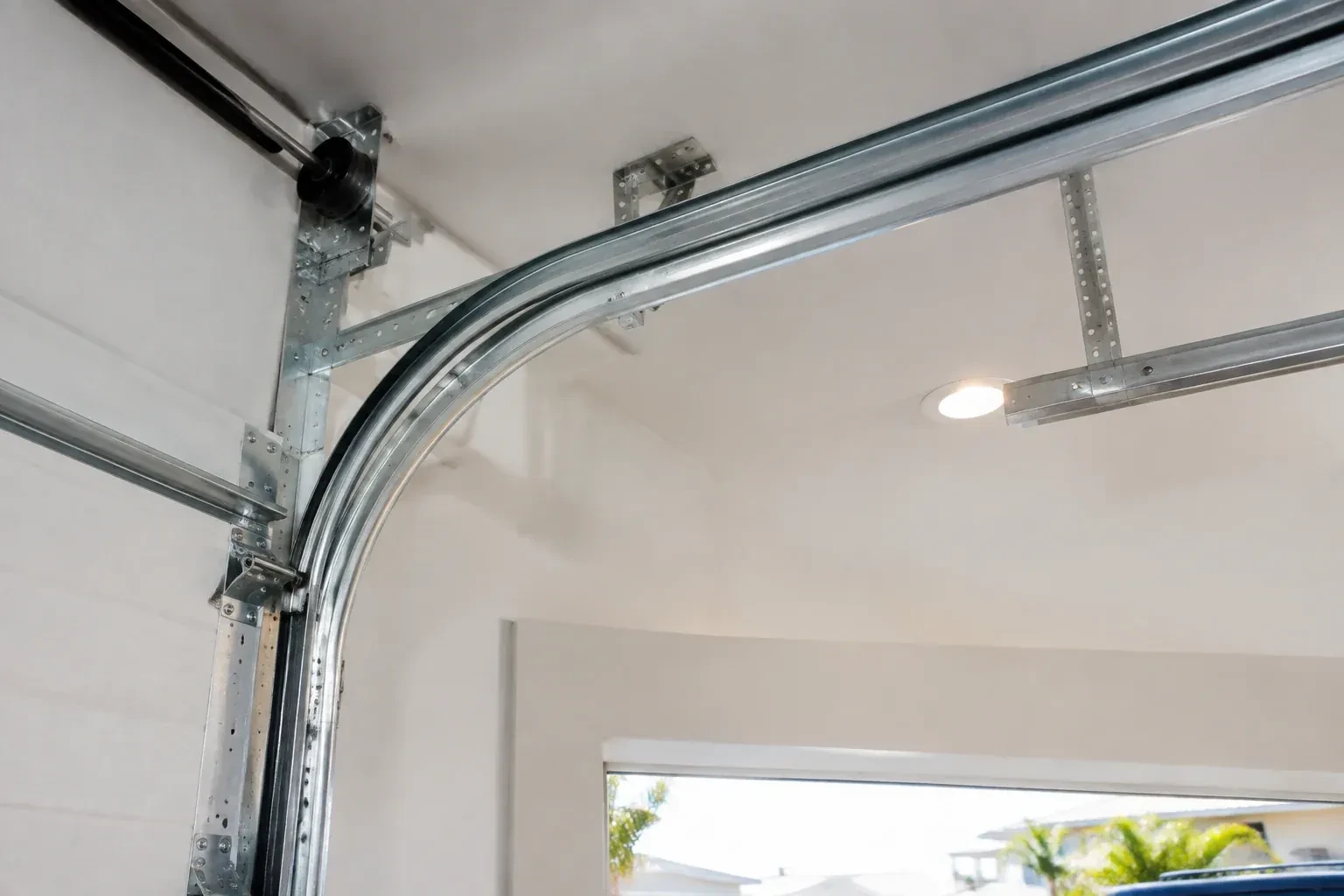
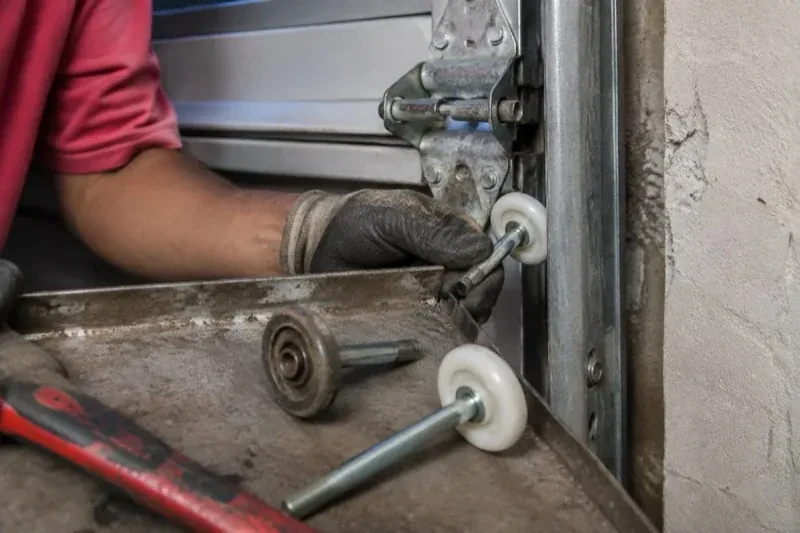
Every fixing along the vertical track is tested by hand and by eye. Jamb brackets that rock, lag screws that turn without tightening, and a continuous angle standing off the wood all mean the track has been free to move. The technician then looks at the jamb itself, probing the bottom foot for softness where splash and salt have soaked in, and checking for splits around the screw holes. In an older garage the wood is often the real fault, and no amount of tightening holds a screw in punky timber. Where that is the case, sistering or replacing the lower jamb goes onto the plan alongside the track.
Fixing into sound framing
Track is only as steady as the wood it is screwed to. Where the bottom of a jamb has gone soft, the technician cuts back to solid timber and sisters a new piece alongside or replaces the lower length, fastening it through to the framing behind. Enlarged or stripped screw holes higher up are plugged and re-drilled, or the bracket is moved to fresh wood. Lag screws of the right length and diameter are driven into the jamb, and any hanger anchored into ceiling finish alone is moved to a joist or given a length of angle to reach one. This is unglamorous work, and it is the reason the alignment lasts.
A door that runs the full path without a catch
The change is felt more than seen. The door rises without the bang or hesitation that marked the damaged spot, both sides climb together, and it turns the curve overhead without the top section twisting. Closed, it sits flush against the stop moulding on both jambs with no stripe of daylight, and open, it stays where the opener leaves it instead of drifting back. The opener sounds calmer because it is no longer dragging a door through a pinch point. Lifted by hand with the opener released, the door moves lightly and holds at waist height, which tells you the track and springs are working together again.
Garage Door Track Repair or Replacement
In the van
Lag screws and track bolts
Top fixtures
Perforated angle back hangs
Level, plumb line and square
Track pliers and dead-blow hammer
Garage Door Track Repair or Replacement
What affects the quote
How the door is sitting
A door resting closed is straightforward. One jammed partway on a bent section, or with rollers out of the channel, has to be supported and freed before the track can be measured.
Low-headroom or high-lift hardware
Changing the layout, rather than repairing the existing one, brings new horizontal track, curve pieces, top fixtures and often drums and spring adjustment, and is quoted as a separate scope.
Ceiling hangers and what they are fixed to
A hanger that has bent or pulled from a joist is replaced, and a run that was only fixed into drywall gets angle reaching to solid framing. Each hanger corrected is named in the quote.
What to have ready
- Is there rust on the track or brackets near the floor?
- Do you have the door's manual or a label with its model?
- Is anything stored against or hung from the overhead track?
Garage Door Track Repair or Replacement: questions
QuestionsShould I keep using the opener while the track is bent?
It is better to leave the door where it is and use another way in and out. An opener pushing a door through a damaged section pulls rollers out of the channel, twists the top section and can turn a small dent into a jammed door off its track. Industry guidance after any impact is to stop operating the door and have it assessed. Leaving it still keeps the repair small.
How is the vertical track attached to the wall?
Two ways are common. Bracket-mounted track uses several L-shaped jamb brackets, each lag-screwed into the wood jamb, which lets the track be adjusted a little at each bracket. Angle-mounted track bolts to a full-height continuous angle, often chosen where sideroom is tight. In both cases the fasteners bite into the jamb, so the condition of that wood matters as much as the track itself.
My door rubs the frame on one side. Is that a track problem?
Often, yes. The vertical track is meant to stand a fraction further from the jamb at the top than the bottom, so the closed door seals on its stop and swings clear as it rises. If a bracket has loosened or the track was set flat to the wood, the door drags along the stop moulding every trip. Resetting the spacing and taper, and tightening the brackets into sound wood, usually ends the rub.
Related services
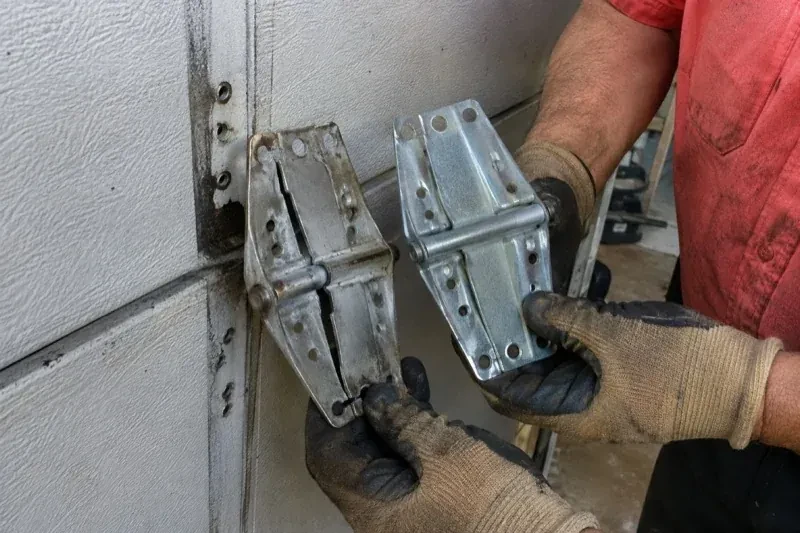
- Garage Door Hinge ReplacementWatching from inside as the door opens, you can see the gap between the second and third panels open up on one side as they turn the corner into the ceiling, then close again.
- Garage Door Cable ReplacementThe door went up as usual this morning, then stopped a third of the way with one corner higher than the other.
- Torsion Spring ReplacementOne side of the door sits higher than the other in the tracks, and a lift cable is hanging slack or has jumped off its drum.