Springs · Lisgar
Garage Door Balance Adjustment in Lisgar
On cold mornings the door barely makes it up.
In plain words
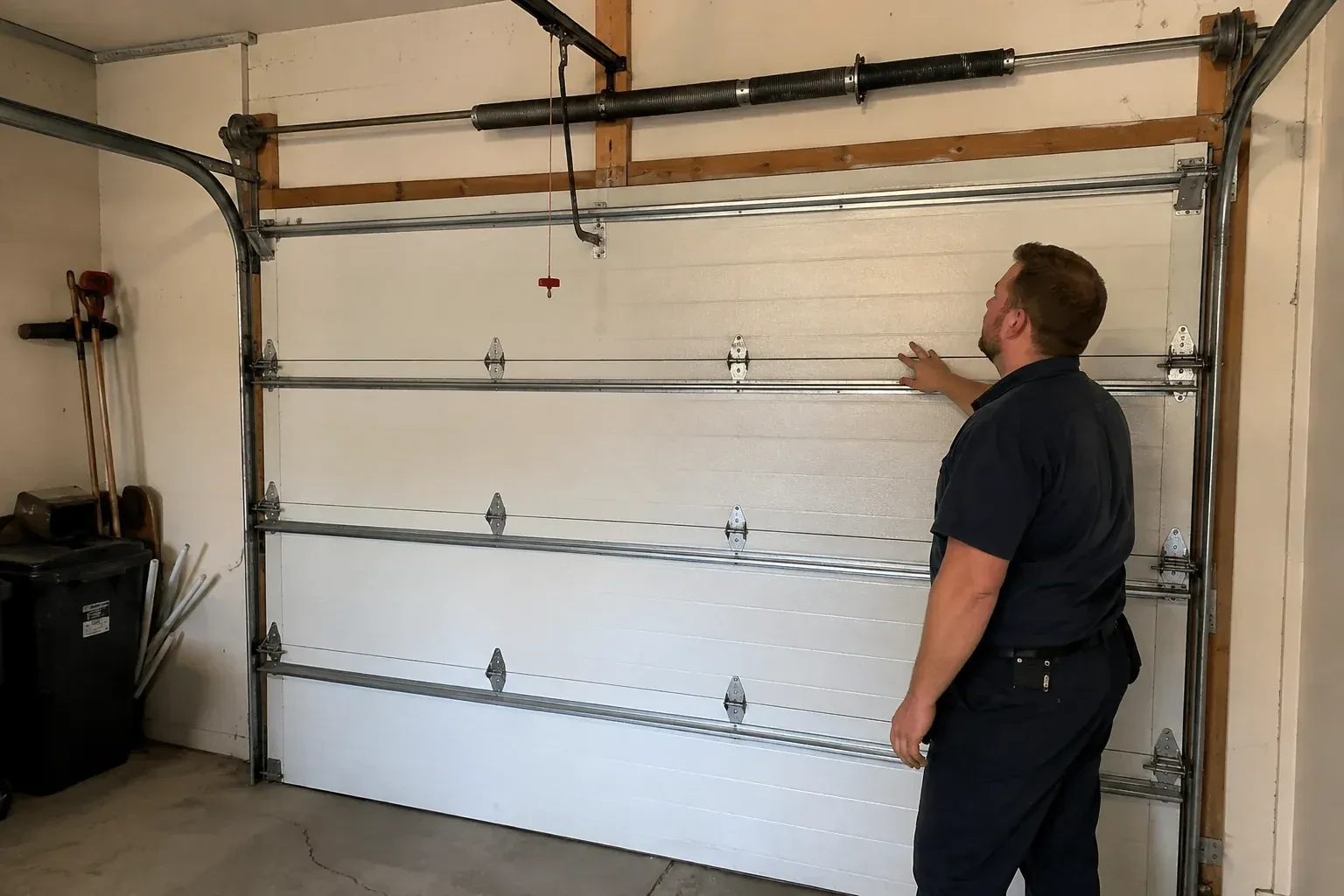
The whole service is built around one simple test that door manufacturers and safety bodies describe the same way. With the opener released, the door is lifted by hand to roughly a metre off the floor and let go. A balanced door stays where it is. One that drifts upward is carrying too much spring tension; one that sinks is carrying too little. The technician reads that behaviour at several heights, checks the door is level across its width, and then adjusts the counterbalance a quarter turn at a time, testing to the manufacturer's specified height and tolerance, until the door meets that standard and moves smoothly.
How the visit goesThe door has grown heavy so gradually you stopped noticing, until a visitor tried to lift it and could not. The opener still manages, but it sounds strained, the chain slaps on the way up, and the wall button gets pressed twice most mornings.
Garage Door Balance Adjustment
How the visit goes
Releasing the door and reading how it behaves
The assessment begins with the opener out of the picture. The technician closes the door, pulls the red manual release so the trolley disconnects, and lifts the door by hand to about a metre, then to full height, then lets it settle. A balanced door pauses wherever it is stopped; a door that climbs on its own has too much tension, one that drops has too little, and one that is fine low down but drifts up near the top can point to drum profile, cable length, uneven section weight or the spring's own characteristics rather than one single cause. How much effort the lift takes and whether it stays fully open are noted before anything is adjusted.
Adding or releasing quarter turns on a torsion spring
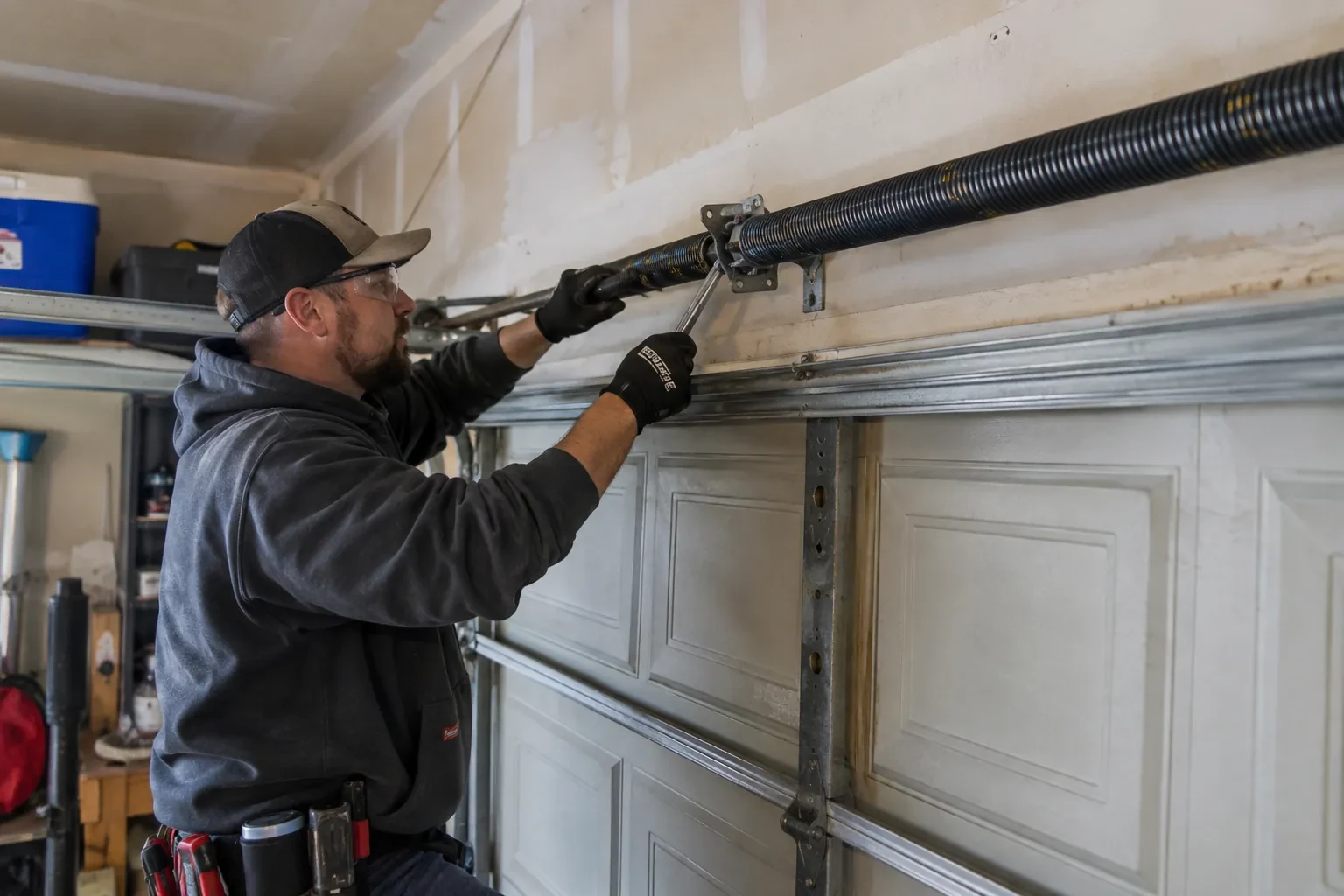
With one winding bar seated firmly in the winding cone and a second ready, the technician loosens the cone's set screws and either adds tension by levering the bar upward or releases it by letting the bar down, always a quarter turn at a time, always with a bar in the cone. After each quarter turn the set screws are tightened onto the shaft, the clamp is removed and the door is lifted by hand to test. A door that sank now holds a little higher; a door that climbed now settles. On a two-spring door the same change is made to both springs so they share the load equally.
A door that is nearly weightless again
The difference is obvious the first time you lift the door by hand. It rises with light effort, pauses when you stop it, and stays fully open without drifting down. Closing it, the bottom seal meets the slab evenly along its length instead of thudding at one corner. Under power, the opener runs quieter because it is guiding a balanced door rather than hauling one, and it stops reversing near the floor for no reason. The door also moves at the speed of your hand, neither racing ahead nor dragging, which is exactly what the industry checklist describes as correct operation.
Garage Door Balance Adjustment
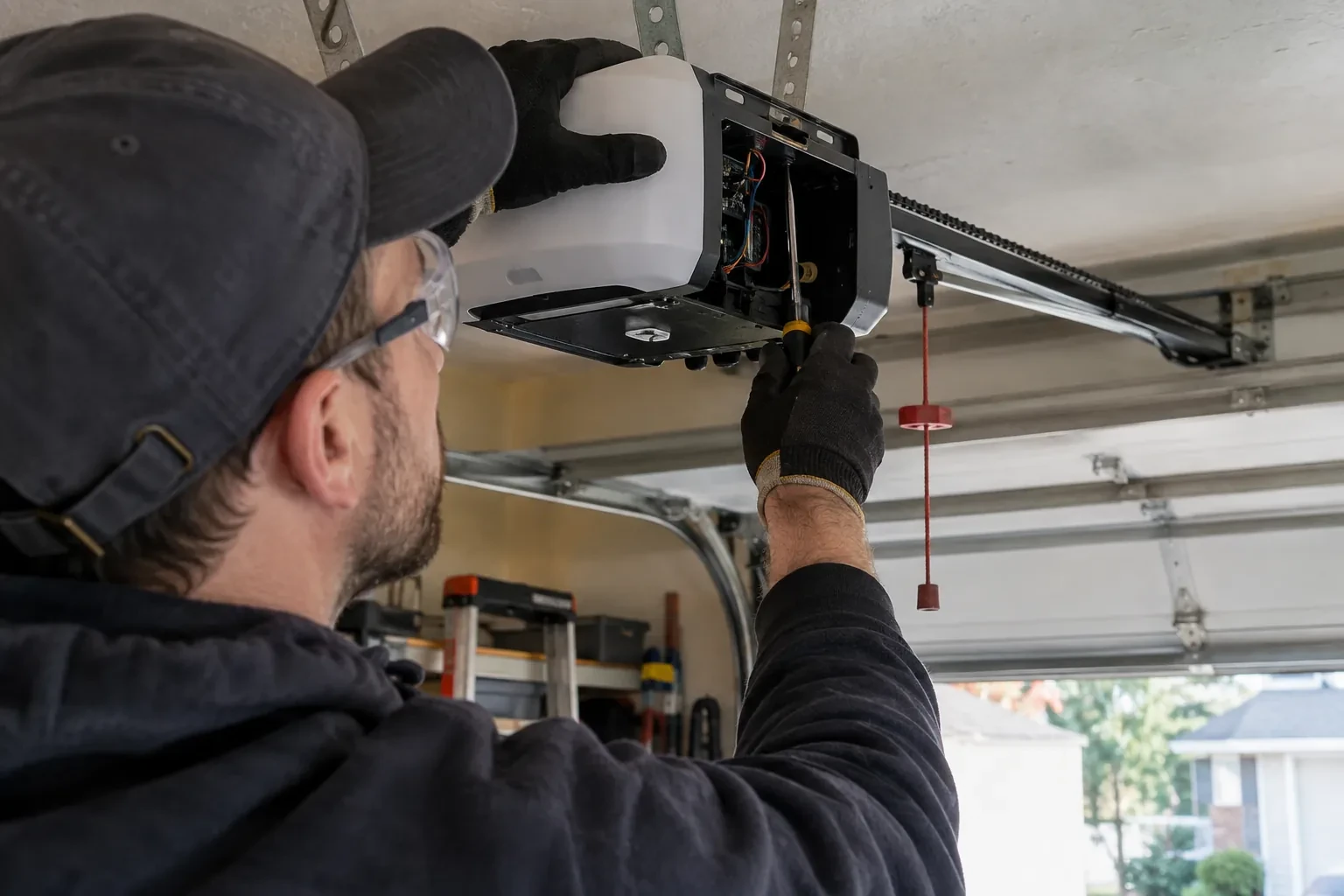
In the van
Garage-door lubricant
Containment cables
Cable drums
Lift cables
Winding bars
Garage Door Balance Adjustment
What affects the quote
Door out of level
A door with one corner high needs its cables reset on the drums before the tension is set, which adds a step to the visit and is listed as its own item.
Single or double door
A double door commonly carries more spring than a single, but the exact count follows the manufacturer's engineered hardware package for that door's weight rather than width alone: one, two or more torsion springs, or one or two extension springs per side. More springs means more adjustment and testing.
Lubrication and tune-up
Some people combine the balance adjustment with a full lubrication and hardware tightening. That bundle is priced as a whole and saves a separate maintenance visit.
What to have ready
- Has anyone turned up the force setting on the opener?
- Has anything been added to the door, such as insulation, windows or a new section?
- Does the door sit level when closed, or is one corner higher?
Garage Door Balance Adjustment: questions
QuestionsWhy does my door sink or slam down when released?
Not enough spring tension for the door's weight. Springs lose a little pull as they age through thousands of cycles, and a door gains weight when insulation, windows or a heavier seal are added. Either way the door outweighs its springs. Adding tension in measured quarter turns restores the hold, provided the springs are sound; if they are near the end of their life, new ones are the right answer.
The door was fine until a power cut. Why is it heavy now?
During a power cut the door is often released and moved by hand for the first time in years, and what people discover is a door that had already grown heavy while the opener quietly covered for it. The outage did not change the springs; it revealed them. A balance check confirms what the door weighs against what the springs give, and resets them to match.
What is the difference between balancing a torsion door and an extension-spring door?
A torsion door has springs on a shaft above the opening, and tension is changed by winding the springs with steel bars, a quarter turn at a time. An extension door has springs along the tracks, and tension is changed by moving the hook or cable clip to a different position with the door open and clamped. The hand test that proves the result is the same for both.
Related services
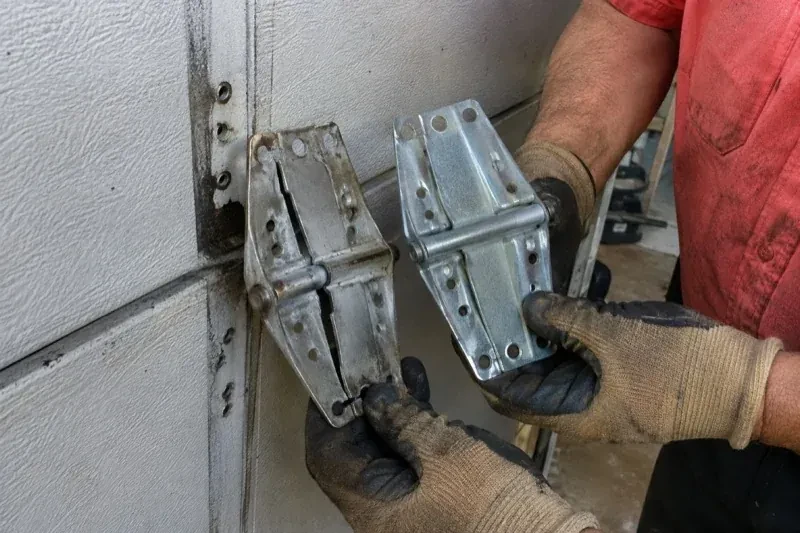
- Garage Door Hinge ReplacementWatching from inside as the door opens, you can see the gap between the second and third panels open up on one side as they turn the corner into the ceiling, then close again.
- Garage Door Track Repair or ReplacementAfter a decade of slushy winters the bottom foot of the track is flaking rust.
- Garage Door Cable ReplacementThe door went up as usual this morning, then stopped a third of the way with one corner higher than the other.