Springs · Mississauga
Garage Door Hinge Replacement
Watching from inside as the door opens, you can see the gap between the second and third panels open up on one side as they turn the corner into the ceiling, then close again.
In plain words
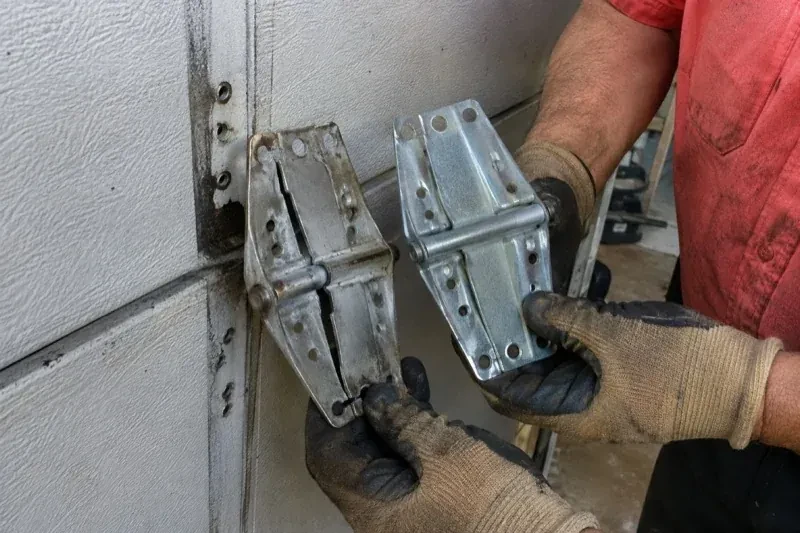
The hinge is only as good as what it is screwed to. On a steel door the screws bite into the stile, a folded steel channel at the panel edge, sometimes with a support plate behind it; on a wood door they thread into timber. Years of vibration back screws out, and once a hole is stripped the hinge rocks and the joint loosens. Hinge replacement includes fresh fasteners, and where holes have opened up the technician shifts to sound metal, steps up to a larger self-drilling screw, or bolts through the panel with a nut and washer or a backer plate. The new hinge then stays put.
How the visit goesThe roller at the top of the second panel is leaning outward and only half of the wheel is still in the track. Behind it, the hinge that should hold it flat against the door has a screw missing and another hanging by a thread.
Garage Door Hinge Replacement
How the visit goes
The rollers the hinges carry
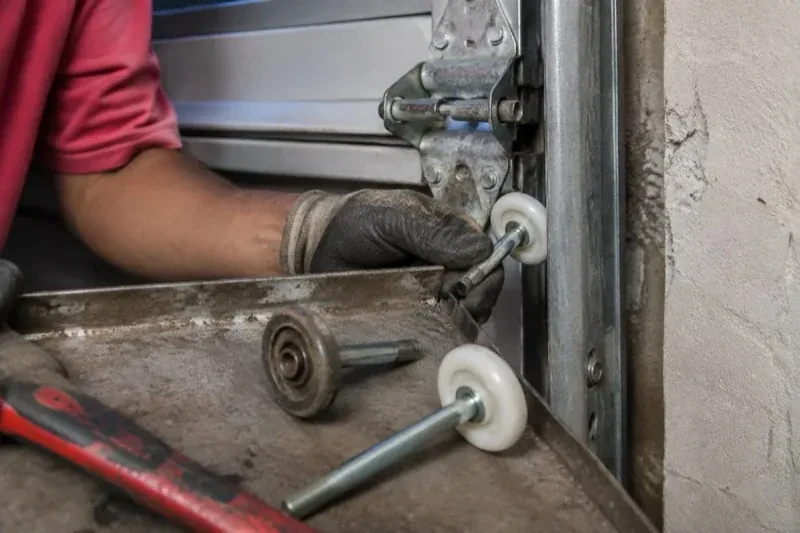
Each edge hinge cradles a roller stem, and the two wear together. The technician spins every wheel, looks for cracked or flat-spotted tires, checks that the stem has the right length for the hinge it sits in and that the bearing turns without grinding. A roller that has seized drags at the hinge on every trip, and a stem that is too short lets the wheel wander out of the track and twist the hinge. Where rollers are worn, changing them while the hinge is off costs a few minutes and stops the new hinge inheriting the strain that finished the old one.
Travel, fit, balance and the opener
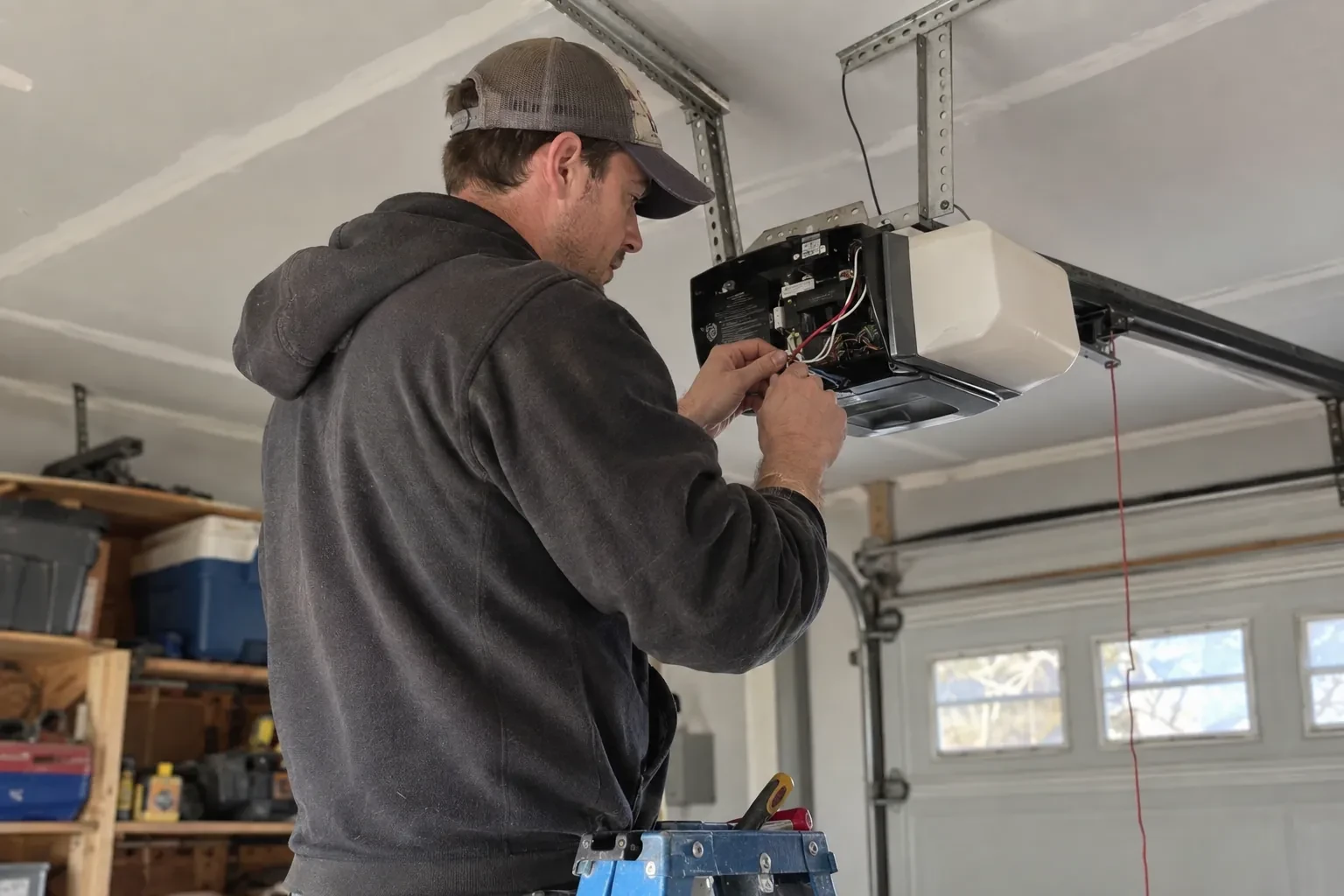
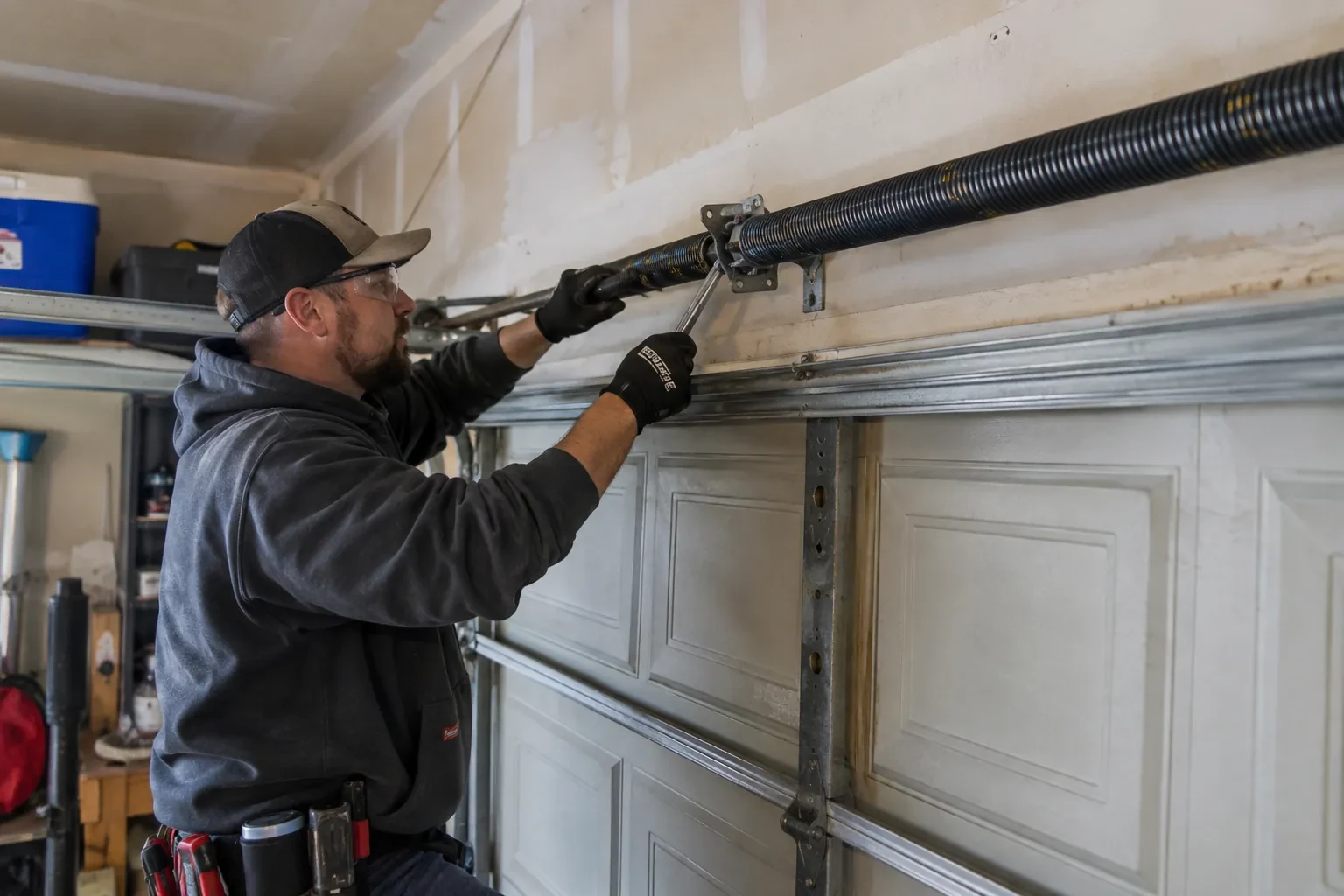
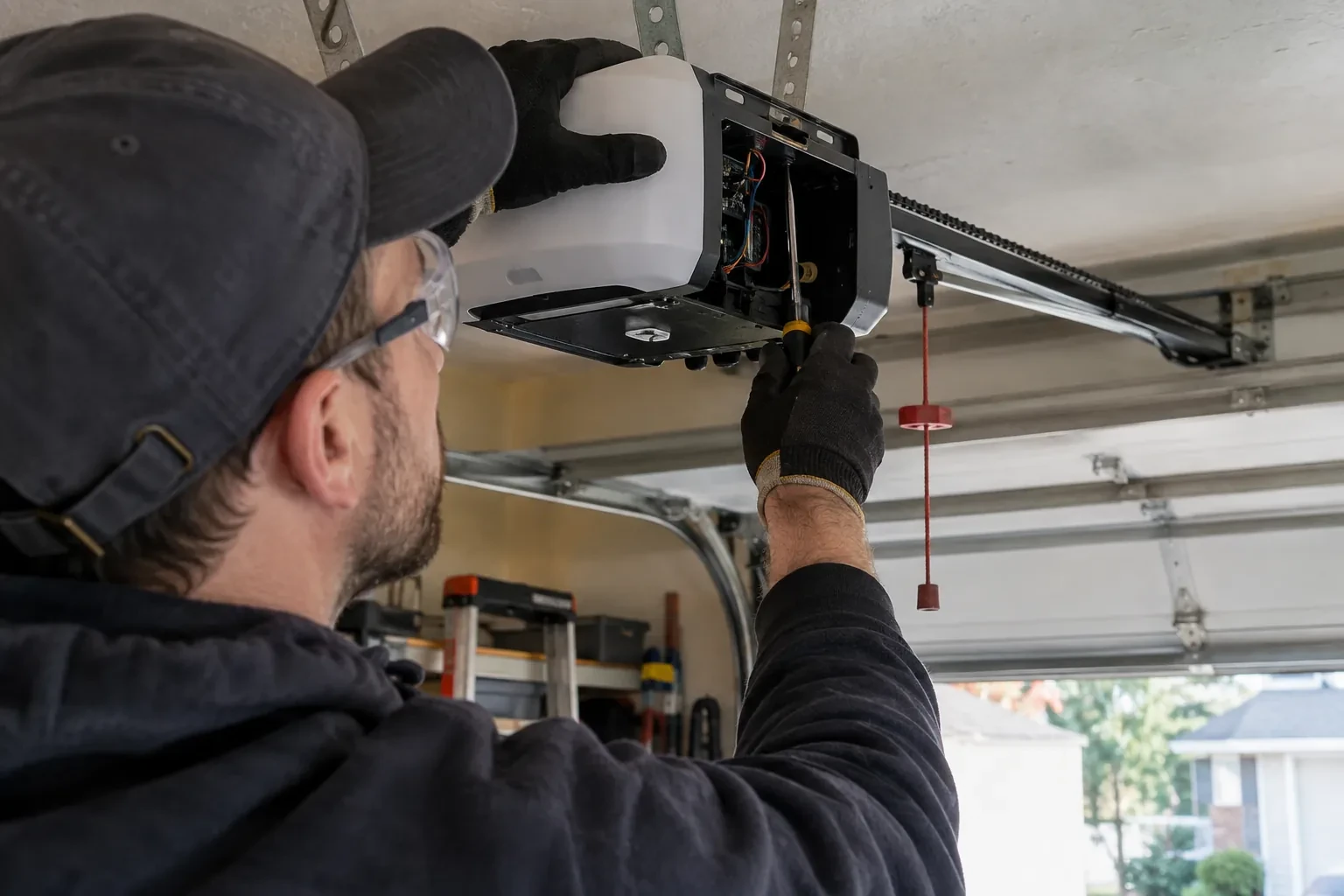
Once every hinge is on, the door is run by hand. The technician watches each joint turn the curve, listening for the pop that started the call and looking for a gap opening between panels. The door is closed and checked for an even fit against both jambs, then raised to waist height and let go: a balanced door stays put, which confirms the hinge work has not disturbed the springs' job. Rollers are watched for staying flat in the track. Then the opener is reconnected, its travel limits confirmed, and the reversing test and photo-eye check carried out while you watch.
What was fitted, written down
Before leaving, the technician tells you which hinges were replaced, their numbers and gauge, whether rollers or backer plates went on, and anything corrected along the way such as a wrong-numbered hinge or a loose track bracket. Write it inside the door manual or on a card near the opener, along with the door's make and panel count. Hinge widths and hole patterns vary between manufacturers, so the next technician, or you at the parts counter, can match parts without measuring from scratch. If some hinges were left in place as sound, their condition goes on the same note so you know what to watch.
Garage Door Hinge Replacement
In the van
Replacement rollers
Centre hinges
Heavy-gauge hinges for heavy doors
Track clamps or locking pliers
Numbered galvanized edge hinges
Garage Door Hinge Replacement
What affects the quote
Opener adjustment afterwards
A door that folds freely again sometimes needs the opener's force and travel settings reset and its reversal retested. That adjustment is named when it is needed.
Condition of the mounting holes
Stripped or torn holes need a larger screw, a through-bolt with nut and washer, or a backer plate. That extra anchoring is small but is quoted separately from the hinge itself.
Adding a strut to a wide door
A wide panel without a strut flexes and loosens its hinges. Fitting one is an optional item that stiffens the panel and protects the new hinges from the same movement.
What to have ready
- Is anything stored against the door or under the track we should know about?
- Has a car, bin or anything else bumped the door recently?
- Do any screws turn without tightening when you press a hinge?
Garage Door Hinge Replacement: questions
QuestionsHow should I lubricate the hinges?
A short burst of silicone or white lithium spray made for garage doors on each hinge knuckle and roller stem, spring and autumn, then run the door a few times to work it in. Wipe away any excess. Skip heavy grease and general-purpose oil, which trap grit and salt against the steel. Leave the track dry and simply wipe it clean, since lubricant in the track makes wheels slide instead of roll.
What are the hinges made of?
Stamped galvanized steel, formed into two leaves joined by a pin or a rolled tube. The zinc coating is what resists rust in a garage that sees wet cars and salt, and it is why a scratched or bent hinge starts to brown at the damaged spot. Edge hinges include a tube that holds the roller stem. Thickness is given as a gauge, most residential hinges being 14 or 18.
The screws spin in their holes. Can the hinge still be fitted securely?
Yes. A stripped hole is common on older steel doors and on wood doors where the timber has softened. The technician either shifts the hinge to fresh metal within the stile, uses a larger self-drilling screw that cuts new threads, or drills through and fits a bolt with a nut and washer or a backer plate on the inside. Any of these gives the new hinge a firmer anchor than the original screws had.
Related services
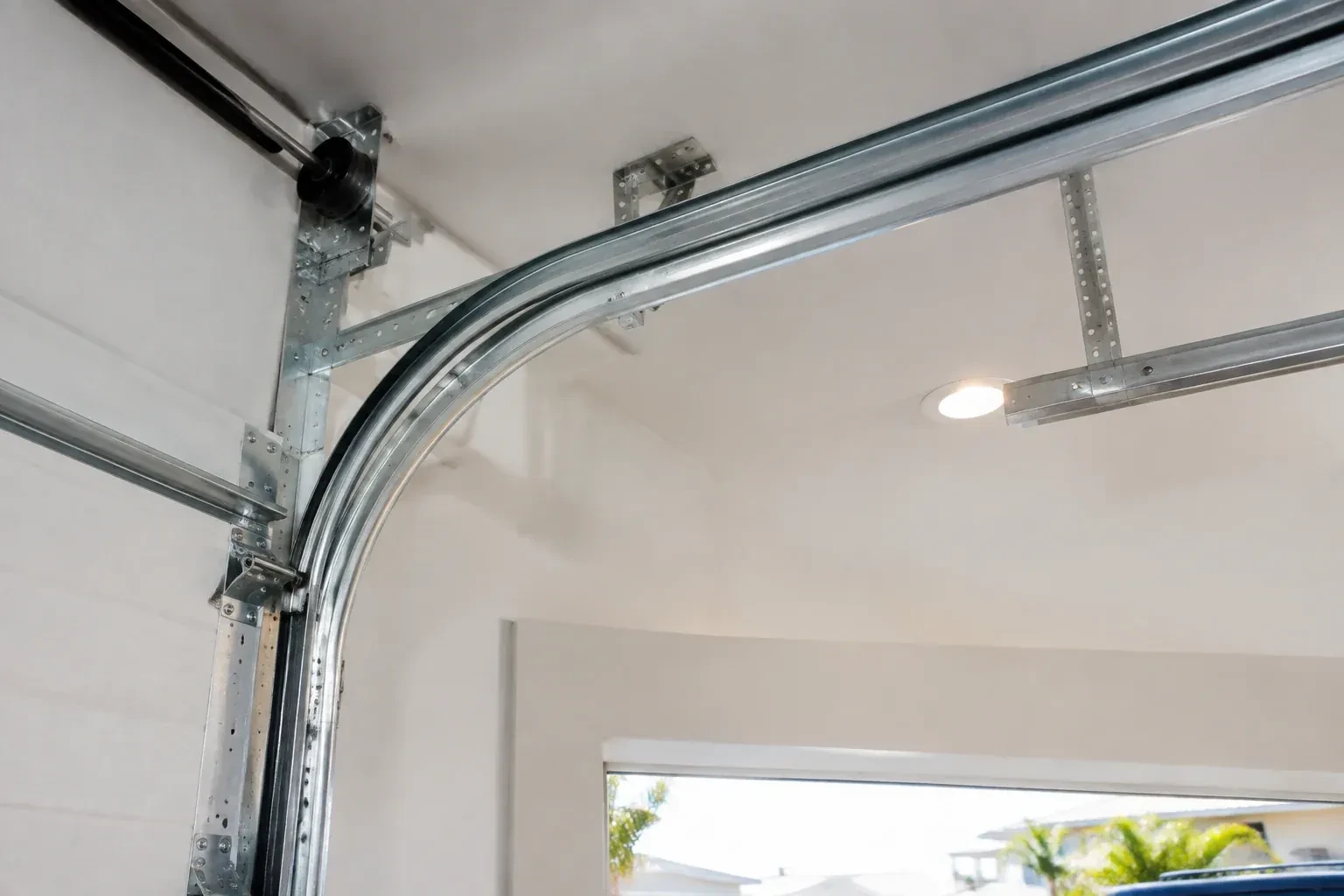
- Garage Door Track Repair or ReplacementAfter a decade of slushy winters the bottom foot of the track is flaking rust.
- Garage Door Cable ReplacementThe door went up as usual this morning, then stopped a third of the way with one corner higher than the other.
- Torsion Spring ReplacementOne side of the door sits higher than the other in the tracks, and a lift cable is hanging slack or has jumped off its drum.