Springs · Mississauga
Garage Door Balance Adjustment
On cold mornings the door barely makes it up.
In plain words
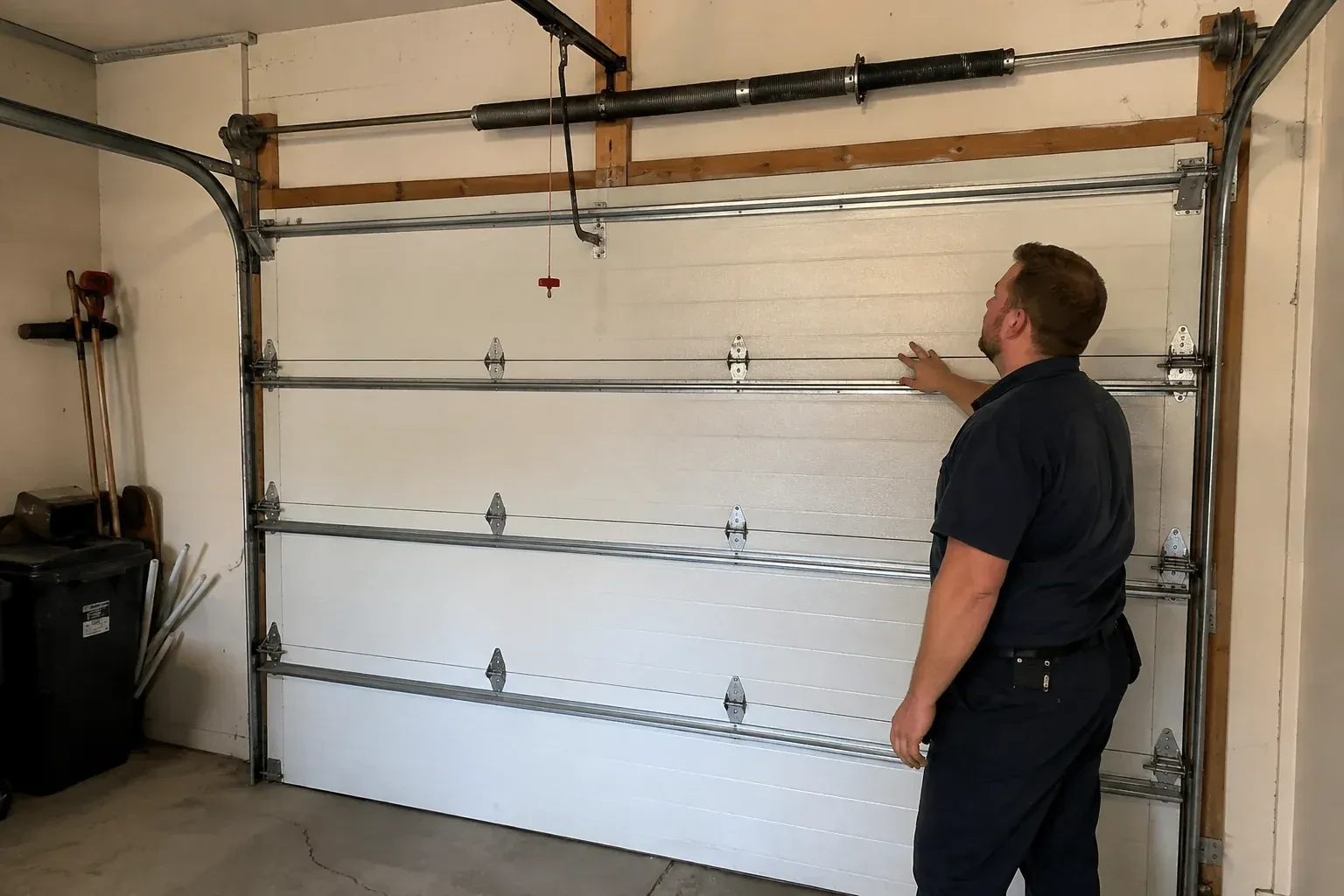
The whole service is built around one simple test that door manufacturers and safety bodies describe the same way. With the opener released, the door is lifted by hand to roughly a metre off the floor and let go. A balanced door stays where it is. One that drifts upward is carrying too much spring tension; one that sinks is carrying too little. The technician reads that behaviour at several heights, checks the door is level across its width, and then adjusts the counterbalance a quarter turn at a time, testing to the manufacturer's specified height and tolerance, until the door meets that standard and moves smoothly.
How the visit goesSince the new insulated panels went in, the door feels like a different animal. It closes with a thud, the opener labours where it used to hum, and lifting it by hand takes a proper heave rather than a fingertip.
Garage Door Balance Adjustment
How the visit goes
Looking at the opener's settings without touching them yet
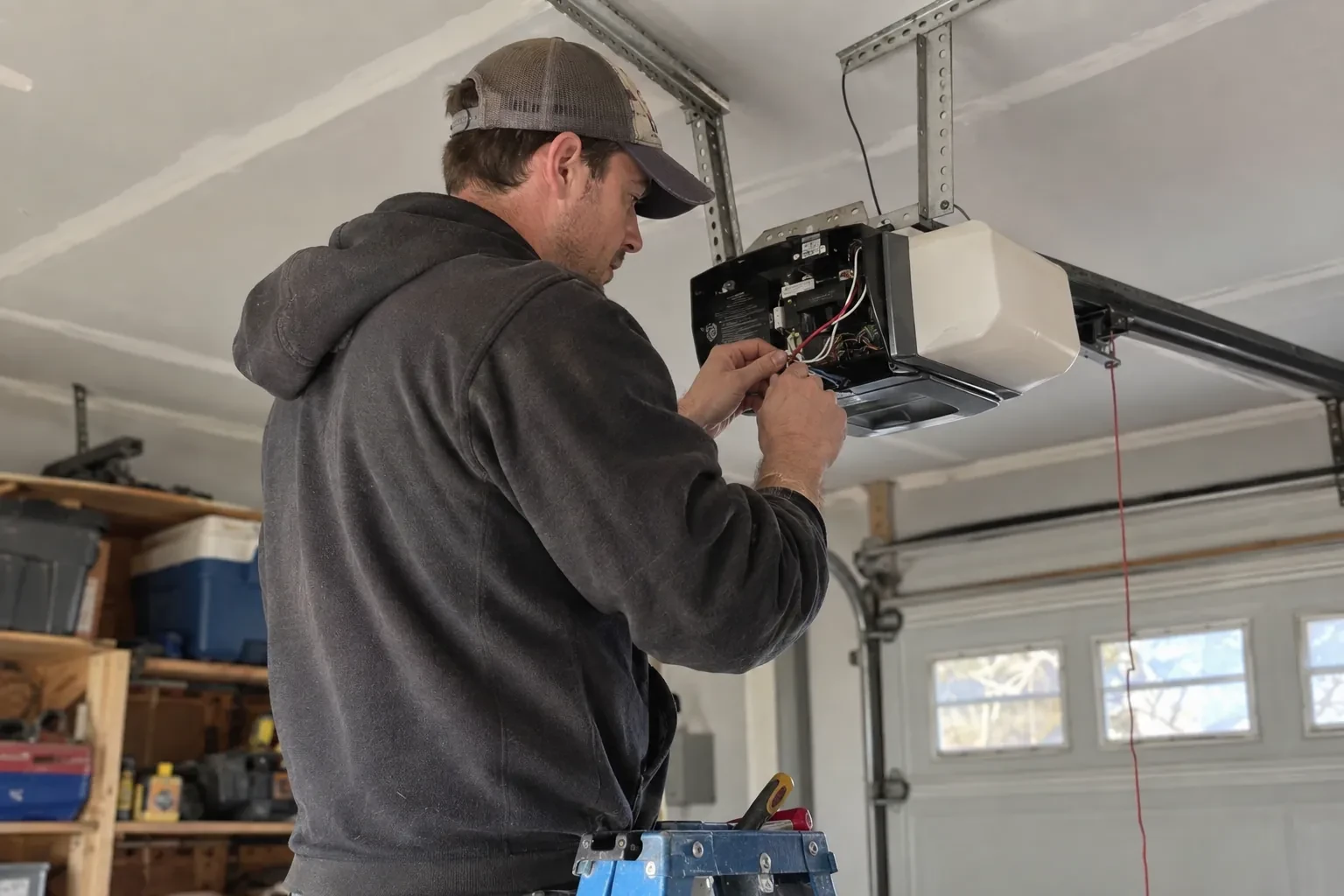
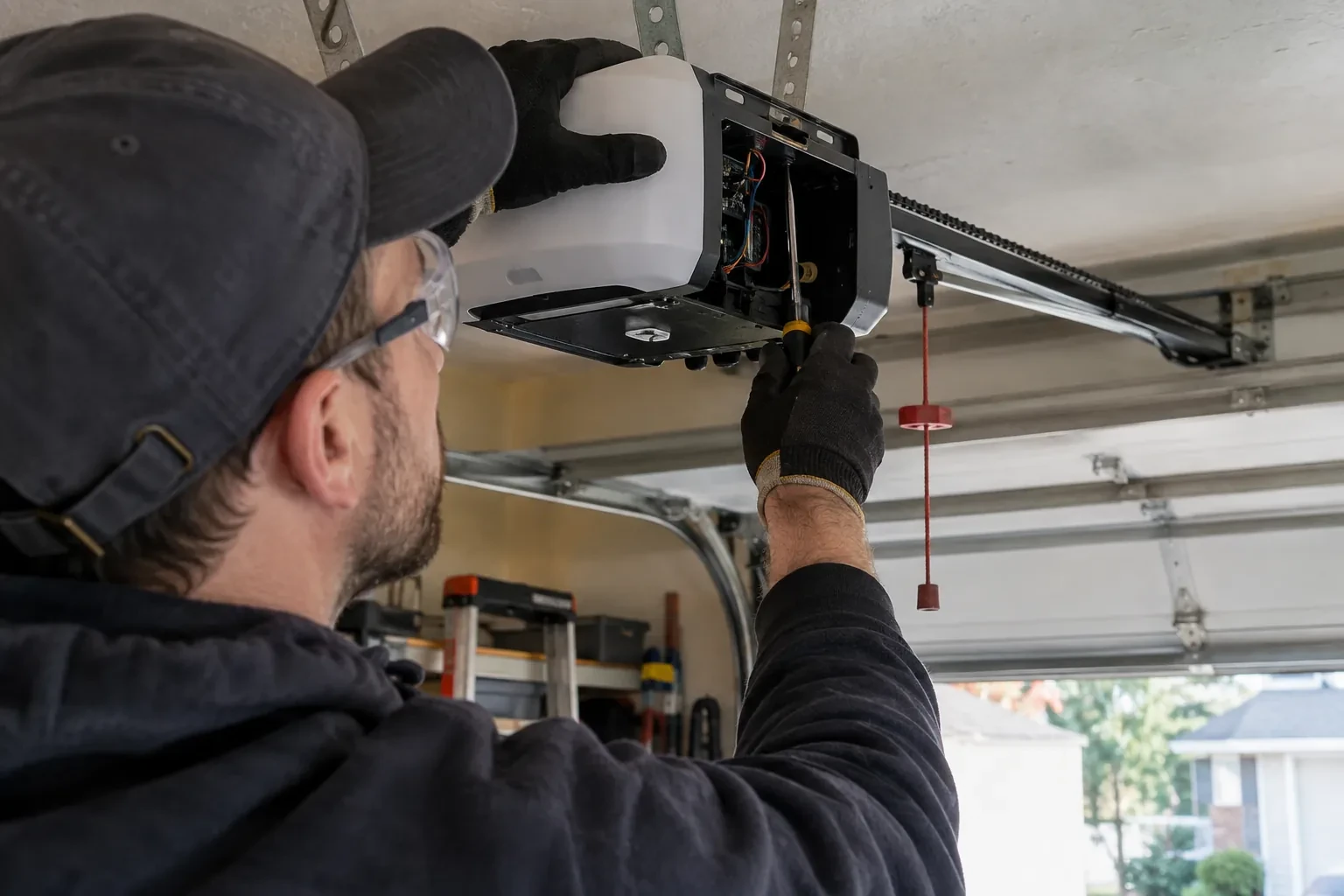
The opener is inspected as a witness rather than a cure. The technician checks its force and travel settings, listens for strain during a powered cycle, and notes whether it reverses near the floor or stalls part way up. A force setting that has been turned up over the years is a strong hint that someone has been compensating for a door that grew heavy. Those settings are left alone for now, because the right order is to balance the door first and then fit the opener to it. Any change made to the opener before the door is corrected would only mask what the door is asking for.
Adding or releasing quarter turns on a torsion spring
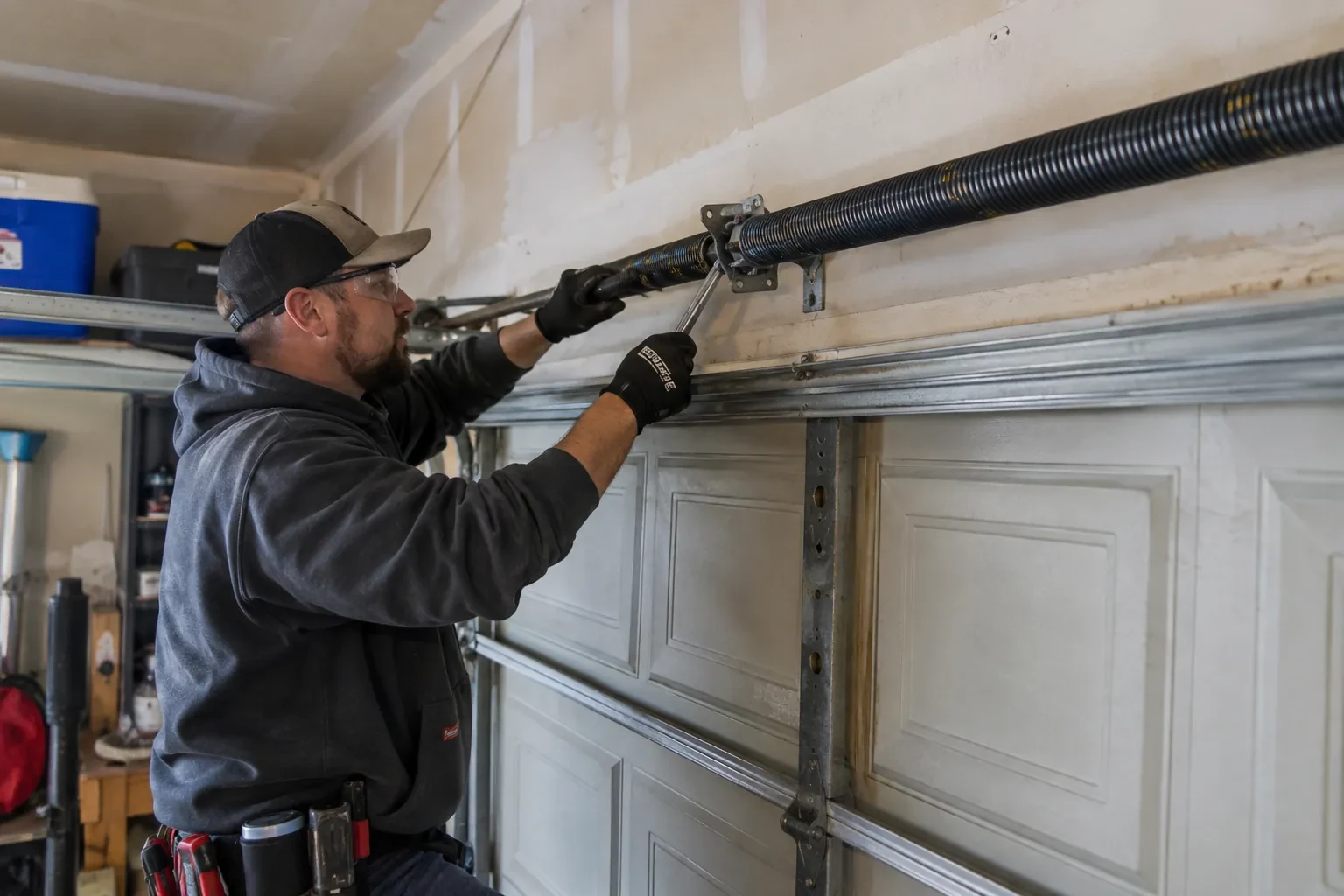
With one winding bar seated firmly in the winding cone and a second ready, the technician loosens the cone's set screws and either adds tension by levering the bar upward or releases it by letting the bar down, always a quarter turn at a time, always with a bar in the cone. After each quarter turn the set screws are tightened onto the shaft, the clamp is removed and the door is lifted by hand to test. A door that sank now holds a little higher; a door that climbed now settles. On a two-spring door the same change is made to both springs so they share the load equally.
Watching for the early signs of drift
You will now know what the door feels like when it is right, which makes small changes easy to spot. A door that begins to close with a heavier thud, an opener that pauses at the top or hums a little longer, a gap appearing under one corner, or a door that no longer quite stays fully open when released are all early signs. Cold weather can make the door feel a little heavier for a few weeks without anything being wrong. But a door that stalls, races or no longer passes its balance check is telling you to stop using it and book an inspection promptly rather than waiting out the season, since the cause is not always minor.
Garage Door Balance Adjustment
In the van
Garage-door lubricant
Containment cables
Cable drums
Lift cables
Winding bars
Garage Door Balance Adjustment
What affects the quote
Single or double door
A double door commonly carries more spring than a single, but the exact count follows the manufacturer's engineered hardware package for that door's weight rather than width alone: one, two or more torsion springs, or one or two extension springs per side. More springs means more adjustment and testing.
Commercial or oversized doors
Doors wider or heavier than a standard residential opening use heavier springs, sometimes several on one shaft, and take longer to wind and test, which the quote reflects.
Rollers, hinges and friction repairs
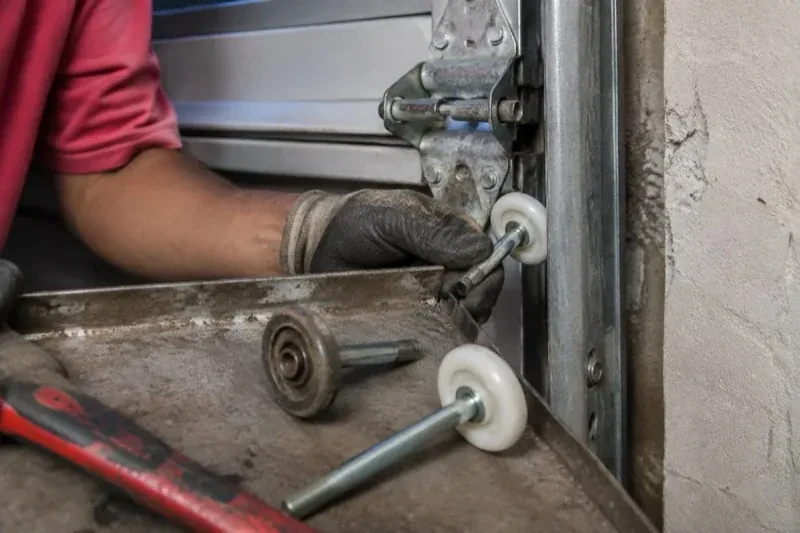
Seized rollers or worn hinges that made the door heavy are pointed out and offered as optional items, since replacing them while the technician is at the door is efficient.
What to have ready
- Did the heaviness come on gradually or all at once?
- Is it a single or a double door, and roughly how tall?
- Does the door behave differently in cold weather?
Garage Door Balance Adjustment: questions
QuestionsWhy does my door sink or slam down when released?
Not enough spring tension for the door's weight. Springs lose a little pull as they age through thousands of cycles, and a door gains weight when insulation, windows or a heavier seal are added. Either way the door outweighs its springs. Adding tension in measured quarter turns restores the hold, provided the springs are sound; if they are near the end of their life, new ones are the right answer.
The door was fine until a power cut. Why is it heavy now?
During a power cut the door is often released and moved by hand for the first time in years, and what people discover is a door that had already grown heavy while the opener quietly covered for it. The outage did not change the springs; it revealed them. A balance check confirms what the door weighs against what the springs give, and resets them to match.
What is the difference between balancing a torsion door and an extension-spring door?
A torsion door has springs on a shaft above the opening, and tension is changed by winding the springs with steel bars, a quarter turn at a time. An extension door has springs along the tracks, and tension is changed by moving the hook or cable clip to a different position with the door open and clamped. The hand test that proves the result is the same for both.
Related services
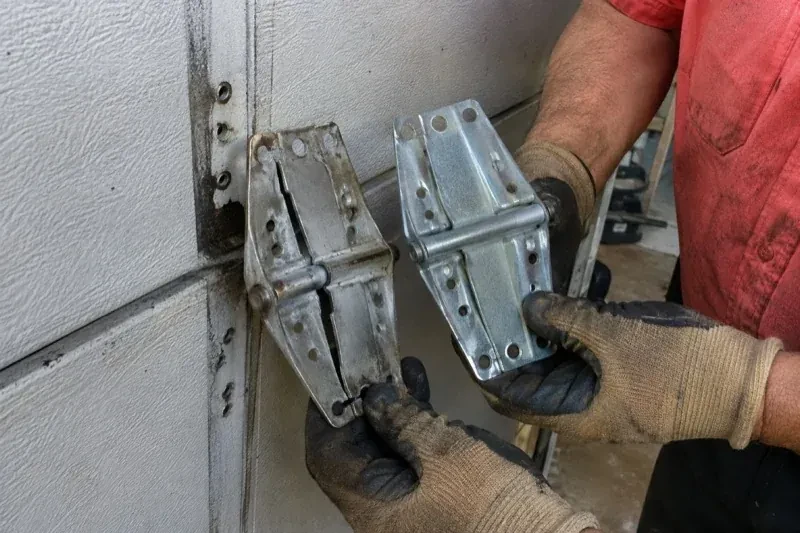
- Garage Door Hinge ReplacementWatching from inside as the door opens, you can see the gap between the second and third panels open up on one side as they turn the corner into the ceiling, then close again.
- Garage Door Track Repair or ReplacementAfter a decade of slushy winters the bottom foot of the track is flaking rust.
- Garage Door Cable ReplacementThe door went up as usual this morning, then stopped a third of the way with one corner higher than the other.