Springs · Mississauga
Torsion Spring Replacement in Mississauga
One side of the door sits higher than the other in the tracks, and a lift cable is hanging slack or has jumped off its drum.
In plain words
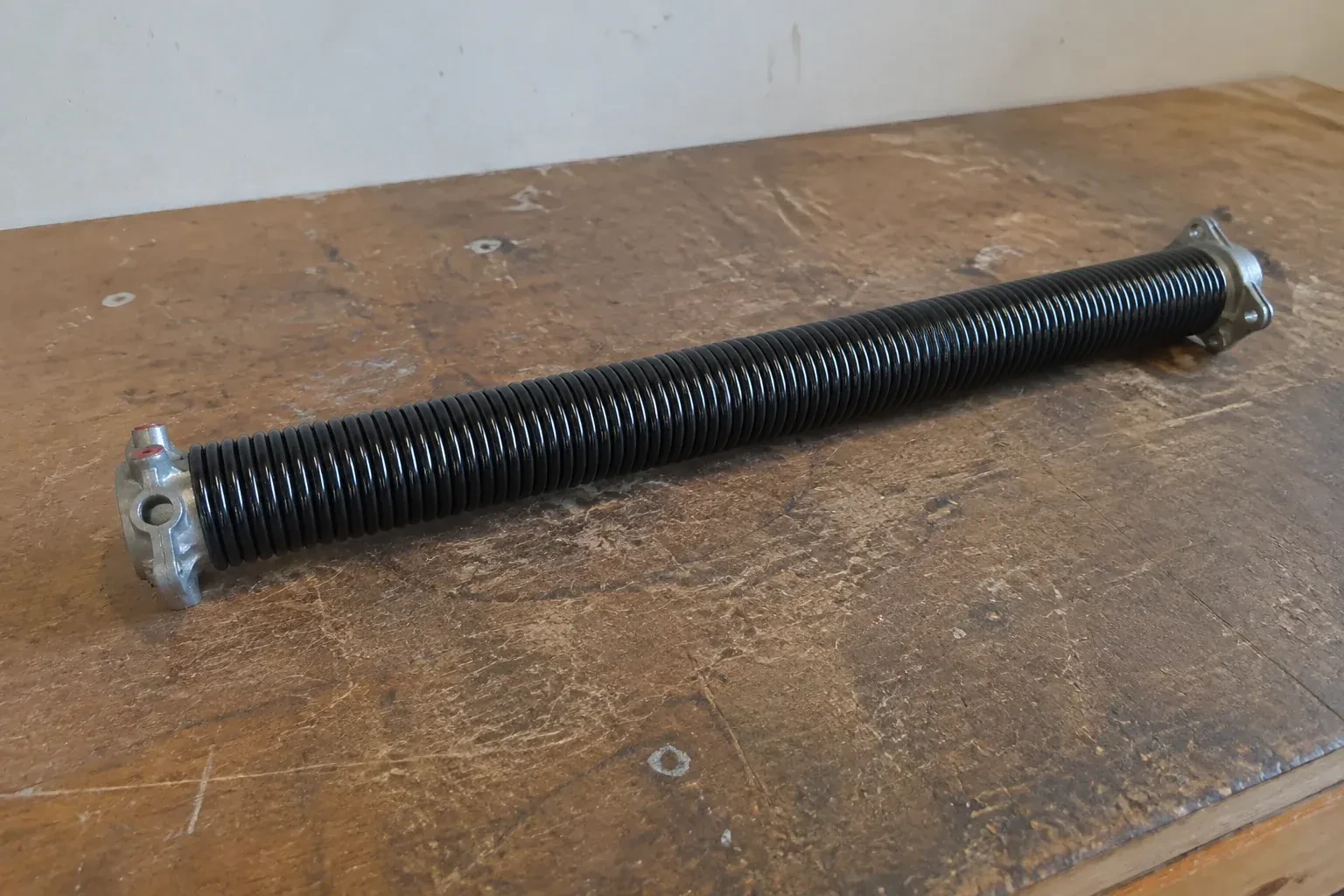
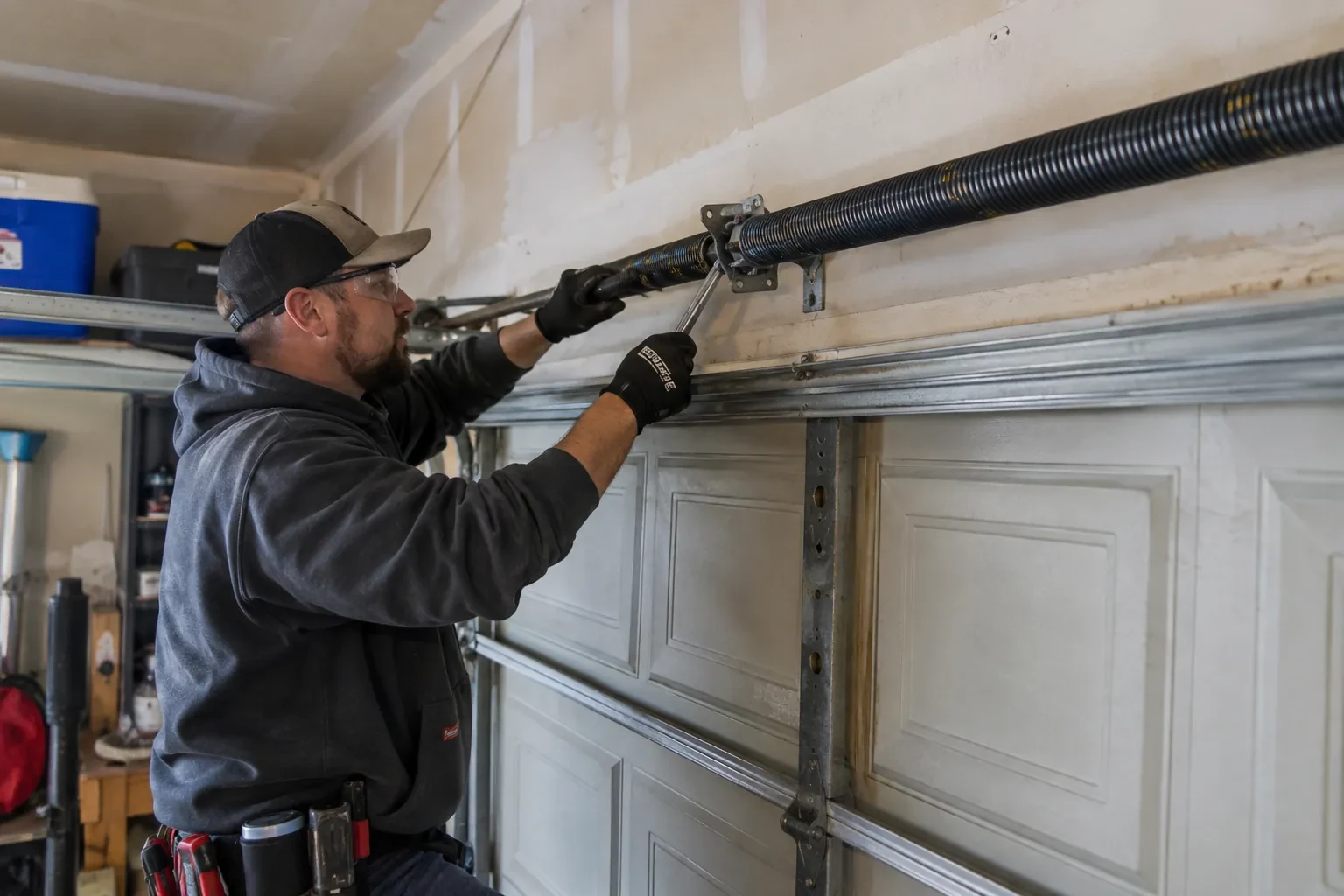
A spring that breaks with the car inside puts the whole morning on hold, and this service is designed to get that door working again in a single visit. The technician arrives with a range of spring sizes, secures the door so it cannot move, identifies exactly which spring the door needs, and installs and winds the replacement. Once the door balances by hand, the opener is reconnected and tested. Until then the safe approach is simple: leave the door where it is, keep clear of it, and share a photo of the spring area so the right parts arrive on the truck.
How the visit goesNothing broke outright, but the door has grown heavier each winter, opens more slowly and squeals as it moves. The springs on an older door have lost tension and the coils show pitting, so the system is asking for attention before it fails.
Torsion Spring Replacement
How the visit goes
Weighing the door honestly
A spring is chosen for a specific load, so the technician establishes what the door actually weighs rather than guessing from its appearance. With the opener released and any remaining tension safely removed, a scale under the bottom section gives a real figure. Construction is recorded alongside it: single-skin steel, insulated steel sandwich, solid wood, glass panels or an aluminum frame all sit at very different weights for the same size. Extras count as well, including added windows, a heavy bottom seal or panels replaced over the years. That weight, with the door's height, is the basis for the spring specification.
Reconnecting and testing the opener
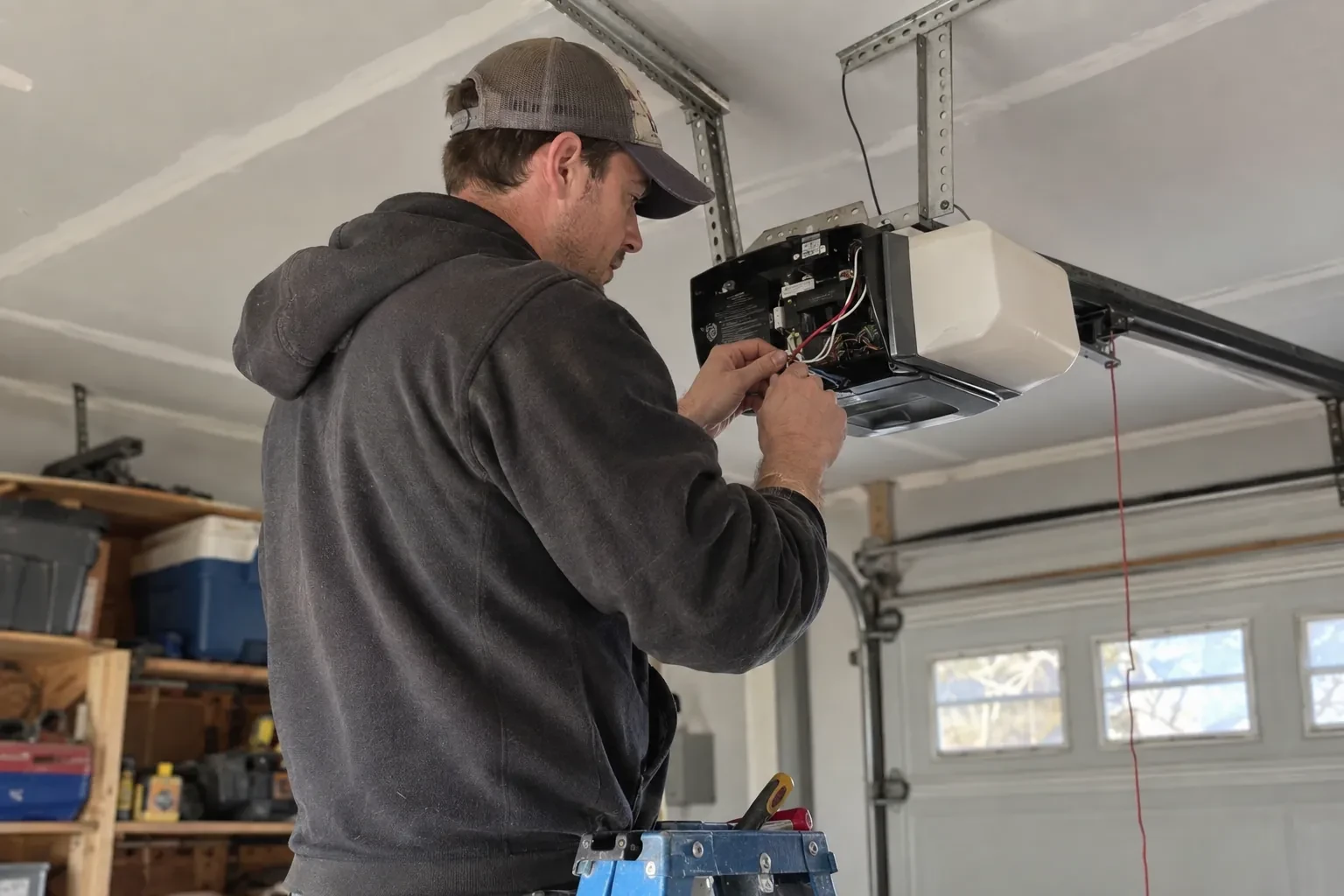
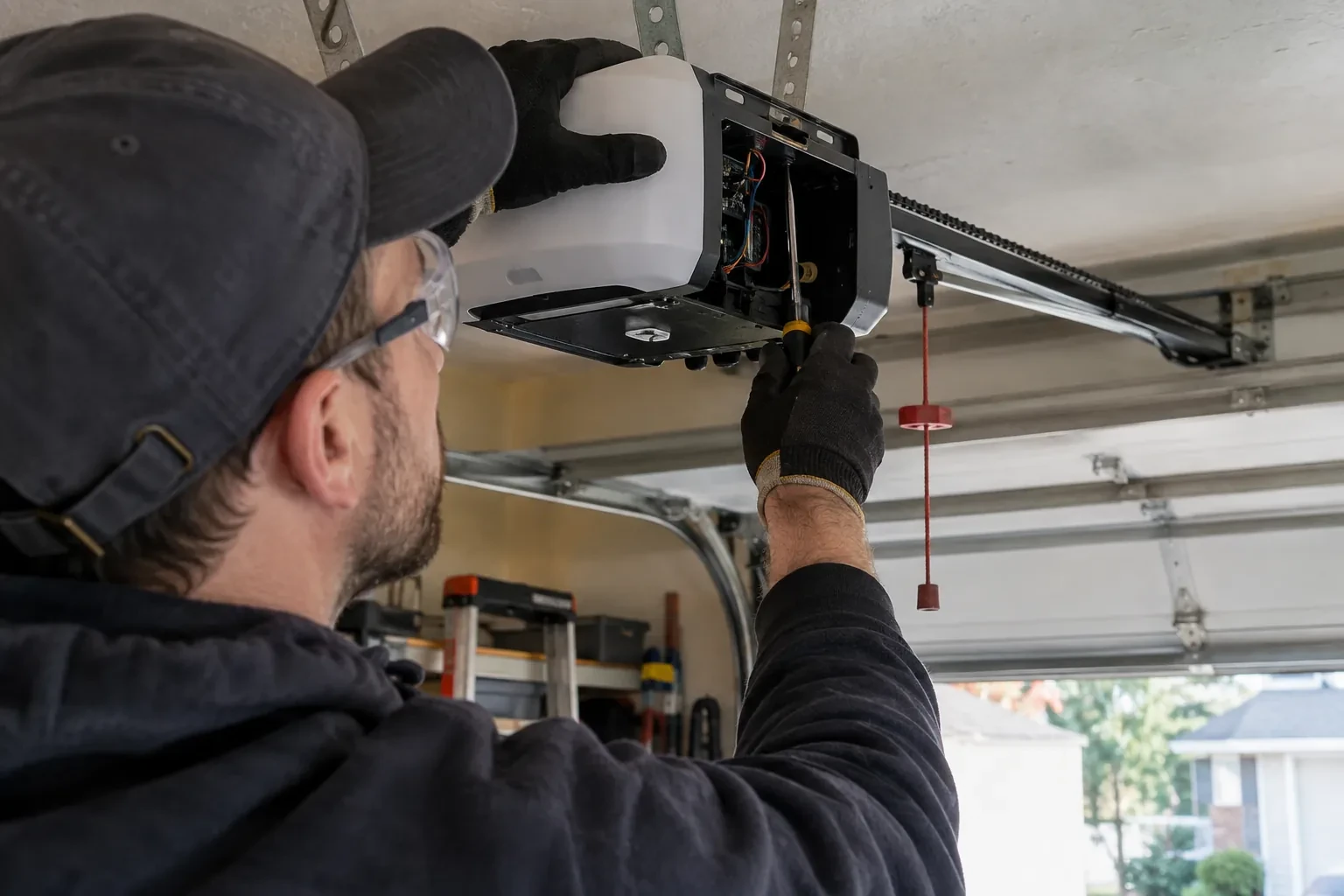
With the door balanced, the opener comes back into service. The trolley is re-engaged, power is restored and the door is run open and closed under motor. Travel limits are adjusted so the door seals at the floor and stops at the right height, and force settings are set to the light load a balanced door presents. The technician then places an object flat on the floor in the door's path and confirms the door reverses on contact, and passes a hand through the photo-eye beam to confirm the door reverses again. These checks close the visit on a working, safe system.
What cycle life means for you
The spring you chose is rated for a number of full open-close cycles, and that number translates into years according to your routine. A standard-cycle spring on a door used four times a day works out to several years of service; a household with teenagers and a home workshop will use cycles sooner, while a high-cycle spring stretches the same routine considerably further. Knowing your rating and your habits gives you a rough sense of when the next replacement falls due, so spring service becomes a planned item like furnace maintenance rather than a surprise on a cold morning.
Torsion Spring Replacement
In the van
Garage-door spring lubricant
Locking pliers for the track
Winding bars
Stationary cone bolts and nuts
Socket set and wrenches
Torsion Spring Replacement
What affects the quote
Access and working space
A vehicle that stays inside, shelving under the shaft, a very high ceiling or a tight side clearance affects how the technician sets up and how long the visit runs.
Converting from extension springs
Moving a door from extension springs to a torsion system adds a shaft, bearings, drums and brackets, and removes the old pulleys, which is a broader job than replacing an existing torsion spring.
Centre and end bearings
With the shaft out, bearings that grind, wobble or have seized are renewed. Smooth bearings reduce the load on the spring and opener, and their condition is confirmed by hand during the check.
What to have ready
- Is the door currently closed, open, or stuck partway?
- Is a vehicle parked inside the garage right now?
- Are the cables on either side still tight, or hanging loose?
Torsion Spring Replacement: questions
QuestionsMy car is inside the garage; how do you get the door open?
Once the technician is on site, the door is secured and the spring replaced with the door in its closed position, which is how spring work is always done. When the new spring is wound and the door balances, it lifts normally and the vehicle drives out. There is no need to force the door open beforehand; leaving it closed keeps the door square and the job straightforward.
Do I need to be home for the visit?
It helps to have someone present to open the garage, point out anything you noticed and hear how the door should feel afterwards. The technician needs power at the opener outlet, clear space under the shaft for a ladder, and access to both sides of the door. If a vehicle is inside, it stays until the door is working. Being there also lets you approve any extra items, such as bearings or cables, as they come up.
What is the difference between galvanized and oil-tempered springs?
Oil-tempered springs are the traditional dark grey or black coil; they hold their tension well over time and are widely used. Galvanized springs have a zinc coating that resists rust, which is useful in damp garages, though they tend to relax slightly and may need a small adjustment after settling in. Both are available in standard and high-cycle ratings, and the technician can explain which suits your garage.
Related services
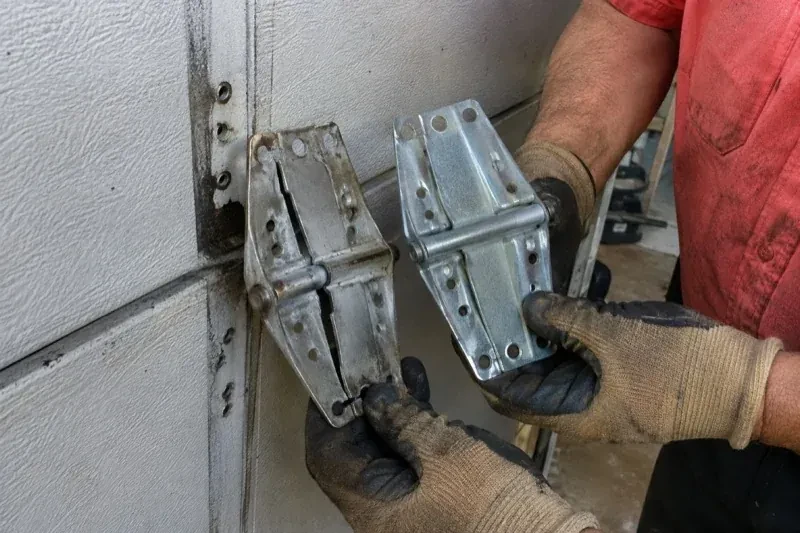
- Garage Door Hinge ReplacementWatching from inside as the door opens, you can see the gap between the second and third panels open up on one side as they turn the corner into the ceiling, then close again.
- Garage Door Track Repair or ReplacementAfter a decade of slushy winters the bottom foot of the track is flaking rust.
- Garage Door Cable ReplacementThe door went up as usual this morning, then stopped a third of the way with one corner higher than the other.